FDA Approves First Oral PCSK9 Inhibitor
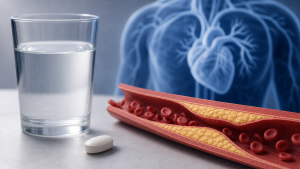
The U.S. Food and Drug Administration approved Lipfendra, also called enlicitide, on 16 July 2026 for lowering low-density lipoprotein cholesterol in adults. It is the first FDA-approved oral proprotein convertase subtilisin/kexin type 9, or PCSK9, inhibitor and is given as a once-daily 20-mg tablet.
PCSK9 Inhibitors
PCSK9 inhibitors are lipid-lowering medicines that act on the proprotein convertase subtilisin/kexin type 9 pathway. This pathway affects the number of LDL receptors available to remove LDL cholesterol from the blood.
Approved Use and Formulation
Lipfendra is approved as an adjunct to diet and exercise for adults with hypercholesterolaemia, including adults with heterozygous familial hypercholesterolaemia. The drug provides an oral alternative to injectable PCSK9 inhibitors, which are already used in cholesterol management.
Clinical Trial Evidence
The approval was supported by two Phase 3 trials, CORALreef Lipids and CORALreef HeFH, with 3,207 adults. In CORALreef Lipids, Lipfendra reduced LDL-C by an average of 56% versus placebo at week 24, and a post-hoc analysis reported a 60% reduction after excluding certain baseline values.
Safety Profile and Related Oral Therapies
In the CORALreef HeFH trial, diarrhoea occurred in 7% of patients receiving Lipfendra and 2% of those receiving placebo, while dizziness occurred in 9% and 4%, respectively. Bempedoic acid, marketed as Nexletol, and bempedoic acid with ezetimibe, marketed as Nexlizet, received expanded FDA labels on 22 March 2024.
Important Facts for Exams
- LDL cholesterol is commonly called “bad cholesterol” in clinical lipidology.
- Heterozygous familial hypercholesterolaemia is an inherited disorder associated with elevated LDL-C levels.
- Phase 3 trials are late-stage clinical studies used to assess efficacy and safety before regulatory approval.
- Ezetimibe is a cholesterol-lowering drug that reduces intestinal absorption of cholesterol.
Oral Non-statin Therapies
Nexletol and Nexlizet were first approved in February 2020 as oral non-statin therapies. Their expanded indications now include reduction of cardiovascular risk and treatment of primary hyperlipidaemia, with or without statin therapy.
| Related | |
|---|---|