National Investment Policy for Urea-2026
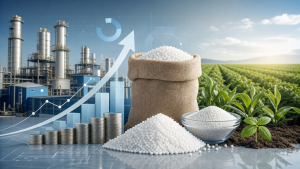
The Cabinet Committee on Economic Affairs (CCEA) approved the National Investment Policy for Urea-2026 (NIPU-2026) on 15 July 2026 to expand domestic manufacturing, scale up indigenous production, and phase out dependency on fertilizer imports. The policy, administered by the Department of Fertilizers, establishes a structured framework to attract fresh capital into gas-based greenfield and brownfield urea manufacturing units across the country.
Core Drivers of NIPU-2026
India operates as the second-largest global consumer of fertilizers and the single largest importer of urea. Annual domestic urea demand stands at approximately 40 million tonnes (mt) and rises at a steady clip of 5% each year. Domestic units generate roughly 30 mt, leaving a systemic supply deficit of 10 mt that relies on international trade. Geopolitical conflicts in West Asia, volatile international natural gas prices, and shipping logistics bottlenecks pose distinct vulnerabilities to national food security. The predecessor framework, the New Investment Policy-2012 (NIP-2012), saw its investment eligibility window conclude in October 2019. While NIP-2012 successfully added six functional production units—four via public sector undertaking (PSU) joint ventures and two via private entities—the continuous expansion of agricultural demand necessitated a successor policy to bridge the remaining 10 mt gap.
Structural Innovations in the 2026 Policy
NIPU-2026 modifies the financial and operational guidelines of previous investment regimes to optimize government spending and secure investor participation.
Cost Bifurcation and Return Safeguards
The policy explicitly segregates fixed investment costs from variable operating costs within the subsidy calculation matrix. It institutes a regulated Return on Equity (RoE) band. A floor rate of 12% ensures downside protection for capital investments, while a ceiling cap of 16% prevents excessive profiteering at the expense of the public exchequer.
Foreign Exchange Risk Mitigation
To construct high-capacity chemical units, operators often import critical machinery, technology licenses, and specialized engineering components, leaving them exposed to currency depreciation. NIPU-2026 allows exchange rate fluctuations to adjust project costs during the initial implementation phase. After a four-year operational period, the recognized fixed-cost component converts permanently into Indian Rupees (INR) at the prevailing exchange rate, stabilizing long-term subsidy outlays.
Fiscal Efficiency
By decoupling volatile external elements and fixing capital calculations, the exchequer projects a structural saving of over ₹250 crore for each individual plant built under this framework relative to older NIP-2012 parameters.
Projected Economic and Industrial Impact
The policy framework expects to mobilize the setup of 8 to 9 gas-based greenfield and brownfield production units. Each standard facility maintains an installed capacity benchmark of 1.27 mt per annum.
| Parameter | Current Status | Projected Target under NIPU-2026 |
| Annual Domestic Demand | ~40 Million Tonnes | Met fully by domestic production |
| Domestic Production Capacity | ~30 Million Tonnes | ~40 Million Tonnes (+10 mt addition) |
| Import Dependence | ~10 Million Tonnes (20-25%) | 0 Million Tonnes (Self-Sufficiency) |
| Operational Manufacturing Units | 33 Units | 41 to 42 Units |
| Employment Generation | Baseline sector workforce | 20,000–30,000 construction jobs; 50,000 permanent roles |
Replacing 10 mt of imported urea with domestic production yields an estimated foreign exchange conservation of 300 million to 500 million annually for every 1 mt of localized capacity. Cumulatively, complete import substitution can shield the country from multi-billion-dollar hard currency drains.
Fertilizer Consumption and Fiscal Data Points
Urea functions as the primary nitrogenous fertilizer utilized in domestic agriculture, comprising over 50% of total chemical nutrient application. Local production volumes grew from 22.5 mt in 2014-15 to 30.6 mt in 2024-25. The central government retains retail price control on urea, maintaining a heavily subsidized consumer price of ₹242 per 45-kg bag to protect farm operational margins from global price spikes. The financial subsidy burden remains substantial; the fertilizer subsidy allocation crossed ₹2.17 trillion in FY26, driven higher by rising natural gas feedstock costs and supply strains linked to global trade lane vulnerabilities.
| Related | |
|---|---|