Seamounts: Formation, Distribution and Ecological Importance
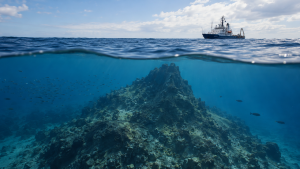
Seamounts are submerged elevations rising from the ocean floor without reaching the surface. Their volcanic origins and distinctive relief shape local ocean conditions, while hard substrates and nutrient-rich waters support varied marine life. They are important both as deep-sea habitats and as sites requiring careful conservation and management.
What Are Seamounts?
Seamounts are isolated elevations that rise at least 1,000 metres (3,280 feet) above the surrounding seabed. Most are extinct volcanoes, commonly composed of basaltic rock, and may be conical or elongated. Estimates suggest that more than 100,000 seamounts occur worldwide, although many remain poorly studied. Unlike islands, seamounts remain submerged. A guyot, or tablemount, is a flat-topped seamount; its summit is understood to have been flattened by erosion when it was at or near sea level. Seamounts vary widely in height and base diameter.
Formation and Distribution
Most seamounts form through volcanic activity. At divergent plate boundaries, including mid-ocean ridges, magma rises through the crust and solidifies. Others form above mantle plumes, or hotspots, where magma penetrates oceanic crust away from plate boundaries. As an oceanic plate moves over a relatively stationary hotspot, a chain of seamounts may develop. The Hawaiian–Emperor chain is a prominent example. The youngest seamounts lie nearest the active volcanic source, while older ones move away with the plate. Seamounts range in age from newly formed features to formations hundreds of millions of years old. Volcanically active seamounts may also host hydrothermal vents, which release mineral-rich fluids. Seamounts occur in all major ocean basins, with the Pacific containing the largest share of known examples and extensive chains. Significant numbers also occur in the Atlantic, Indian and Southern Oceans. By summit depth, they may be described as shallow, with peaks in the euphotic zone (less than 200 metres deep), or deep, extending into the aphotic zone (greater than 200 metres). Their forms include conical seamounts, elongated ridges, flat-topped guyots and smaller hills known as knolls. Some lie within national Exclusive Economic Zones (EEZs); others are in international waters.
Ecological Importance
Seamount relief disrupts prevailing deep-sea currents and can generate internal waves and local upwelling of nutrient-rich water. The resulting vertical mixing can increase primary productivity and food availability, creating conditions that differ from those on surrounding plains. Seamounts can therefore support high biodiversity and endemism. Their hard surfaces provide attachment sites for sessile organisms, including corals and sponges. Cold-water coral reefs, often including species such as Desmophyllum pertusum, can form complex structures that offer shelter and feeding grounds. These habitats, together with locally enhanced food supply, attract a range of marine life. Seamounts may also serve as aggregation sites for migratory species such as tuna, sharks and marine mammals. They can act as “stepping stones” that assist species dispersal across ocean basins. The same relief that shapes currents and creates habitat conditions can make seamount ecosystems distinct from nearby deep-sea environments.
Threats to Seamounts
Deep-sea bottom trawling can physically damage fragile coral and sponge habitats and harm benthic communities. Because such habitats may be slow to recover, disturbance can have lasting effects. Potential deep-sea mining is an emerging concern. Seamount-related deposits targeted for extraction include cobalt-rich crusts and massive sulfides; polymetallic nodules are also found in deep-sea environments. Mining could cause habitat destruction, sediment plumes and noise pollution. Other pressures include overfishing of fish populations aggregated around seamounts, ocean warming, acidification and changes in ocean currents associated with climate change. Anthropogenic pollution, including microplastics, adds to the risks facing these environments.
Conservation and Management
The United Nations Convention on the Law of the Sea (UNCLOS) provides the legal framework for ocean governance, including areas beyond national jurisdiction (ABNJ). The Biodiversity Beyond National Jurisdiction (BBNJ) Agreement, also known as the High Seas Treaty, aims to conserve marine biodiversity in ABNJ, including seamount ecosystems. Regional Fisheries Management Organizations (RFMOs) manage fishing activities in their respective regions and implement measures to protect Vulnerable Marine Ecosystems (VMEs). Marine protected areas (MPAs) specifically designed for seamount ecosystems are another conservation tool. Effective protection also requires sustainable fisheries management to limit damage to habitats and depletion of aggregated fish populations. Continued research helps document biodiversity and inform management decisions.
Key Prelims Takeaways
- Definition: A seamount rises at least 1,000 metres above the surrounding seabed; a guyot is flat-topped.
- Formation: Seamounts commonly form at mid-ocean ridges or above hotspots; the Hawaiian–Emperor chain is a hotspot example.
- Distribution: They occur in all major ocean basins, with the largest share of known seamounts in the Pacific.
- Ecology: Relief can disrupt currents, generate internal waves and enhance local vertical mixing and productivity.
- Habitats: Seamounts support corals, sponges and migratory species, and may have high endemism.
- Threats and protection: Bottom trawling, potential mining and overfishing threaten these habitats; UNCLOS, the BBNJ Agreement, RFMOs and MPAs are relevant to their management.
Recent Context
ZooKeys published descriptions and updated genus keys in October–November 2026 for Megastygarctides hekatae (<200 micrometres; rare spines near its genital opening) and Parastygarctus potercha (~70 micrometres), identified from 2009 Meteor expedition sediments. Senghor’s 100–130-metre summit yielded 20 tardigrade taxa, compared with two at a site nearly 100 kilometres north, 3,300 metres deep.
| Related | |
|---|---|