Major Space Telescopes and Exoplanet Detection Missions
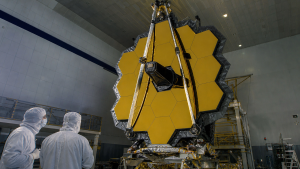
Space telescopes have transformed exoplanet science by using precise instruments to detect planets, measure their sizes and masses, and study atmospheres beyond Earth’s atmosphere.
Core Methods of Exoplanet Detection
- Transit Photometry: Measures the drop in a star’s brightness when an orbiting planet passes between the star and the telescope. The depth of the dip helps estimate the planet’s size.
- Radial Velocity (Doppler Spectroscopy): Tracks periodic shifts in a star’s spectral lines caused by the gravitational pull of an orbiting planet, revealing the star’s wobble.
- Direct Imaging: Captures actual images of exoplanets using coronagraphs or starshades to block the glare of the parent star.
- Gravitational Microlensing: Occurs when the gravity of a foreground star and its planet temporarily magnifies the light from a more distant background star.
- Astrometry: Measures the tiny movement of a star across the sky caused by the gravitational influence of an orbiting planet.
Historic and Retired Space Missions
- Kepler Space Telescope (NASA): Launched in 2009, Kepler used transit photometry and observed one patch of the Milky Way before the K2 mission. It confirmed more than 2,600 exoplanets before retiring in 2018.
- Spitzer Space Telescope (NASA): Launched in 2003 and retired in 2020, Spitzer observed the universe in infrared light. It provided important data on hot Jupiter atmospheres and confirmed several planets in the TRAPPIST-1 system.
- CoRoT (CNES/ESA): Launched in 2006, the Convection, Rotation and planetary Transits space telescope was the first space mission dedicated to exoplanet searches using the transit method. It discovered CoRoT-7b, the first confirmed rocky exoplanet.
Current Operational Space Telescopes
- Hubble Space Telescope (NASA/ESA): Launched in 1990, Hubble is a multi-purpose observatory. It made the first direct measurements of chemical elements in an exoplanet atmosphere, HD 209458b, and continues atmospheric studies.
- Transiting Exoplanet Survey Satellite (TESS, NASA): Launched in 2018, TESS conducts an all-sky survey of nearby, bright stars using transit photometry. It is finding Earth-sized and super-Earth planets suitable for atmospheric follow-up.
- James Webb Space Telescope (JWST, NASA/ESA/CSA): Launched in December 2021, JWST is optimized for infrared observations. It uses transmission spectroscopy to detect compounds such as water, carbon dioxide, and methane in exoplanet atmospheres.
- CHEOPS (CHaracterising ExOPlanets Satellite, ESA): Launched in 2019, CHEOPS does not search for new planets. It measures the sizes of already known planets with high precision.
- Gaia (ESA): Launched in 2013, Gaia maps the three-dimensional positions and motions of more than one billion stars. It uses astrometry to detect gas giants and massive exoplanets by tracking stellar wobbles.
Upcoming and Planned Space Telescopes
- Nancy Grace Roman Space Telescope (NASA): Planned for launch in 2027, this observatory will carry a wide-field instrument and a coronagraph. It will use gravitational microlensing to find cold outer planets and directly image nearby gas giants.
- PLATO (ESA): Scheduled for launch in 2026, the Planetary Transits and Oscillations of stars mission will search for rocky planets in habitable zones around Sun-like stars and measure stellar oscillations.
- Ariel (ESA): Planned for launch in 2029, the Atmospheric Remote-sensing Infrared Exoplanet Large-survey will study the chemical composition of about 1,000 known exoplanet atmospheres.
- Habitable Worlds Observatory (NASA): This proposed late-2030s mission aims to identify atmospheric biosignatures on Earth-like planets orbiting Sun-like stars.
Key Exoplanet Missions Comparison
| Mission | Agency | Launch Year | Primary Method | Primary Target/Focus |
| Kepler | NASA | 2009 | Transit | Statistical census of exoplanets |
| TESS | NASA | 2018 | Transit | Nearby bright stars |
| JWST | NASA/ESA/CSA | 2021 | Infrared Spectroscopy | Atmospheric composition and structure |
| CHEOPS | ESA | 2019 | Transit | Measuring precise sizes of known planets |
| PLATO | ESA | 2026 (Planned) | Transit | Earth-like planets in habitable zones |
| Ariel | ESA | 2029 (Planned) | Infrared Spectroscopy | Atmospheric chemistry of 1,000 planets |
| Roman | NASA | 2027 (Planned) | Microlensing & Direct Imaging | Outer-orbit planets and direct imaging |
Key Exoplanet Discoveries and Trivia
- 51 Pegasi b: The first exoplanet discovered orbiting a Sun-like star. Found in 1995, it is a hot Jupiter that completes an orbit in just four days.
- TRAPPIST-1 System: Located about 40 light-years away, this system has seven Earth-sized rocky planets around an ultra-cool red dwarf. Three lie in the habitable zone.
- K2-18b: A sub-Neptune exoplanet in the habitable zone of a red dwarf star. JWST observations detected carbon dioxide, methane, and dimethyl sulfide (DMS) in its atmosphere.
- PSR B1257+12: A pulsar system in which the first confirmed exoplanets were discovered in 1992. These planets orbit a rapidly spinning neutron star, not a normal star.
- WASP-39b: A hot Saturn-like planet that became a JWST target for detecting the first clear evidence of carbon dioxide in an exoplanet atmosphere.
GJ 523b: A newly studied exoplanet orbiting a mid-K dwarf star, with a radius of about 2.55 times Earth’s, a mass of 23.5 Earth masses, and a density of about 7.8 g/cm³.
GJ 523b Classification: It fits the proposed “mega-Earth” category, defined as rocky exoplanets with a radius of at least 2.1 Earth radii and a bulk density of at least 5.5 g/cm³.
GJ 523b Orbit: The planet completes one orbit in 17.75 days and has a minimum orbital obliquity of 71.4 degrees, placing it in a highly tilted polar orbit.
GJ 523b Detection: Its properties were derived from TESS transit observations and radial velocity data from the NEID spectrograph on the WIYN 3.5-metre Telescope in Arizona.
GJ 523b Composition: Despite its high mass, the planet is largely devoid of a major hydrogen-helium envelope, challenging standard planet-formation models.
Recent Context
GJ 523b is about 169 million years old. TESS measured its radius through transit photometry, while radial velocity observations measured its mass from stellar wobble. Its dense, rocky nature makes it an unusual mega-Earth candidate.
Rare Facts for Prelims
- Transit spectroscopy: During a transit, starlight filtering through a planet’s atmosphere can reveal chemical fingerprints of gases.
- Coronagraphs: These instruments were first developed for solar studies and later adapted to help block starlight in exoplanet imaging.
- Microlensing advantage: This method can detect planets far from their stars, including cold worlds that are difficult to find with transits.
- Astrometry precision: Gaia can detect minute stellar position shifts, making it valuable for finding massive planets in wide orbits.
- TRAPPIST-1 significance: It remains one of the best systems for comparing multiple Earth-sized planets under similar stellar conditions.
- JWST infrared strength: Its infrared design is especially useful for studying cool planets and faint atmospheric signals.
| Related | |
|---|---|