Major Tribes and Ethnic Communities of Sikkim
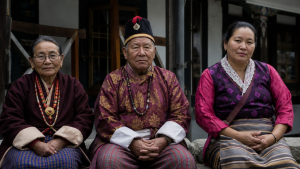
Sikkim is a small but highly diverse Himalayan state where the Lepchas, Bhutias and Nepalis form the core of its social and cultural identity. Their languages, religions, attire, festivals and customary institutions have shaped the state’s history as well as its constitutional safeguards.
The Lepchas
The Lepchas are widely regarded as the indigenous inhabitants of Sikkim. They call themselves Rongpas, a term linked with the meaning “ravine dwellers” or “people of the valleys.”
- Language: They speak the Lepcha language, which belongs to the Tibeto-Burman family. Their traditional script is known as Rong-ring or Rong.
- Religion: Traditionally, the Lepchas followed Mun or Bongthingism, an animistic faith based on nature worship and shamanic rituals led by priests (Bongthing) and priestesses (Mun).
- Religious change: Many Lepchas later converted to Nyingma Mahayana Buddhism after the rise of the Namgyal dynasty, and some later adopted Christianity.
- Settlement: Dzongu in North Sikkim is preserved as a cultural reserve exclusively for the Lepcha community to protect their traditional way of life.
- Attire: Lepcha men wear a handwoven coat called Dumpra with trousers, while women wear a long gown known as Dumdem or Ankyu.
The Bhutias
The Bhutias, also called Lhopo, are an ethnic community of Tibetan origin who migrated to Sikkim around the 14th century. They played an important role in the establishment of monarchy and Buddhist institutions in the region.
- Monarchy: In 1642, Phuntsog Namgyal was consecrated at Yuksom by three Buddhist lamas, marking the beginning of the Namgyal dynasty.
- Language: They speak Sikkimese, also known as Denzongke, a Tibeto-Burman language closely related to Tibetan.
- Religion: The Bhutias mainly follow Mahayana Buddhism, especially the Nyingma and Kagyu sects.
- Monastic centres: Important monasteries such as Rumtek, Pemayangtse and Enchey are major spiritual centres for the community.
- Attire: The traditional dress includes the Bakhu or Kho, a cloak-like garment tied at the waist with a belt. Women wear a silk inner blouse called Honju and a striped apron called Pangden, which is generally worn by married women.
The Nepalis of Sikkim
The Nepali community forms the demographic majority in Sikkim. Migration increased during the late 18th and 19th centuries, especially under British administrative policies that encouraged agriculture and mining.
- Community composition: The Nepali population includes several caste and ethnic groups such as Rai, Limbu, Gurung, Tamang, Magar, Newar, Chhetri, Bahun, Pradhan, Sunuwar, Kami, Damai and Sarki.
- Kirat groups: The Limbus and Rais belong to the Kirat lineage. They follow Yumaism and Kirat Mundhum, traditions centred on ancestor and nature worship.
- Language: Nepali serves as the lingua franca in Sikkim and is included in the Eighth Schedule of the Constitution of India.
- Attire: Nepali men traditionally wear Daura Suruwal, while women wear Chaubandi Cholo and Faria.
Festivals and Cultural Expressions
Sikkim’s festivals reflect agriculture, Buddhism, ancestral traditions and community memory. Several of them are closely linked to mountains, harvest cycles and historical alliances.
| Festival | Community | Significance |
| Pang Lhabsol | Bhutia, Lepcha | Commemorates the treaty of brotherhood between Lepcha chief Thekong Tek and Bhutia chief Khye Bumsa at Kabi Lungchok; honours Mount Khangchendzonga as the guardian deity. |
| Losoong / Namsoong | Bhutia, Lepcha | Sikkimese New Year celebrated in December, marking the end of the harvest season with Cham (masked dances) at monasteries. |
| Tendong Lho Rum Faat | Lepcha | Worship of Mount Tendong in South Sikkim; linked to the legend that the mountain saved the Lepcha people during a great deluge. |
| Sakewa | Rai (Kirat) | Agricultural festival celebrated with the Chandi dance and Bhumi Puja for a good harvest. |
| Chasok Tangnam | Limbu (Kirat) | Harvest festival dedicated to Yuma Sammang to offer the first yield of crops. |
| Lhabab Dhoechin | Bhutia, Lepcha | Buddhist festival marking the descent of Lord Buddha from heaven. |
| Bhanu Jayanti | Nepali | Celebrates the birth anniversary of Adikavi Bhanubhakta Acharya, who translated the Ramayana into Nepali. |
Legal Protections and Representation
Sikkim’s special constitutional arrangements reflect its distinct history and the need to protect local identity, land rights and political representation.
- Article 371F: Inserted through the 36th Constitutional Amendment Act, 1975, when Sikkim became the 22nd state of India. It protects pre-existing laws, land rights and the cultural identity of the Sikkimese people.
- Assembly reservation: Out of 32 seats in the Sikkim Legislative Assembly, 12 are reserved for the BL (Bhutia-Lepcha) community, 1 for the Sangha, and 2 for Scheduled Castes.
- Scheduled Tribe status: The Lepchas and Bhutias received ST status in 1978.
- Later inclusion: The Limbu and Tamang communities were included in the Scheduled Tribes list in 2003.
- Sangha constituency: The reserved Sangha seat represents the Buddhist monastic community in the Assembly.
Important Facts to Remember
Rong means “ravine dweller” in the Lepcha language, and Dzongu is a protected area for Lepchas in North Sikkim.
- Rongpas: The Lepchas use this self-designation for their community identity.
- Phuntsog Namgyal: He was the first ruler of the Namgyal dynasty and took the title of Chogyal in 1642.
- Kabi Lungchok: The historic blood brotherhood treaty between Lepcha chief Thekong Tek and Bhutia chief Khye Bumsa is associated with this place.
- Mount Khangchendzonga: Revered as the protective deity of Sikkim.
- Losoong: Marks the Sikkimese New Year according to the Tibetan lunar calendar.
- Article 371F: A key constitutional provision for Sikkim’s special status.
Key Prelims Takeaways
- Core communities: Lepchas, Bhutias and Nepalis form the principal ethnic groups of Sikkim.
- Indigenous group: Lepchas are considered the original inhabitants and identify as Rongpas.
- Bhutia role: Bhutias helped establish the Namgyal dynasty and the Chogyal system.
- Major language: Nepali is the lingua franca of Sikkim and is in the Eighth Schedule.
- Protected area: Dzongu in North Sikkim is reserved for the Lepcha community.
- Key constitutional provision: Article 371F protects Sikkim’s pre-existing laws, land rights and cultural identity.
- Reserved seats: Sikkim Assembly has reserved seats for BL communities, Sangha and Scheduled Castes.
| Related | |
|---|---|