UNESCO World Heritage Sites in India
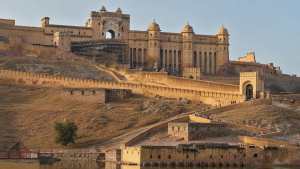
UNESCO World Heritage Sites are places recognized for their outstanding universal value and protected under the 1972 World Heritage Convention. India has a rich and varied presence on the list, covering monuments, religious landscapes, ecological zones and mixed heritage properties.
Legal and Institutional Framework
- World Heritage Convention (1972): This international treaty provides the legal framework for identifying, protecting and preserving heritage of outstanding universal value. India ratified it in 1977.
- Nodal bodies: The Archaeological Survey of India (ASI), under the Ministry of Culture, handles cultural nominations, while the Ministry of Environment, Forest and Climate Change (MoEFCC) deals with natural nominations.
- World Heritage Committee: It has 21 State Parties elected by the General Assembly and meets annually to evaluate nominations, decide inscriptions and review conservation status.
- Operational Guidelines: The nomination and monitoring process is governed by the Operational Guidelines for the Implementation of the World Heritage Convention.
Distribution and Classification of Sites
| Category | Number of Sites | Representative Examples |
| Cultural sites | 37 | Taj Mahal, Red Fort, Sarnath |
| Natural sites | 7 | Kaziranga National Park, Western Ghats |
| Mixed sites | 1 | Khangchendzonga National Park |
| Total | 45 |
- Global position: India ranks sixth globally and second in the Asia-Pacific region after China in the number of inscribed World Heritage Sites.
- First inscriptions: In 1983, Ajanta Caves, Ellora Caves, Agra Fort and the Taj Mahal became India’s first four World Heritage Sites.
- Mixed heritage site: Khangchendzonga National Park in Sikkim is India’s only mixed World Heritage Site, inscribed in 2016.
Sarnath and Key Historical Components
- Location and significance: Sarnath is in Uttar Pradesh near Varanasi and is one of the four major Buddhist pilgrimage sites. It is associated with Gautama Buddha’s first sermon, the Dharmachakra Pravartana.
- Inscription criteria: The site is listed under cultural criteria (iii) and (vi), relating to testimony of a cultural tradition and association with events of outstanding universal value.
- Dhamekh Stupa: This stone-and-brick structure stands 43.6 metres high with a diameter of 28 metres and marks the spot of Buddha’s first sermon.
- Chaukhandi Stupa: It is a terraced brick structure surmounted by an octagonal tower, built during the Mughal period under Akbar to commemorate Humayun’s visit, over older Mauryan foundations.
- Dharmarajika Stupa and Ashokan Pillar: The site includes remains of a Mauryan stupa and the base of the Ashokan Pillar, whose Lion Capital is the State Emblem of India.
Other Important Inscriptions
- Maratha Military Landscapes: Inscribed in July 2025 as the 44th site, this network of 12 forts reflects the military strategy and fortification skills of the Maratha Empire between the 17th and 19th centuries.
- Fort distribution: Eleven forts are in Maharashtra — Salher, Shivneri, Lohgad, Khanderi, Raigad, Rajgad, Pratapgad, Suvarnadurg, Panhala, Vijaydurg and Sindhudurg — and one is Gingee Fort in Tamil Nadu.
- Moidams of Charaideo: Inscribed in July 2024 as the 43rd site, these vaulted mound-burials of the Ahom dynasty in Assam are shaped like earth-pyramids.
Tentative List and Nomination Pipeline
- Tentative List: India has 69 properties on its Tentative List, including 49 cultural, 17 natural and 3 mixed properties. This is a mandatory first step before formal nomination.
- March 2025 additions: Six sites were added, including Kanger Valley National Park (Chhattisgarh), Mudumal Megalithic Menhirs (Telangana), Ashokan Edict Sites along Mauryan Routes, Chausath Yogini Temples, Gupta Temples of North India and Palace-Fortresses of the Bundelas.
- September 2025 additions: Seven natural properties were added, including Deccan Traps, St. Mary’s Island Cluster, Meghalayan Age Caves, Naga Hill Ophiolite, Erra Matti Dibbalu, Tirumala Hills and Varkala Cliffs.
- One nomination per cycle: Each country can submit only one property, cultural or natural, in a yearly nomination cycle for consideration by the World Heritage Committee.
Key Prelims Takeaways
- Inscription criteria: A site must meet at least one of the 10 UNESCO criteria — six cultural and four natural — along with integrity and authenticity requirements.
- Statutory protection: Cultural heritage sites in India are protected under the Ancient Monuments and Archaeological Sites and Remains (AMASR) Act, 1958.
- Buffer zones: Development around protected monuments is regulated, especially in notified and surrounding areas.
- State-wise presence: Maharashtra has the highest number of UNESCO World Heritage Sites in India.
- Mixed site example: Khangchendzonga National Park is India’s only mixed site, making it an important prelims fact.
- Committee role: The World Heritage Committee decides new inscriptions and monitors conservation status annually.
- Nomination process: Only properties on the Tentative List can be formally nominated for World Heritage inscription.
Current General Studies comprises current-affairs-based, General Studies-rich study material on policies, laws, institutions, economy, science, environment, governance, international relations, and other varied but important topics for UPSC and State PSC Prelims examinations.
Fortnightly PDF compilations: Available here
Originally written on
March 18, 2026
and last modified on
September 5, 2026.
| Related | |
|---|---|