Indian Nobel Laureates in Physical Sciences
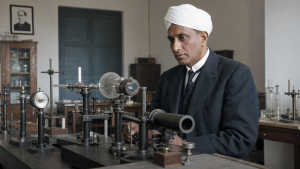
Indian and Indian-origin scientists have made landmark contributions to the physical sciences, reflected in Nobel Prizes across physics and chemistry. Their work ranges from the Raman Effect and stellar evolution to the atomic structure of the ribosome.
Sir C. V. Raman and the Raman Effect
- Nobel Prize: C. V. Raman won the 1930 Nobel Prize in Physics for discovering the Raman Effect.
- Discovery: The Raman Effect explains the inelastic scattering of light, in which a small fraction of scattered light changes frequency and wavelength.
- Research setting: Raman conducted the work with K. S. Krishnan at the Indian Association for the Cultivation of Science (IACS), Kolkata.
- Date of discovery: The discovery was finalized on February 28, 1928.
- Historical first: He was the first Asian and the first non-white person to receive a Nobel Prize in any scientific discipline.
- National Science Day: February 28 is observed as National Science Day in India to mark the discovery of the Raman Effect and encourage scientific temper.
Subrahmanyan Chandrasekhar and Stellar Evolution
- Nobel Prize: Subrahmanyan Chandrasekhar shared the 1983 Nobel Prize in Physics with William A. Fowler for theoretical studies of the physical processes important to the structure and evolution of stars.
- Chandrasekhar Limit: He formulated the Chandrasekhar Limit, the maximum stable mass of a white dwarf, at about 1.44 solar masses.
- Scientific significance: Below this limit, electron degeneracy pressure can halt gravitational collapse and leave a stable white dwarf.
- Beyond the limit: If the core mass exceeds the limit, the star may continue collapsing into a neutron star or a black hole.
- Background: Chandrasekhar was born in Lahore, British India, studied at Presidency College, Madras, and later became a naturalized citizen of the United States.
Venkatraman Ramakrishnan and Ribosome Structure
- Nobel Prize: Venkatraman Ramakrishnan shared the 2009 Nobel Prize in Chemistry with Thomas A. Steitz and Ada Yonath.
- Awarded for: Their work used X-ray crystallography to map the atomic structure and function of the ribosome.
- Importance of the ribosome: Knowing the ribosome’s structure helps explain how genetic information is translated into proteins.
- Academic background: Ramakrishnan earned a Ph.D. in Physics from Ohio University in 1976 before moving into molecular biology.
- Nationality and role: He is a dual British-American citizen and served as the 62nd President of the Royal Society from December 1, 2015, to November 30, 2020.
Honours and Recognition
- Padma Vibhushan: Ramakrishnan received India’s Padma Vibhushan in 2010.
- Knighthood: He was awarded a United Kingdom knighthood in 2012.
- Order of Merit: He was appointed to the UK’s Order of Merit in 2022.
- Scientific contribution: His career reflects the interdisciplinary use of physical science methods in biology and chemistry.
| Laureate | Field and Year | Core Scientific Focus | Associated Institution |
| Sir C. V. Raman | Physics (1930) | Inelastic light scattering | Indian Association for the Cultivation of Science |
| S. Chandrasekhar | Physics (1983) | Structure and evolution of stars | University of Chicago |
| V. Ramakrishnan | Chemistry (2009) | Ribosome mapping via X-ray crystallography | MRC Laboratory of Molecular Biology |
Key Prelims Takeaways
- Raman scattering: It is an example of inelastic scattering, unlike Rayleigh scattering, which is elastic and does not change the wavelength.
- Raman Effect: It was discovered at IACS, Kolkata, on February 28, 1928.
- National Science Day: Observed in India on February 28 to commemorate the Raman Effect.
- Chandrasekhar Limit: The approximate value is 1.44 solar masses and is central to the fate of white dwarfs.
- Stellar collapse: A core above the Chandrasekhar Limit may collapse further into a neutron star or black hole.
- Ribosome research: Ramakrishnan’s Nobel-winning work explained how the ribosome decodes genetic messages to make proteins.
- Order of Merit: It is a very selective British honour limited to 24 living members.
Current General Studies comprises current-affairs-based, General Studies-rich study material on policies, laws, institutions, economy, science, environment, governance, international relations, and other varied but important topics for UPSC and State PSC Prelims examinations.
Fortnightly PDF compilations: Available here
Originally written on
January 10, 2026
and last modified on
September 4, 2026.
| Related | |
|---|---|