China–Pakistan Economic Corridor: Projects and Impact
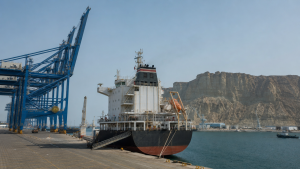
The China–Pakistan Economic Corridor (CPEC) is a flagship connectivity and development project linking China’s Xinjiang Uygur Autonomous Region with Pakistan’s Gwadar Port on the Arabian Sea. It forms a key part of Beijing’s Belt and Road Initiative, with focus areas such as transport, energy, industrial cooperation and trade facilitation.
Evolution of CPEC Phase II and Policy Alignment
CPEC Phase II, also called CPEC 2.0, is being implemented through a Five-Year Action Plan for 2025 to 2029. The phase marks a shift from basic infrastructure building toward deeper industrial and policy coordination.
It aligns with Pakistan’s Uraan Pakistan framework, which is built around the 5Es: Exports, E-Pakistan (digital economy), Equity and Empowerment, Energy and Infrastructure, and Environment. Pakistan and China have also agreed to align this framework with China’s 15th Five-Year Plan (2026–2030) for better coordination in planning, finance and industrial integration.
The planning process in Pakistan is being directed by Professor Ahsan Iqbal, Federal Minister for Planning, Development and Special Initiatives.
Expansion of Special Economic Zones and High-Tech Cooperation
A major objective of CPEC Phase II is to strengthen industrial cooperation through Special Economic Zones (SEZs). In January 2026, Pakistan’s Board of Investment announced an increase in approved SEZs from 7 to 44, expanding industrial activity across provinces and encouraging local development.
The new phase also broadens cooperation into high-technology areas. Bilateral agreements signed in Beijing cover artificial intelligence, agricultural technology and space exploration. The agreement includes the selection and training of Pakistani astronauts for missions aboard China’s space station.
- Industrial shift: Focus is moving from roads and power projects to manufacturing and technology-led cooperation.
- SEZ expansion: Approved zones increased from 7 to 44 in January 2026.
- Provincial spread: The expansion is meant to distribute industrial growth more widely within Pakistan.
- AI and space ties: Cooperation now includes advanced technology sectors beyond conventional infrastructure.
Gwadar Port and the Smart Port City Plan
Gwadar Port remains the terminal node of CPEC. Its development is guided by the Gwadar Smart Port City Master Plan (2025–2035), which seeks to turn the port area into a more functional trade and urban hub.
The Gwadar Development Authority finalized a Rs 280 billion 10-year development programme in May 2026. To attract shipping traffic, authorities introduced tariff cuts, including:
- 25% reduction in container vessel berthing fees.
- 40% reduction in international transshipment charges.
- 31% reduction in transit container charges.
Water supply has also been treated as a key bottleneck. On July 3, 2026, Balochistan’s Provincial Development Working Party approved a utility project to route fresh water from the Mirani Dam to Gwadar Town.
Exam fact: Gwadar is the maritime endpoint of CPEC and is central to Pakistan’s port-led connectivity plans.
ML-1 Railway Project and Financing Shift
The Main Line-1 (ML-1) railway upgrade is intended to rehabilitate the Karachi–Peshawar rail corridor. In July 2026, Pakistan formally separated the project from the bilateral CPEC framework and opted to seek primary financing from multilateral lenders instead of relying mainly on Chinese concessional loans.
The Asian Development Bank has committed a loan package of about USD 2 billion for the first phase, which targets the 480-kilometer Karachi–Rohri section. Groundbreaking is still pending, as a federal audit is reviewing the construction plans and cost estimates prepared by the Frontier Works Organisation.
- Project focus: ML-1 is Pakistan’s major railway modernization project.
- Route: Karachi to Peshawar, with Phase I centred on Karachi–Rohri.
- Length under Phase I: 480 kilometers.
- Financing change: Pakistan is moving toward multilateral funding.
- ADB package: Around USD 2 billion for the first phase.
Broader Impact of CPEC
CPEC has significant strategic and economic implications for both countries. For Pakistan, it is designed to improve connectivity, expand energy and transport capacity, and support industrial growth. For China, it strengthens access to the Arabian Sea and supports regional trade routes under the Belt and Road Initiative.
The second phase indicates a more mature model of cooperation, with emphasis on industrialization, digital development, technology transfer and urban infrastructure. At the same time, the financing shift in ML-1 shows that Pakistan is also diversifying the funding base for large projects.
- Connectivity: Links western China with Pakistan’s southern port infrastructure.
- Economic aim: Supports trade, energy supply and industrial expansion.
- Strategic value: Enhances China’s access to the Arabian Sea.
- Policy evolution: Phase II prioritizes industry, technology and planning coordination.
Key Prelims Takeaways
- CPEC route: Connects China’s Xinjiang Uygur Autonomous Region with Gwadar Port in Pakistan.
- Strategic framework: It is a major corridor under China’s Belt and Road Initiative.
- Phase II timeline: CPEC 2.0 runs under a Five-Year Action Plan for 2025–2029.
- Pakistan’s policy link: The Uraan Pakistan 5Es framework is aligned with CPEC Phase II.
- China alignment: Pakistan and China agreed to align plans with China’s 15th Five-Year Plan (2026–2030).
- SEZ expansion: Approved Special Economic Zones increased from 7 to 44 in January 2026.
- Gwadar plan: The Gwadar Smart Port City Master Plan covers 2025–2035, with a Rs 280 billion programme.
- Gwadar tariff cuts: Berthing fees, transshipment charges and transit container charges were reduced to attract shipping.
- Water project: Fresh water is planned to be routed from Mirani Dam to Gwadar Town.
- ML-1 financing: The railway project was separated from CPEC in July 2026 and linked to multilateral funding.
| Related | |
|---|---|