International Space Law, Treaties, and Norms
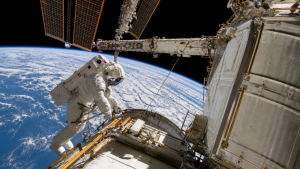
International space law is the legal framework that governs human activities in outer space, including exploration, use of celestial bodies, liability for damage, registration of space objects, and peaceful cooperation. It is built mainly through United Nations treaties, COPUOS processes, and related norms that aim to balance security, scientific progress, and emerging commercial activity.
Foundational Treaties of Outer Space
The core of international space law rests on five UN treaties drafted under the United Nations Committee on the Peaceful Uses of Outer Space (UN COPUOS). These instruments define the basic rights and duties of states in outer space.
| Treaty | Year | Main provisions |
| Outer Space Treaty | 1967 | Bans placement of weapons of mass destruction in orbit; prohibits national appropriation of celestial bodies. |
| Rescue Agreement | 1968 | Requires assistance to astronauts in distress and return of space objects to the launching state. |
| Liability Convention | 1972 | Provides absolute liability for damage on Earth and fault-based liability for damage in space. |
| Registration Convention | 1976 | Requires national registries for space objects and submission of data to the UN central register. |
| Moon Agreement | 1979 | Declares celestial bodies and their resources as the common heritage of mankind. |
The Outer Space Treaty is often described as the constitution of outer space. It bars militarization through the prohibition of weapons of mass destruction in orbit and also disallows military bases on celestial bodies. The Liability Convention creates a dual regime: absolute liability for damage on Earth and fault-based liability for damage occurring in outer space. The Moon Agreement remains controversial because its common heritage clause envisages an international regime for resource exploitation, which major spacefaring states have generally not accepted.
Institutional Architecture: COPUOS and UNOOSA
International space governance is supported by United Nations bodies that facilitate rule-making, cooperation, and legal coordination.
- COPUOS membership: The United Nations Committee on the Peaceful Uses of Outer Space was formalized in 1959 and expanded to 110 Member States in early 2026.
- New members: The expansion included Côte d’Ivoire, the Gambia, Honduras, Maldives, Malta, and Zimbabwe.
- Chairmanship: Teodor Valente of Italy chairs UN COPUOS for the 2026–2027 term.
- 69th session: He presided over the committee’s 69th session in June 2026.
- Scientific and Technical Subcommittee: Dr. Pakorn Apaphant, Executive Director of Thailand’s Geo-Informatics and Space Technology Development Agency (GISTDA), chairs the STSC for 2026.
- Legal Subcommittee: Pablo Adrián Arrocha Olabuenaga of Mexico chairs the 65th session of the Legal Subcommittee in April 2026.
- UNOOSA: The United Nations Office for Outer Space Affairs, based in Vienna, serves as the secretariat for these activities.
- Director: Aarti Holla-Maini has directed UNOOSA since September 2023.
Emerging Regulatory Frameworks and Space Resources
As commercial space mining and deep-space missions expand, multilateral bodies are addressing regulatory gaps in resource use and traffic coordination.
- Space resource guidelines: The UN COPUOS Working Group on the Legal Aspects of Space Resource Activities is drafting the Recommended Principles on Space Resource Activities.
- Non-binding nature: Draft iterations from late 2025 clarify that these principles are non-binding and do not create new legal obligations under international law.
- Airspace-space coordination: Commercial space flights require coordination between air and space traffic management.
- UNOOSA-ICAO mechanism: In February 2026, UNOOSA and the International Civil Aviation Organization established a formal coordination mechanism for integration of aviation and space operations in international airspace.
The Artemis Accords and Civil Exploration
The Artemis Accords are a set of non-binding political commitments led by the United States to guide civil space exploration and resource extraction. They build on the 1967 Outer Space Treaty and reflect the growing role of public-private participation in space activities.
- Framework nature: The Accords are non-binding and are meant to guide civil space exploration.
- Legal basis: They are framed in relation to the Outer Space Treaty.
- Administration: NASA administers the framework.
- Membership growth: Türkiye signed the Artemis Accords on August 31, 2026, becoming the 71st country to join.
- NASA leadership: Jared Isaacman serves as the 15th Administrator of NASA after Senate confirmation on December 17, 2025.
Exam focus: The outer space regime is treaty-based, but newer instruments such as the Artemis Accords and draft COPUOS principles remain non-binding.
Key Prelims Takeaways
- Five UN treaties: Outer Space Treaty (1967), Rescue Agreement (1968), Liability Convention (1972), Registration Convention (1976), and Moon Agreement (1979).
- Outer Space Treaty: It prohibits weapons of mass destruction in orbit and denies national appropriation of celestial bodies.
- Liability rule: Damage on Earth attracts absolute liability, while damage in space is governed by fault-based liability.
- Moon Agreement: It treats celestial bodies and their resources as the common heritage of mankind.
- COPUOS: Expanded to 110 Member States in early 2026, including six new members.
- UNOOSA: Based in Vienna; Aarti Holla-Maini has been Director since September 2023.
- Artemis Accords: A non-binding framework for civil exploration; Türkiye became the 71st signatory in August 2026.
| Related | |
|---|---|