Important Coal Mining Methods in India
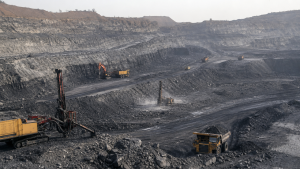
Coal mining in India is done through surface and underground methods, with newer technologies being used to access deep or difficult reserves while balancing energy needs, extraction efficiency, and environmental impact.
Overview of Coal Mining in India
India is the second-largest coal producer in the world, and coal contributes more than half of the country’s primary energy supply. More than 98% of India’s coal reserves are found in Gondwana deposits. Coal is extracted mainly through opencast mining and underground mining.
National companies such as Coal India Limited (CIL) and Singareni Collieries Company Limited (SCCL) account for most coal production. Surface mining remains the dominant method, while underground and specialized techniques are used for deeper or more valuable reserves.
Opencast Mining (Surface Mining)
Opencast mining is the most widely used coal extraction method in India and accounts for over 95% of domestic coal production. It is used when coal seams lie close to the surface, usually at depths of less than 300 meters.
Process and Equipment
- Overburden removal: Soil, clay, and rock layers covering the coal seam are drilled, blasted, and removed.
- Shovel-dumper systems: Heavy electric or hydraulic shovels load the blasted material into dumpers for transport.
- Draglines: These large machines remove deep overburden and cast waste directly into worked-out areas.
- Surface miners: These machines cut, crush, and load coal in a single continuous operation, reducing blasting-related noise, dust, and vibration.
Benefits and Limitations
- High recovery rate: Opencast mining can recover up to 90% of the coal in a seam.
- Operational flexibility: Production can be increased quickly to meet energy demand.
- Environmental disturbance: It causes land degradation, air pollution, and requires large-scale reclamation.
Opencast mining is the largest coal-producing method in India, but it also creates the highest surface environmental impact.
Underground Coal Mining Methods
Underground mining is used when coal seams are deep, generally below 300 meters, or lie beneath protected surface structures. It contributes less than 5% of India’s coal production but often yields better-quality coal with less surface disturbance.
Bord and Pillar Method
The Bord and Pillar method, also called Room and Pillar, is the oldest and most widely used underground coal mining method in India. It accounts for about 90% of underground coal production.
- Development phase: Miners create a grid of galleries or bords in the seam, leaving coal pillars to support the roof.
- Depillaring phase: After reaching the mine boundary, pillars are extracted in a retreating sequence.
- Support and safety: Roof support is provided by timber props, steel arches, or rock bolting. During depillaring, the roof may be allowed to cave in a controlled way or the void may be stowed with sand or fly ash.
Longwall Mining Method
Longwall mining is a highly mechanized underground method that offers high productivity and improved safety, though it requires heavy investment.
- Working principle: A long coal face, usually 150 to 300 meters wide, is mined in one continuous operation.
- Equipment: A shearer cuts the coal, which falls onto an armored flexible conveyor.
- Powered supports: Hydraulic roof supports hold the roof at the face and advance with the machine.
- Application in India: It is used in deep underground projects such as the Jhanjra Project of Eastern Coalfields Limited (ECL).
Blasting Gallery Method
The Blasting Gallery method is a specialized underground technique used for thick coal seams, usually 8 to 11 meters thick.
- Operation: Galleries are developed along the floor of the seam, and ring holes are drilled into the roof and sides.
- Blasting and loading: Explosives are used to bring down coal, which is then collected by remote-controlled Load Haul Dumpers (LHDs).
- Usage: SCCL and ECL have successfully used this method in thick-seam mines.
Hydraulic Mining
Hydraulic mining is an underground method that uses high-pressure water to extract coal.
- Mechanism: Water jets fracture and wash away the coal from the face.
- Transport: The coal-water slurry flows through flumes to a sump and is then pumped to the surface.
- Limitations: It needs abundant water and is suitable only under specific geological conditions, such as steeply dipping seams.
Advanced and Emerging Mining Technologies
To deal with declining near-surface reserves and environmental concerns, Indian coal operators are adopting modern, lower-impact extraction technologies.
Highwall Mining (HWM)
Highwall mining is a hybrid method that combines features of surface and underground mining.
- Principle: Coal is extracted from exposed seams at the base of an active or abandoned opencast pit without removing the overburden above it.
- Equipment: A remotely operated continuous miner enters the seam from the pit floor and drives parallel entries up to 300 to 500 meters.
- Benefits: It recovers coal from areas too deep for opencast mining and too shallow or unsafe for conventional underground mining. It requires no blasting and protects surface structures.
- Adoption: SCCL and Tata Steel at West Bokaro pioneered highwall mining in India.
Underground Coal Gasification (UCG)
Underground Coal Gasification is an in-situ process that converts deep, unmineable coal seams into usable gas.
- Method: Oxygen or air is injected into the seam through a borehole, the coal is ignited, and partial combustion produces syngas.
- Utility: Syngas can be used to generate electricity, produce synthetic fuels, or serve as chemical feedstock.
- Advantage: It avoids physical extraction of coal and reduces the surface footprint.
UCG is considered important for deep coal reserves where conventional open-cast or underground mining is technically difficult or uneconomic.
Comparison of Primary Coal Mining Methods
| Parameter | Opencast Mining | Bord and Pillar Mining | Longwall Mining | Highwall Mining |
| Primary Location | Shallow depths (<300 m) | Deep seams (>300 m) | Very deep, flat seams | Exposed pit walls |
| Coal Recovery Rate | High (80% to 90%) | Moderate (50% to 60%) | Very high (over 85%) | Moderate (40% to 50%) |
| Capital Requirement | Moderate to high | Low to moderate | Extremely high | Moderate |
| Safety Level | High | Low (risk of roof falls) | High (automated supports) | High (unmanned operation) |
| Surface Impact | Severe land degradation | Minimal surface damage | Potential subsidence | Zero surface disturbance |
| Production Scale | Bulk output | Low to medium | High continuous output | Medium output |
Key Facts and Trivia for Aspirants
- Historical origin: Coal mining in India began in 1774 at the Raniganj Coalfield along the Damodar River under the British East India Company.
- Dominant coal type: Indian coal reserves are mainly non-coking bituminous coal with high ash content, often 35% to 45%.
- Major coalfield: Jharia Coalfield in Jharkhand is famous for coking coal.
- Coal capital: Dhanbad is widely known as the “Coal Capital of India.”
- Nationalisation: Coal mining in India was nationalized in phases between 1971 and 1973 under the Coal Mines (Nationalisation) Act.
- Safety regulator: The Directorate General of Mines Safety (DGMS) under the Ministry of Labour and Employment regulates coal mine safety standards in India.
Rare Facts for Prelims
- Gondwana dominance: Nearly all of India’s coal comes from Gondwana-age deposits, which are among the oldest workable coal basins in the country.
- Longwall profile: Longwall mining is most effective in thick, fairly flat seams because the shearer needs a continuous coal face.
- Highwall advantage: Highwall mining is often used to recover coal left behind after opencast operations, improving overall resource recovery.
- Blasting Gallery niche: The Blasting Gallery method is especially useful in thick seams where conventional bord and pillar mining becomes less efficient.
- Syngas composition: Syngas from UCG mainly contains carbon monoxide, hydrogen, carbon dioxide, and methane.
- UCG output use: UCG can support production of hydrogen, methanol, urea, ammonia, and synthetic fuels.
Recent Context
Reliance Industries Limited has proposed an integrated Underground Coal Gasification project in Andhra Pradesh using deep coal blocks in Chintalapudi and Recherla. The project aims to convert deep coal into syngas in phases from 2026 onward.
| Related | |
|---|---|