Important Agricultural Terminology and Crop Classification for Prelims
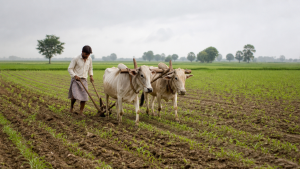
Agricultural terminology and crop classification help in understanding how plants are grouped by season, use, growth habit, and farm function. For Prelims, these terms are useful because they appear in questions on cropping patterns, agronomy, and India’s agro-climatic conditions.
Classification Based on Cropping Seasons in India
India’s cropping calendar is broadly divided into three seasons, mainly according to the monsoon cycle and temperature conditions.
- Kharif season: Sown with the onset of the Southwest monsoon in June–July and harvested in September–October. These crops need warm, wet weather and short day lengths for flowering.
- Major Kharif crops: Rice, maize, jowar, bajra, cotton, groundnut, soybean and tur.
- Rabi season: Sown at the beginning of winter in October–November and harvested in March–April. These crops require a cool climate for vegetative growth and warm conditions for germination and maturation.
- Major Rabi crops: Wheat, barley, gram, mustard, linseed and peas.
- Zaid season: A short summer season between March and June, covering the gap between Rabi harvest and Kharif sowing. Crops are generally grown under assured irrigation.
- Major Zaid crops: Watermelon, muskmelon, cucumber, bitter gourd, moong, urad and fodder crops.
| Season | Sowing Period | Harvesting Period | Key Crops |
| Kharif | June–July | September–October | Rice, cotton, jowar, bajra, tur, soybean, groundnut |
| Rabi | October–November | March–April | Wheat, barley, mustard, gram, peas, rapeseed |
| Zaid | March–April | May–June | Watermelon, cucumber, fodder crops, moong, urad |
Agronomic and Economic Classification of Crops
Crops are also classified on the basis of their economic use and consumption pattern. These groups are frequently used in agricultural and general studies questions.
- Cereals: Cultivated grasses grown for edible starchy seeds. Examples: rice (Oryza sativa), wheat (Triticum aestivum) and maize (Zea mays).
- Millets (nutri-cereals): Small-seeded grasses grown mainly in dryland regions. Major millets include jowar, bajra and ragi.
- Minor millets: Foxtail, kodo, proso and barnyard millet.
- Pulses: Grain legumes of the Fabaceae family that fix atmospheric nitrogen through root nodules. Examples: Bengal gram (chickpea), red gram (pigeon pea/arhar), green gram (moong) and black gram (urad).
- Oilseeds: Crops grown mainly for oil extraction from seeds. Examples: groundnut, mustard, sunflower, sesame, soybean, safflower, castor and niger.
- Fiber crops: Crops grown for plant fibre used in textiles and cordage. Examples: cotton, jute, sunn hemp and mesta.
- Cash crops: Grown primarily for commercial sale and industrial processing rather than direct subsistence use. Examples: sugarcane, tobacco, cotton and tea.
- Plantation crops: Cultivated on large contiguous estates and usually perennial in nature. Examples: tea, coffee, rubber, coconut, arecanut and oil palm.
- Forage or fodder crops: Grown for livestock feeding, either green or as hay/silage. Examples: berseem, lucerne, oats, napier grass and sorghum fodder.
Special Functional Agronomic Classifications
Besides economic use, crops are also grouped by their role in soil management, pest control and field protection.
- Cover crops: Grown mainly to cover the soil surface, reduce erosion, suppress weeds and check nutrient leaching during fallow periods.
- Examples of cover crops: Cowpea, sunn hemp and rye.
- Catch crops (contingent crops): Fast-growing short-duration crops sown to use the remaining season after failure of the main crop due to drought, flood or pest attack.
- Examples of catch crops: Moong, urad and radish.
- Nurse crops: Companion crops that provide shelter, support or shade to a delicate main crop during its early stage.
- Trap crops: Grown along borders to attract pests away from the main crop.
- Examples of trap crops: Marigold with tomato to trap fruit borer, and castor around cotton to trap Spodoptera.
- Green manure crops: Fast-growing leguminous crops incorporated into the soil while still green to improve organic matter and nitrogen content.
- Examples of green manure crops: Sesbania aculeata (Dhaincha) and Crotalaria juncea (sunn hemp).
- Smother crops: Fast-growing crops with dense foliage that suppress weed emergence by blocking light and competing for nutrients.
- Examples of smother crops: Cowpea, buckwheat and barley.
- Border or guard crops: Tall, hardy crops grown on field edges to protect against wind, stray animals or pathogen entry.
- Examples of border crops: Safflower around chickpea and sorghum around cotton.
Important Cropping Systems and Agronomic Terms
A cropping system refers to the cropping pattern and its interaction with available farm resources and technology. Several standard terms are important for Prelims revision.
- Monoculture: Continuous cultivation of a single crop on the same land year after year.
- Multiple cropping: Growing two or more crops on the same field in a single agricultural year.
- Mixed cropping: Sowing two or more crops together on the same land without a distinct row arrangement or fixed ratio.
- Intercropping: Growing two or more crops simultaneously in a definite row pattern or spatial arrangement.
- Relay cropping: Sowing a second crop in an existing standing crop before the first crop is harvested, reducing time gaps.
- Paira or Utera cultivation: Broadcasting lathyrus or gram in standing rice fields before harvest; this is a form of relay cropping.
- Ratoon cropping: Raising a new crop from regrowth of roots or stubble left after the main harvest, without fresh sowing.
- Examples of ratooning: Sugarcane ratoon and pineapple.
- Alley cropping: Growing food crops in the alleys between hedges of planted trees or woody shrubs to reduce erosion and improve soil fertility.
- Ley farming: A cropping system in which grasses and legumes are grown in rotation with arable crops to improve soil condition and fodder availability.
Botanical and Seasonal Terms Often Asked in Prelims
- Ontogeny: Developmental stages of a plant from germination to maturity.
- Short-day plants: Plants that flower when day length becomes shorter, often linked with Kharif crops.
- Warm-season crops: Crops that grow best in high temperature and moist conditions, such as rice and cotton.
- Cool-season crops: Crops that perform better in lower temperatures, such as wheat and barley.
- Dryland crops: Crops suited to low-rainfall conditions, including several millets and pulses.
- Perennial crops: Crops that live for more than two years, common in plantation crops.
- Leguminous crops: Crops that help in nitrogen fixation and are important for soil fertility management.
- Commercial crops: Crops grown for sale and industrial use rather than only household consumption.
Key Prelims Takeaways
- Kharif, Rabi and Zaid are the three main cropping seasons in India.
- Kharif crops need warm, wet weather; Rabi crops need cool weather; Zaid crops are grown in the summer gap with irrigation.
- Cereals are starchy grain crops, while pulses are nitrogen-fixing legumes.
- Millets are important dryland crops and are also called nutri-cereals.
- Oilseeds, fiber crops, cash crops and plantation crops are common economic classifications.
- Cover crops, green manure crops and smother crops help in soil and weed management.
- Mixed cropping, intercropping, relay cropping and ratoon cropping are distinct cropping system terms.
| Related | |
|---|---|