Counter-Terrorism Laws and Legal Framework in India
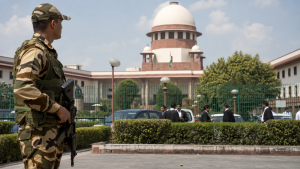
India’s counter-terrorism framework combines special anti-terror laws, general criminal law, investigative agencies, and court rulings. The system seeks to protect national security while keeping constitutional safeguards such as liberty, fair trial, and speedy justice intact.
Unlawful Activities (Prevention) Act, 1967
The UAPA is India’s principal anti-terror law. Enacted in 1967, it was strengthened through major amendments in 2004, 2008, 2012, and 2019 to deal with terrorism-related offences more effectively.
- Designation of terrorists: The 2019 amendment empowered the Central Government to designate individuals as terrorists under the Fourth Schedule. Earlier, only organisations could be listed as terrorist organisations under the First Schedule.
- Investigating authority: UAPA cases are generally investigated by officers of the rank of Deputy Superintendent of Police (DSP) or Assistant Commissioner of Police (ACP). After the 2019 amendment, NIA officers of Inspector rank or above can also investigate such cases.
- Attachment of property: Section 25 allows attachment of property representing the proceeds of terrorism. Where the case is investigated by the NIA, the written approval of the Director General of the NIA is required.
- Bail restrictions: Section 43D(5) imposes strict bail conditions. If the Public Prosecutor opposes bail and the court finds, on the basis of the case diary or the report under Section 173 of the CrPC/BNSS, that the accusation is prima facie true, bail cannot be granted.
Terrorist Act under Bharatiya Nyaya Sanhita, 2023
The Bharatiya Nyaya Sanhita (BNS), 2023, which replaced the Indian Penal Code from 1 July 2024, includes terrorism within general penal law for the first time.
- Section 113: Defines a “terrorist act” as an act intended to threaten the unity, integrity, sovereignty, security, or economic security of India.
- Economic security: The definition covers damage to monetary stability through the production, smuggling, or circulation of counterfeit currency or coin.
- Fatal terrorist acts: If a terrorist act causes death, the punishment is death or life imprisonment without parole, along with a minimum fine of ₹10 lakh.
- Non-fatal offences: Non-fatal terrorist acts, including conspiracy, attempt, or facilitation, are punishable with imprisonment ranging from five years to life, plus fine.
National Investigation Agency and Institutional Setup
The National Investigation Agency (NIA) is India’s premier central agency for investigating and prosecuting terror-related offences. It can investigate scheduled offences across the country without requiring state government consent.
- Statutory basis: The NIA was established under the National Investigation Agency Act, 2008, after the November 2008 Mumbai terror attacks.
- Administrative control: It functions under the Ministry of Home Affairs.
- Scheduled offences: The NIA Act Schedule includes the UAPA, Anti-Hijacking Act, Atomic Energy Act, and offences relating to counterfeit currency and weapons of mass destruction.
- Special Courts: Sections 11 and 22 provide for Special Courts to try scheduled offences, to be constituted by the Central and State Governments respectively.
Judicial Pronouncements on Counter-Terrorism Laws
Courts have repeatedly stressed that anti-terror laws must operate within constitutional limits, especially the right to personal liberty under Article 21.
- Bail principle: The Supreme Court has reiterated that bail is the rule, jail is the exception, even in UAPA cases.
- Article 21 and Section 43D(5): Statutory restrictions on bail cannot override the constitutional guarantee of speedy trial and personal liberty.
- K.A. Najeeb precedent: Union of India v. K.A. Najeeb (2021) remains an important precedent holding that constitutional courts may grant bail where prolonged delay in trial violates Article 21.
- Witness statements: In Mohammed Asarudeen v. Union of India & Ors. (May 2025), the Supreme Court held that courts cannot issue blanket orders withholding witness statements from the accused under Section 44(2) of the UAPA.
- Case-by-case scrutiny: The Court said protection of witness identity or statements must depend on actual risk and specific facts, not on a general presumption.
Police Modernisation and Intelligence Support
Counter-terrorism also depends on police capacity-building, intelligence sharing, and modern databases.
- Police modernisation funding: Between 2021 and 2026, India allocated over ₹6,300 crore for police and security modernisation.
- ASUMP: About ₹4,846 crore was provided under the Assistance to States for Modernisation of Police (ASUMP) scheme.
- CAPF modernisation: Around ₹1,523 crore was allotted under Modernisation Plan-IV for Central Armed Police Forces.
- NATGRID: The National Intelligence Grid functions as an integrated intelligence database linking providers and user agencies to track terror suspects.
- Data integration: NATGRID combines information from multiple sectors, including banking, immigration, and telecom, to support intelligence-based action.
Key Prelims Takeaways
- UAPA: India’s primary anti-terror statute, strengthened through amendments in 2004, 2008, 2012, and 2019.
- 2019 UAPA amendment: Allowed the Central Government to designate individuals as terrorists and enabled NIA officers of Inspector rank or above to investigate cases.
- Section 43D(5), UAPA: Imposes strict bail conditions where the court finds the accusation prima facie true.
- BNS Section 113: Introduces a general penal law definition of “terrorist act” effective from 1 July 2024.
- Penalty under BNS: Death or life imprisonment without parole, plus a minimum fine of ₹10 lakh, where a terrorist act causes death.
- NIA Act, 2008: Establishes the central agency for scheduled offences and provides for Special Courts under Sections 11 and 22.
- Article 21 link: Courts have held that prolonged trial delay can justify bail even under restrictive anti-terror provisions.
| Related | |
|---|---|