Major Urban Housing and Smart-City Schemes
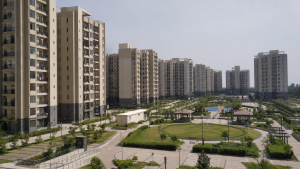
India’s urban housing and smart-city policies are built around affordable shelter, planned land use, and upgraded civic infrastructure. The current framework is shaped by the transition from PMAY-U 1.0 to PMAY-U 2.0 and by the closure phase of the Smart Cities Mission.
Restructuring of the Urban Affairs Ministry
- Allocation change: Under an amendment to the Government of India (Allocation of Business) Rules, 1961, on July 23, 2026, the Ministry of Housing and Urban Affairs was split into two separate departments.
- New bodies: The two entities are the Department of Urban Development (DoUD) and the Department of Capital Development (DoCD).
- Jurisdiction: The DoCD has sole jurisdiction over the Delhi-National Capital Region (NCR).
- Leadership: The administrative set-up includes Cabinet Minister Manohar Lal Khattar, Minister of State Tokhan Sahu, DoUD Secretary Satendra Singh, and DoCD Secretary Ms. D. Thara.
Pradhan Mantri Awas Yojana – Urban (PMAY-U) 1.0 and 2.0
- PMAY-U 1.0: Launched on June 25, 2015, it has been extended until September 30, 2026.
- Purpose of extension: The extension allows states and Union Territories to complete houses already sanctioned under the original funding pattern.
- PMAY-U 2.0 approval: Approved in August 2024 and effective from September 1, 2024.
- Implementation period: PMAY-U 2.0 has a five-year timeline from 2024 to 2029.
- Coverage target: It seeks affordable pucca housing for 1 crore urban poor and middle-class families.
- Financial outlay: The scheme involves a total investment of ₹10 lakh crore, including direct central assistance of ₹2.30 lakh crore.
Structural Verticals and Eligibility Under PMAY-U 2.0
- Verticals: The updated guidelines remove the In-Situ Slum Redevelopment (ISSR) vertical.
- Active components: The four active verticals are Beneficiary-Led Construction (BLC), Affordable Housing in Partnership (AHP), Affordable Rental Housing (ARH), and the Interest Subsidy Scheme (ISS).
- ISS benefit: The Interest Subsidy Scheme provides a uniform 4% subsidy on home loans up to ₹8 lakh.
- Subsidy cap: The maximum subsidy under ISS is ₹1.80 lakh.
- Income groups: Eligibility covers Economically Weaker Sections (annual income up to ₹3 lakh), Low Income Groups (₹3 lakh to ₹6 lakh), and Middle Income Groups (₹6 lakh to ₹9 lakh).
- Ownership condition: Eligible families must not own any pucca house anywhere in the country.
- Past benefit rule: Applicants should not have received benefits from any central, state, or local housing scheme in the preceding 20 years.
Lifecycle and Outcomes of the Smart Cities Mission
- Launch and closure: The Smart Cities Mission was launched on June 25, 2015, and its funding and operational lifecycle concluded on March 31, 2025.
- Project completion: As of March 31, 2026, states completed 7,790 projects, or 97% of the 8,064 projects undertaken.
- Spending: These completed projects were worth ₹1,56,257 crore out of a total budget allocation of ₹1,64,811 crore.
- ICCCs: All 100 designated Smart Cities have fully operational Integrated Command and Control Centres (ICCCs).
- Advisory for closure: MoHUA Advisory No. 27, issued on June 10, 2025, directed states to complete pending works, prepare long-term operation and maintenance guidelines, and repurpose the Special Purpose Vehicles (SPVs) created under the mission.
- Evaluation: A September 2025 NITI Aayog report rated the mission highly aligned with national priorities and noted 100% completion of ICCCs along with strong performance in urban safety and mobility.
Reforms in Affordable Housing and Land Use
- Affordable housing zones: A joint NITI Aayog and MoHUA report titled A Comprehensive Framework to Promote Affordable Housing recommends reserving at least 10% of residential land for affordable housing zones in municipal master plans.
- Floor Area Ratio: The framework advocates raising the permissible Floor Area Ratio (FAR) to a limit of 5 or 6 to improve land utilisation in urban areas.
- Land-use fees: In August 2026, NITI Aayog Member Rajiv Gauba proposed waiving land-use change fees for designated parcels.
- Stamp duty: The same proposal suggested exempting affordable units from stamp duty.
Key Prelims Takeaways
- PMAY-U 1.0: Launched on June 25, 2015, and extended till September 30, 2026.
- PMAY-U 2.0: Approved in August 2024, effective from September 1, 2024, and valid for 2024-2029.
- PMAY-U 2.0 target: Affordable pucca housing for 1 crore urban poor and middle-class families.
- ISS benefit: 4% interest subsidy on loans up to ₹8 lakh, capped at ₹1.80 lakh.
- Eligibility: EWS, LIG, and MIG households with annual income up to ₹9 lakh, subject to ownership and prior-benefit conditions.
- Smart Cities Mission: Funding and operational lifecycle ended on March 31, 2025; 97% of projects were completed by March 31, 2026.
- Administrative change: MoHUA was split into the Department of Urban Development and the Department of Capital Development, with the latter handling Delhi-NCR.
Current General Studies comprises current-affairs-based, General Studies-rich study material on policies, laws, institutions, economy, science, environment, governance, international relations, and other varied but important topics for UPSC and State PSC Prelims examinations.
Fortnightly PDF compilations: Available here
Originally written on
January 14, 2026
and last modified on
September 4, 2026.
| Related | |
|---|---|