Key Police Reform Committees in India
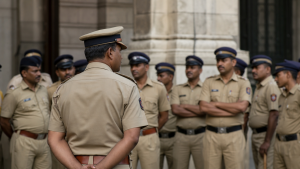
The reform of police administration in India has been a long-running policy issue, shaped by colonial-era laws, judicial intervention, and expert committee recommendations. The main focus has been to improve police autonomy, accountability, recruitment, investigation standards, and public grievance redressal.
The National Police Commission (1977-1981)
The National Police Commission (NPC) was set up in 1977 under the chairmanship of Dharma Vira. It was the first national-level commission to conduct a comprehensive review of the policing system.
- Eight reports: The commission submitted eight reports between 1979 and 1981 on political interference, organizational defects, police accountability, and welfare.
- Model Police Bill: It drafted a Model Police Bill to replace the Police Act of 1861 and recommended a State Security Commission to insulate the police from political misuse.
- Inquiry mandates: It proposed mandatory judicial inquiries into serious complaints such as deaths or rape in police custody.
Ribeiro, Padmanabhaiah, and Malimath Committees
In the late 1990s and early 2000s, several committees examined the gaps in police structure, recruitment, and criminal justice administration.
- Ribeiro Committee (1998-1999): Appointed by the Supreme Court to assess implementation of earlier reforms, it proposed a State Security Commission and a District Police Complaints Authority.
- Padmanabhaiah Committee (2000): It made over 240 recommendations on police restructuring, including recruitment standards, lowering the age of entry, specialized training, and expansion of the urban police commissionerate system.
- Malimath Committee (2003): Formally focused on reform of the criminal justice system, it recommended separation of the investigation wing from the law and order wing and modernization of forensic systems.
Soli Sorabjee and Mooshahary Committees
To update the legal framework governing policing, the government initiated drafting of a model police law and a consolidated reform package.
- Soli Sorabjee Committee: Constituted in 2005, it drafted the Model Police Act, 2006 as a legislative template for state governments.
- State-level use: Seventeen states have enacted new police laws or amended existing laws using the 2006 model as a reference.
- Mooshahary Committee: It reviewed earlier reform drafts and consolidated them into 49 actionable administrative recommendations.
- MHA action: The Ministry of Home Affairs circulated these 49 recommendations to all states and Union territories for implementation.
The Prakash Singh Case and Supreme Court Directives
In Prakash Singh v. Union of India (2006), the Supreme Court issued binding directives to reform police functioning and reduce undue political control.
- State Security Commission: States were directed to set up a commission to lay down broad policy guidelines and reduce arbitrary interference.
- DGP selection and tenure: The Director General of Police must be chosen from a panel of the three senior-most empanelled officers and given a minimum tenure of two years.
- Separation of functions: Investigation staff must be separated from law and order staff to improve efficiency.
- Police Establishment Board: A board was mandated for transfers, postings, and promotions of officers below the rank of Deputy Superintendent of Police.
- Complaints authorities: Independent Police Complaints Authorities were to be created at state and district levels to examine serious misconduct complaints.
- National Security Commission: A central commission was directed to prepare panels for selection of chiefs of central paramilitary forces.
Comparative Snapshot
| Committee / Case | Year | Core focus / contribution |
| National Police Commission | 1977 | Dharma Vira; eight reports; Model Police Bill proposal |
| Ribeiro Committee | 1998 | Implementation review; grievance redressal mechanism |
| Padmanabhaiah Committee | 2000 | Recruitment reforms; urban commissionerate system |
| Malimath Committee | 2003 | Investigation-law and order separation; criminal justice reform |
| Soli Sorabjee Committee | 2005 | Drafted the Model Police Act, 2006 |
| Mooshahary Committee | 2005 | Formulated 49 administrative reform recommendations |
| Prakash Singh Case | 2006 | Seven Supreme Court directives on police autonomy and accountability |
Key Prelims Takeaways
- National Police Commission: Set up in 1977 under Dharma Vira; it produced eight reports on police reform.
- Colonial legacy: The NPC sought to replace the Police Act of 1861 through a Model Police Bill.
- State Security Commission: Recommended by both the NPC and later reform efforts to reduce political interference.
- Ribeiro Committee: Focused on implementing earlier reform proposals and strengthening grievance redressal.
- Padmanabhaiah Committee: Highlighted recruitment, training, and commissionerate-based urban policing reforms.
- Malimath Committee: Emphasized separation of investigation from law and order and modernization of forensics.
- Prakash Singh directives: Key directives covered DGP tenure, police complaints authorities, and separation of investigation.
Exam fact: The Supreme Court’s Prakash Singh judgment (2006) is the most cited judicial milestone in Indian police reform.
Recent Context
No recent-context section is added here, as the source is an old-post rewrite and does not provide a directly relevant current trigger.
| Related | |
|---|---|