Blue Economy: Concepts, Initiatives and Policies in India
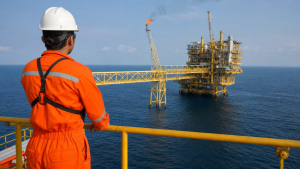
The blue economy refers to the sustainable use of ocean resources for economic growth, jobs and livelihoods while protecting marine ecosystems. For India, it spans fisheries, ports, offshore energy, deep-sea exploration and marine conservation, all within a policy framework aimed at balanced and long-term growth.
India’s Ocean Geography and Resource Targets
- Coastline and EEZ: India’s coastline is officially re-assessed at about 11,098 km, with an Exclusive Economic Zone (EEZ) of around 2.37 million sq km.
- Blue economy ambition: India aims to build a USD 100 billion blue economy and achieve ₹1 lakh crore in seafood exports by 2030.
- Seafood exports: Seafood exports reached ₹73,890 crore in the 2025–26 fiscal year, highlighting the sector’s economic significance.
- Nodal ministry: The Union Ministry of Earth Sciences (MoES) is the nodal ministry for deep ocean exploration and related marine scientific initiatives.
- Administrative leadership: Dr. Jitendra Singh serves as Union Minister of State (Independent Charge) for MoES.
Deep Ocean Mission and Samudrayaan Project
- Mission status: The Deep Ocean Mission, also referred to as the Samudra Manthan Mission, is a Central Sector Scheme launched in 2021.
- Budget: It has a total outlay of ₹4,077 crore for the five-year period 2021–2026.
- Samudrayaan: This key component aims to send three personnel to a depth of 6,000 metres in the indigenous Matsya-6000 submersible by 2026 or 2027.
- Submersible developer: Matsya-6000 is being designed and developed by the National Institute of Ocean Technology (NIOT), Chennai.
- Testing milestone: The submersible completed harbour wet testing in early 2025.
- Mission focus: The mission covers deep-sea mining, ocean climate services and exploration of deep-sea biodiversity.
Fisheries Management and Coastal Regulation Reforms
- PMMSY funding: The Pradhan Mantri Matsya Sampada Yojana (PMMSY) received its highest-ever annual allocation of ₹2,500 crore in the Union Budget 2026–27.
- PM-MKSSY: The Prime Minister Matsya Kisan Samridhi Sah-Yojana is a central sector sub-scheme under PMMSY.
- Implementation period: It is being implemented from FY 2023–24 to FY 2026–27.
- Outlay: The scheme has an investment outlay of ₹6,000 crore.
- Objective: It seeks to formalize the unorganised fisheries sector.
- EEZ fishing rules: The Sustainable Harnessing of Fisheries in the Exclusive Economic Zone of India Rules, 2025 were notified on November 4, 2025.
- Legal basis: These rules were issued under the Territorial Waters, Continental Shelf, Exclusive Economic Zone and Other Maritime Zones Act, 1976.
- Fishing zone: They regulate fishing activities from 12 to 200 nautical miles, while territorial waters up to 12 nautical miles remain under state jurisdiction.
- Coastal regulation: On May 26, 2026, MoEFCC issued a draft amendment to the Coastal Regulation Zone (CRZ) and Island Coastal Regulation Zone (ICRZ) Notifications, 2019.
- Petrochemical storage: The draft seeks to permit storage of specified stable petrochemical products in designated coastal areas.
Marine Spatial Planning and Infrastructure Initiatives
- Odisha MSP: In April 2026, Odisha became the first Indian state to launch a Marine Spatial Plan (MSP).
- Cooperation framework: The plan was launched under the second phase of Indo-Norway cooperation on sustainable ocean management.
- Earlier pilots: The first-phase pilots were implemented in Puducherry and Lakshadweep.
- Sagarmala: The Sagarmala infrastructure programme comprises 839 projects valued at ₹5.8 lakh crore.
- Purpose: It aims to improve maritime logistics and port connectivity.
- Deep-sea fishery report: In August 2026, the Centre for Marine Living Resources & Ecology (CMLRE) released the National Report on Deep-Sea and Distant-Water Fishery Resources of the Indian EEZ.
- Survey base: The report draws on decades of oceanographic surveys from the research vessel FORV Sagar Sampada.
Policy Significance for the Blue Economy
- Resource use: India’s blue economy combines fisheries, seabed resources, marine science, ports and coastal infrastructure.
- Sustainability: The policy emphasis is on economic expansion without degrading ocean ecosystems.
- Scientific governance: Missions such as Deep Ocean Mission and tools such as Marine Spatial Planning reflect a science-based approach to ocean management.
- Regulatory balance: EEZ rules and CRZ-related amendments show the attempt to align livelihood needs, maritime activity and environmental safeguards.
- Industrial potential: Deep-sea mining, submersible technology and port-led development are major growth areas.
Key Prelims Takeaways
- Blue economy: Sustainable use of ocean resources for growth, livelihoods and ecosystem protection.
- India’s coastline: About 11,098 km; EEZ around 2.37 million sq km.
- Deep Ocean Mission: Launched in 2021 with an outlay of ₹4,077 crore for 2021–2026.
- Matsya-6000: Indigenous human scientific submersible developed by NIOT, Chennai.
- PM-MKSSY: ₹6,000 crore scheme under PMMSY for FY 2023–24 to FY 2026–27.
- EEZ fishing rules: Notified under the 1976 Maritime Zones Act to regulate fishing from 12 to 200 nautical miles.
- Odisha MSP: First state to launch a Marine Spatial Plan under Indo-Norway cooperation.
Current General Studies comprises current-affairs-based, General Studies-rich study material on policies, laws, institutions, economy, science, environment, governance, international relations, and other varied but important topics for UPSC and State PSC Prelims examinations.
Fortnightly PDF compilations: Available here
Originally written on
March 30, 2026
and last modified on
September 5, 2026.
| Related | |
|---|---|