India’s Official Language Policy and Laws
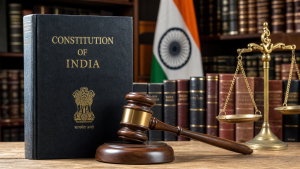
India’s official language policy is based on a constitutional and statutory framework that balances the promotion of Hindi and other Indian languages with administrative continuity. The Constitution does not declare any national language, and English continues to play an important role in Union and judicial business.
Constitutional Framework
- No national language: The Constitution of India does not designate any language as the national language.
- Part XVII: Articles 343 to 351 in Part XVII deal with the official language of the Union, regional languages, and language use in the judiciary.
- Article 343: Hindi in the Devanagari script is the official language of the Union, with the international form of Indian numerals.
- Article 348: English remains the language of the Supreme Court and High Courts unless Parliament provides otherwise by law.
Official Languages Act, 1963
- Continuance of English: The Official Languages Act, 1963 allows English to continue alongside Hindi for the transaction of business in Parliament and for official purposes of the Union.
- Parliamentary oversight: The law provides for a Parliamentary Committee on Official Language to review the progressive use of Hindi.
- Committee strength: The committee has 30 Members of Parliament—20 from the Lok Sabha and 10 from the Rajya Sabha.
- Chairperson: The Union Home Minister is the ex-officio Chairperson of this committee.
- Departmental role: The Department of Official Language under the Ministry of Home Affairs is the nodal agency for implementation and prepares the Annual Programme.
Scheduled Languages and Classical Status
- Eighth Schedule: The Constitution originally listed 14 languages in the Eighth Schedule; it now recognizes 22 languages.
- Current list: Assamese, Bengali, Bodo, Dogri, Gujarati, Hindi, Kannada, Kashmiri, Konkani, Maithili, Malayalam, Manipuri, Marathi, Nepali, Odia, Punjabi, Sanskrit, Santali, Sindhi, Tamil, Telugu and Urdu.
- Scheduled language significance: Inclusion in the Eighth Schedule is important for official recognition, representation and language-related policy support.
- Classical language status: The Union Government grants this status to languages with high antiquity, a valuable heritage, and an original literary tradition.
- Recognized classical languages: India recognizes 11 Classical Languages.
- Expanded list: In October 2024, Classical Language status was approved for Marathi, Pali, Prakrit, Assamese and Bengali, in addition to Tamil, Sanskrit, Telugu, Kannada, Malayalam and Odia.
Judicial and Administrative Use
- Supreme Court and High Courts: English continues as the default language for constitutional courts under Article 348.
- Translation initiative: The Supreme Court has initiated translation of judgments into 16 regional languages.
- GSTAT Rules: Rule 23(1) of the Goods and Services Tax Appellate Tribunal (Procedure) Rules, 2025 requires certified English translations of appeals when the original order is in Hindi or a regional language.
- Official language awards: The Department of Official Language gives awards to ministries and public sector entities for implementation of the official language policy.
- Recent awardees: DARPG received the Rajbhasha Utkrishtta Sammaan for 2025–26, while REC Limited received the First Prize for implementation of the Official Language Policy.
Three-Language Policy in Education
- CBSE circular: CBSE Circular Acad-33/2026 introduced a mandatory three-language policy for Class 9 from July 1, 2026.
- Language mix: Students are required to study three languages, of which at least two must be native Indian languages.
- Policy change: This marks a shift from earlier curriculum patterns that permitted combinations including foreign languages.
- Judicial issue: The Supreme Court did not stay the implementation of the curriculum mandate for the 2026–27 academic year, while related petitions remain under consideration.
Key Prelims Takeaways
- No national language: India has no constitutionally declared national language.
- Union official language: Hindi in Devanagari script is the official language of the Union under Article 343.
- English in courts: English remains the language of the Supreme Court and High Courts under Article 348 unless Parliament decides otherwise.
- Official Languages Act, 1963: English can continue alongside Hindi for Parliament and Union official work.
- Parliamentary committee: The Parliamentary Committee on Official Language has 30 members and is chaired by the Union Home Minister.
- Eighth Schedule: There are 22 scheduled languages in the Constitution.
- Classical languages: India recognizes 11 Classical Languages.
Current General Studies comprises current-affairs-based, General Studies-rich study material on policies, laws, institutions, economy, science, environment, governance, international relations, and other varied but important topics for UPSC and State PSC Prelims examinations.
Fortnightly PDF compilations: Available here
Originally written on
January 5, 2026
and last modified on
September 4, 2026.
| Related | |
|---|---|