Major Animal Husbandry Schemes and Institutions in India
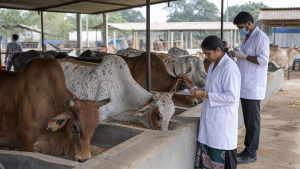
Animal husbandry is a core part of India’s rural economy, supporting income, employment and nutrition through livestock-based livelihoods. The sector is shaped by central schemes for breeding, health, fodder, infrastructure and entrepreneurship, along with specialised research bodies and regulatory institutions. For Prelims revision, the most useful focus areas are scheme objectives, implementing institutions, disease-control initiatives, breed conservation efforts and key constitutional and statistical facts.
Major National Schemes and Programmes
- Rashtriya Gokul Mission (RGM): Launched in December 2014 for development and conservation of indigenous bovine breeds.
- Core objective: To enhance milk production and productivity through advanced breeding technologies and better management of indigenous cattle and buffaloes.
- Gokul Grams: Integrated cattle development centres established under the mission for breed improvement and conservation.
- Biotechnology inputs: Promotes sex-sorted semen production, assisted reproductive technologies such as in-vitro fertilization (IVF), and genomic selection.
- National Kamdhenu Breeding Centres: Set up as centres of excellence for indigenous breeds under the mission.
- Pashu Sanjivni: Provides a 12-digit unique identification number to animals through polyurethane ear tags.
- National Livestock Mission (NLM): Launched in 2014-15 to ensure sustainable growth of the livestock sector, with special emphasis on small ruminants, pigs and poultry.
- Four sub-missions: Livestock Development; Pig Development in the North Eastern Region; Feed and Fodder Development; and Skill Development, Technology Transfer and Extension.
- Entrepreneurship support: Provides capital subsidy of up to 50% for rural entrepreneurship projects in poultry, sheep, goat and fodder production.
- Fodder support: Assists state seed farms and regional fodder stations for certified high-yielding fodder seed production.
Animal Health, Vaccination and Veterinary Services
- Livestock Health and Disease Control Programme (LHDCP): Central sector scheme for control and eradication of major economic livestock diseases.
- National Animal Disease Control Programme (NADCP): Core component targeting 100% vaccination coverage for Foot and Mouth Disease (FMD) and Brucellosis.
- Mobile Veterinary Units (MVUs): Supported under the scheme to provide doorstep veterinary services in rural areas.
- Diagnostic support: Funds the establishment and upgradation of state diagnostic laboratories and biological production units.
- Disease prevention focus: The programme links vaccination, diagnosis and field-level veterinary outreach for better livestock health management.
Important Prelims fact: NADCP aims at 100% vaccination coverage for FMD and Brucellosis.
Infrastructure, Credit and Cooperative Support
- Animal Husbandry Infrastructure Development Fund (AHIDF): Established under the Atmanirbhar Bharat Abhiyan package with a corpus of Rs. 15,000 crore.
- Eligible entities: Private companies, Farmer Producer Organizations (FPOs), micro, small and medium enterprises (MSMEs), and Section 8 companies.
- Eligible activities: Dairy processing plants, meat processing facilities, animal feed manufacturing units and veterinary vaccine production units.
- Interest subvention: The Central Government provides 3% interest subvention on loans through scheduled commercial banks.
- Credit guarantee: Coverage is provided up to 25% of the total credit facility through the Credit Guarantee Fund Trust for Animal Husbandry and Dairying.
- Supporting Dairy Cooperatives and Farmer Producer Organizations (SDCFPO): Assists state dairy federations and milk unions through working capital loans routed via the National Dairy Development Board (NDDB).
- Working capital support: Offers 2% per annum interest subvention on loans, with an additional 2% incentive for prompt repayment.
Key Statutory and Autonomous Institutions
| Institution | Headquarters / Location | Primary Role |
| National Dairy Development Board (NDDB) | Anand, Gujarat | Statutory body promoting and financing producer-owned dairy enterprises |
| National Dairy Research Institute (NDRI) | Karnal, Haryana | Premier ICAR deemed university for research in dairy processing and genetics |
| Indian Veterinary Research Institute (IVRI) | Izatnagar, Bareilly, Uttar Pradesh | Apex institute for veterinary research, disease surveillance and vaccine development |
| Central Institute for Research on Cattle (CIRC) | Meerut, Uttar Pradesh | Research on indigenous and crossbred cattle improvement |
| Central Institute for Research on Buffaloes (CIRB) | Hisar, Haryana | Conservation and genetic improvement of buffalo breeds |
| Central Institute for Research on Goats (CIRG) | Makhdoom, Mathura, Uttar Pradesh | Breed improvement, reproduction and health management of goats |
| Central Sheep and Wool Research Institute (CSWRI) | Avikanagar, Rajasthan | Research on sheep breeding, wool production and meat quality |
| Central Avian Research Institute (CARI) | Izatnagar, Bareilly, Uttar Pradesh | Poultry genetics, nutrition and post-harvest technology |
| National Bureau of Animal Genetic Resources (NBAGR) | Karnal, Haryana | Identification, evaluation, characterization and registration of indigenous livestock breeds |
| Veterinary Council of India (VCI) | New Delhi | Statutory body regulating veterinary practice and professional veterinary education |
Digital Platforms, Breed Conservation and Awards
- e-Gopala App: Digital platform for livestock management, disease-free germplasm purchase, artificial insemination tracking and veterinary advice.
- INAPH: Information Network for Animal Productivity and Health; a central database for animal identification, breeding history, milk recording and disease events.
- NDLM: National Digital Livestock Mission; an integrated digital architecture connecting farmers, veterinarians, diagnostic labs and policy makers through digital animal health records.
- Breed conservation focus: These platforms support traceability, productivity improvement and breed-related data management.
- Gopal Ratna Award: Annual national award for indigenous cattle and buffalo rearers, artificial insemination technicians and dairy cooperative societies.
- Kamdhenu Award: Recognises the best-managed indigenous bovine breeding farms run by institutions and trusts.
Key Prelims Takeaways
- Constitutional status: Animal husbandry is a State subject under Entry 15 of List II (State List) of the Seventh Schedule.
- Milk production: India ranks first globally and contributes nearly a quarter of total world milk output.
- Livestock population: India has the highest livestock population in the world and ranks first in total buffalo population.
- Livestock Census: Conducted every five years; the first census was held in 1919-1920.
- Operation Flood: Launched in 1970 by NDDB and helped establish the Anand pattern of dairy cooperatives across India.
- Father of White Revolution: Dr. Verghese Kurien is recognised for this role.
- National Milk Day: Celebrated annually on 26 November.
Current General Studies comprises current-affairs-based, General Studies-rich study material on policies, laws, institutions, economy, science, environment, governance, international relations, and other varied but important topics for UPSC and State PSC Prelims examinations.
Fortnightly PDF compilations: Available here
Originally written on
June 27, 2026
and last modified on
September 6, 2026.
| Related | |
|---|---|