Key UN Agencies and Their Mandates
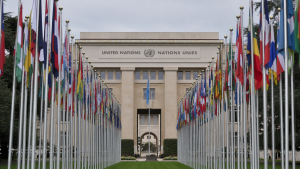
The United Nations system includes principal organs, specialized agencies, funds, programmes and related bodies that work through formal UN arrangements. For Prelims revision, it is important to distinguish these entities by their legal status, funding pattern and core mandate.
Many UN-linked institutions deal with labor standards, health, food security, climate, trade, refugees, nuclear safety and intellectual property. Their headquarters, founding years and flagship reports are frequently asked in competitive examinations.
How UN Entities Are Classified
- UN Funds and Programmes: Created by resolutions of the UN General Assembly and funded mainly through voluntary contributions from member states.
- UN Specialized Agencies: Autonomous organizations established by separate international treaties and linked to the UN through agreements, usually coordinated via ECOSOC.
- Related Organizations: Intergovernmental bodies associated with the UN system through cooperation agreements, but not formally designated as specialized agencies.
- Leadership of Funds and Programmes: Executive heads are appointed by the UN Secretary-General.
- Budgetary distinction: Specialized agencies have separate governance structures and regular budgets independent of the UN Secretariat.
Important Specialized Agencies and Their Mandates
- ILO: Headquarters at Geneva, Switzerland; established in 1919 under the Treaty of Versailles and became the first UN specialized agency in 1946.
- ILO mandate: Promotes decent work, sets international labor standards, and addresses occupational safety and fundamental rights at work through its tripartite structure of governments, employers and workers.
- FAO: Headquarters at Rome, Italy; founded on October 16, 1945.
- FAO mandate: Leads global efforts to defeat hunger, improve nutrition, boost agricultural productivity, and manage forestry and fisheries resources.
- WHO: Headquarters at Geneva, Switzerland; Constitution entered into force on April 7, 1948.
- WHO mandate: Directs international health policy, sets global health standards, leads disease eradication initiatives, and coordinates responses to health emergencies.
- IMF: Headquartered in Washington, D.C., United States; designed at the Bretton Woods Conference in July 1944.
- IMF mandate: Maintains international financial stability, provides balance-of-payments support and conducts economic surveillance.
- World Bank Group: Headquartered in Washington, D.C., United States; also designed at Bretton Woods in 1944.
- World Bank mandate: Supports long-term development and poverty reduction through low-interest loans and grants, mainly via IBRD and IDA.
- UNESCO: Headquarters at Paris, France; established on November 16, 1945.
- UNESCO mandate: Promotes education, science, cultural preservation and freedom of expression.
- WIPO: Headquarters at Geneva, Switzerland; established under the WIPO Convention of 1967 and became a specialized agency in 1974.
- WIPO mandate: Administers treaties protecting patents, trademarks, industrial designs and copyrights.
- ICAO: Headquarters at Montreal, Canada; established in 1947.
- ICAO mandate: Sets international civil aviation standards and safety protocols.
- IMO: Headquarters at London, United Kingdom; established in 1948.
- IMO mandate: Works for maritime safety and prevention of marine pollution by ships.
- WMO: Headquarters at Geneva, Switzerland; established in 1950.
- WMO mandate: Focuses on weather monitoring, climate data exchange and hydrology.
- IFAD: Headquarters at Rome, Italy; established in 1977.
- IFAD mandate: Finances rural development and agricultural transformation.
- UNIDO: Headquarters at Vienna, Austria; established in 1966.
- UNIDO mandate: Promotes inclusive and sustainable industrial development.
Major UN Programmes, Funds and Related Bodies
- UNDP: Headquartered in New York City, United States; formed in 1965 by merging the Expanded Programme of Technical Assistance and the Special Fund.
- UNDP mandate: Serves as the UN’s central development arm, focusing on poverty eradication and structural transformation linked to the Sustainable Development Goals.
- UNDP publication: The Human Development Report, which incorporates the Human Development Index.
- UNEP: Headquarters at Nairobi, Kenya; created in June 1972 after the Stockholm Conference on the Human Environment.
- UNEP mandate: Sets the global environmental agenda, promotes sustainable development within the UN system and hosts secretariats for key multilateral environmental agreements.
- UNEP reports: Global Environment Outlook and Emissions Gap Report.
- UNHCR: Headquarters at Geneva, Switzerland; created in December 1950 by the UN General Assembly.
- UNHCR mandate: Protects refugees, forcibly displaced communities and stateless people, and works in line with the 1951 Refugee Convention.
- IAEA: Headquarters at Vienna, Austria; founded in July 1957 after President Dwight Eisenhower’s “Atoms for Peace” speech.
- IAEA status: An autonomous related organization that reports annually to the UN General Assembly and the Security Council.
- IAEA mandate: Promotes the safe, secure and peaceful use of nuclear technologies and verifies non-proliferation through safeguards inspections.
Quick Agency-Headquarter Reference
| Agency | Headquarters | Established | Core Mandate |
| ILO | Geneva, Switzerland | 1919 | Labor rights, social protection, decent work |
| FAO | Rome, Italy | 1945 | Food security, agricultural development, nutrition |
| UNESCO | Paris, France | 1945 | Education, science, culture, press freedom |
| WHO | Geneva, Switzerland | 1948 | Global public health policy and epidemic response |
| IMO | London, United Kingdom | 1948 | Maritime safety and anti-pollution measures |
| WMO | Geneva, Switzerland | 1950 | Weather monitoring, climate and hydrology |
| WIPO | Geneva, Switzerland | 1967/1974 | Protection of intellectual property rights |
| IFAD | Rome, Italy | 1977 | Rural development and agricultural transformation |
| UNIDO | Vienna, Austria | 1966 | Sustainable industrial development |
Why These Bodies Matter in Prelims
- Legal status: Questions often test whether a body is a specialized agency, fund, programme or related organization.
- Headquarters: Geneva, Rome, Paris, Vienna, New York and Washington, D.C. are repeated exam locations.
- Founding years: The sequence from ILO and FAO to newer bodies like IFAD and WIPO is important.
- Flagship reports: Human Development Report, State of Food Security and Nutrition in the World, Global Environment Outlook and Global Innovation Index are commonly asked.
- Specific mandates: WHO for health, IAEA for safeguards, UNEP for environment, UNESCO for heritage and education, and WIPO for intellectual property.
- Agreement mechanism: UN specialized agencies work through formal agreements under the UN framework, while related organizations retain distinct legal identities.
Key Prelims Takeaways
- UN funds and programmes are created by General Assembly resolutions and depend mainly on voluntary contributions.
- Specialized agencies are independent treaty-based bodies linked to the UN through formal agreements.
- ILO is the first UN specialized agency and uses a tripartite model.
- WHO is the global authority for health standards and emergency coordination.
- UNDP is the UN’s central development arm and publishes the Human Development Report.
- UNEP was created after the Stockholm Conference and leads the global environmental agenda.
- IAEA is a related organization, not a specialized agency, and handles nuclear safeguards and peaceful use of atomic energy.
Current General Studies comprises current-affairs-based, General Studies-rich study material on policies, laws, institutions, economy, science, environment, governance, international relations, and other varied but important topics for UPSC and State PSC Prelims examinations.
Fortnightly PDF compilations: Available here
Originally written on
May 8, 2026
and last modified on
September 6, 2026.
| Related | |
|---|---|