Defence Procurement Procedures and Strategic Partnerships in India
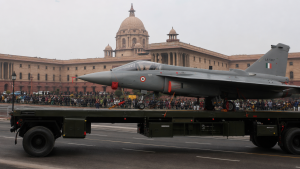
Defence procurement in India follows a structured framework to acquire military hardware while promoting domestic manufacturing and technology development. Over time, the system has moved from the Defence Procurement Procedure (DPP) to the Defence Acquisition Procedure (DAP), with capital acquisitions aligned to national security needs and indigenous industrial capability.
Evolution and Architecture of Defence Acquisition
- Defence Acquisition Council (DAC): Chaired by the Union Defence Minister, it is the highest decision-making body for defence procurement and approves the Acceptance of Necessity (AoN) for capital acquisitions.
- Acceptance of Necessity (AoN): This is the mandatory first approval before any capital procurement tender can be issued.
- Department of Military Affairs (DMA): Headed by the Chief of Defence Staff (CDS), it handles procurement prioritisation and integration across the services.
- Department of Defence (DoD): Led by the Defence Secretary, it oversees administrative and policy matters related to procurement.
- Modernisation outlay: For the fiscal year 2026–27, the modernisation budget stands at ₹2.19 lakh crore, with total Ministry of Defence allocation at ₹7.85 lakh crore.
From DPP to DAP
The Defence Acquisition Procedure replaced the earlier procurement framework to make acquisition more transparent, faster and more aligned with domestic industry. The focus is not only on buying equipment but also on ensuring that India develops long-term capability in design, manufacturing and upgrades.
- Capital acquisitions: DAP guides the purchase of major military equipment for the armed forces.
- Domestic capability: The framework encourages local manufacture and development within India.
- Industrial alignment: Procurement is linked to the country’s broader defence-industrial ecosystem.
Key Proposals of Draft DAP 2026
The Department of Defence released the draft Defence Acquisition Procedure (DAP) 2026 on February 11, 2026, for public and stakeholder consultation. It proposes several structural changes in procurement policy.
- Shift in emphasis: The draft moves the focus from “Made in India” to “Owned by India”, giving priority to Indian control over intellectual property, source codes, critical design data and upgrade authority.
- Indian ownership: Wholly owned Indian subsidiaries of foreign original equipment manufacturers (OEMs) are proposed to be excluded from the category of domestic Indian companies for procurement purposes.
- Category simplification: The draft reduces the core procurement categories from five to four.
- Indigenous content thresholds: The minimum indigenous content requirement in the Buy (Indian-IDDM) category is proposed to rise from 50% to 60%.
- Buy (Global) requirement: A new 30% indigenous content norm is proposed for the Buy (Global) category.
- Technology Readiness Level (TRL): The draft introduces TRL-based categorisation for capital acquisitions.
- New acquisition methods: It also provides for Long Term Bulk Acquisition and Low-Cost Capital Acquisition.
Strategic Partnerships and Domestic Production
India’s defence procurement policy increasingly relies on strategic partnerships with private Indian firms and global OEMs to expand domestic production and technology transfer. This is especially important for high-end platforms and systems that require advanced manufacturing capability.
- Indigenous production: India’s defence production reached ₹1.78 lakh crore in 2025–26.
- Defence exports: Exports touched a record ₹38,424 crore in the same period.
- Strategic Partnership (SP) model: This model identifies private Indian firms to collaborate with global OEMs for platforms such as submarines, fighter aircraft and helicopters.
- Purpose of partnerships: Such collaborations help build domestic capacity, local manufacturing and technology absorption.
- Broader objective: The policy aims to reduce dependence on imports while retaining critical capability within India.
Recent Defence Collaborations
- Javelin missile agreement: In August 2026, India signed a government-to-government agreement with the United States worth ₹292 crore for about 60 Javelin anti-tank guided missiles under Emergency Procurement-6 (EP-6).
- Co-production plan: In the same month, Tata Advanced Systems Limited and the Javelin Joint Venture signed an MoU for co-production of Javelin missiles in India.
- Kalyani-FN Herstal MoU: On September 3, 2026, Kalyani Strategic Systems Ltd. and FN Herstal signed an MoU to establish a local production facility in India for small arms, integrated weapon systems and counter-unmanned aerial systems.
Key Prelims Takeaways
- DAC: The top body for approving defence capital procurement and granting AoN.
- AoN: The required initial approval before a procurement tender can be issued.
- DMA: Headed by the CDS, it coordinates prioritisation and integration across services.
- DPP to DAP: The procurement framework has evolved to better support acquisition and indigenous manufacturing.
- IDDM: Stands for Indigenously Designed, Developed and Manufactured; it is the highest priority procurement category.
- TRL: A 1–9 scale used to assess the maturity of technologies under the draft DAP 2026.
- Strategic Partnership model: It enables Indian private firms to partner with global OEMs for major platforms and systems.
| Related | |
|---|---|