Major International Sports Governing Bodies and Their Functions
International sports governing bodies set common rules, regulate competitions and support the orderly conduct of global sport. For Prelims revision, it is useful to know the main body, its headquarters, official name changes and the current leadership of major federations.
Olympic and Multi-Sport Governance
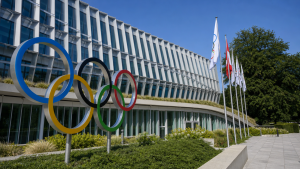
- International Olympic Committee (IOC): Based in Lausanne, Switzerland, the IOC is the supreme authority of the modern Olympic Movement. It was established in 1894 and functions as a Swiss non-profit private association.
- IOC leadership: Kirsty Coventry of Zimbabwe became the 10th President of the IOC on June 23, 2025, succeeding Thomas Bach. She is the first female and first African president in the IOC’s history.
- Core functions: The IOC selects host cities, supervises Olympic organising committees and determines the official sports programme for each edition of the Games.
- Olympic policy: Under its policy as of August 2026, the IOC allows Russian and Belarusian athletes to compete in team events and qualifying competitions for the 2028 Los Angeles Olympics.
Global Cricket and Football Administration
- International Cricket Council (ICC): Headquartered in Dubai, United Arab Emirates, the ICC regulates international cricket, administers playing conditions and oversees global events. It was founded in 1909 as the Imperial Cricket Conference and adopted its present name in 1989.
- ICC leadership: Jay Shah of India serves as the independent Chairman of the ICC. He assumed office on December 1, 2024, as the youngest chairperson in the council’s history, while Sanjog Gupta is the Chief Executive.
- Fédération Internationale de Football Association (FIFA): Based in Zurich, Switzerland, FIFA manages global association football, beach soccer and futsal. Founded in 1904, it is registered under the Swiss Civil Code.
- FIFA leadership and action: Gianni Infantino of Switzerland is FIFA President, first elected in February 2016 and re-elected in March 2023. In June 2026, FIFA approved a new regulatory framework for the global football transfer system and signed an agreement with FIFPRO to strengthen collaboration and player representation.
Athletics, Rugby and Aquatics Bodies
- World Athletics: Based in Monaco, it oversees track and field events. Founded in 1912 as the International Amateur Athletic Federation (IAAF), it rebranded in 2019.
- World Athletics leadership: Sebastian Coe of the United Kingdom serves as President through his final term ending in 2027. In July 2026, the body maintained its ban on Russian and Belarusian athletes, a decision challenged by Russian Athletics at the Court of Arbitration for Sport (CAS) in August 2026.
- World Athletics event: The inaugural World Athletics Ultimate Championship is scheduled in Budapest, Hungary, in September 2026 with a USD 10 million prize purse.
- World Rugby: Based in Dublin, Ireland, it governs rugby union. Founded in 1886 as the International Rugby Football Board, it is chaired by Brett Robinson of Australia, elected in November 2024 as the first Southern Hemisphere representative.
- World Rugby update: Mark Robinson joined in May 2026 to lead a field-of-play excellence division.
- World Aquatics: Based in Lausanne, Switzerland, it governs competitive water sports. Founded in 1908 as FINA, it rebranded in 2022 and delegates its drug-testing operations to the International Testing Agency.
- World Aquatics leadership: Husain Al-Musallam of Kuwait was re-elected in July 2023 to an eight-year term.
Tennis, Basketball, Cycling and Badminton Authorities
- World Tennis: The International Tennis Federation officially rebranded as “World Tennis” on January 1, 2026. Founded in 1913 as the International Lawn Tennis Federation, it continues to serve as the global governing body for tennis.
- World Tennis leadership: David Haggerty of the United States is President for a term through 2027, and Ross Hutchins is Chief Executive Officer.
- FIBA: The International Basketball Federation is based in Mies, Switzerland. Founded in 1932, it governs international basketball.
- FIBA leadership: Sheikh Saud Ali Al Thani of Qatar is the 14th President of FIBA. Ricardo Vairo of Uruguay was appointed FIBA Americas President and ex-officio FIBA Central Board member on February 19, 2026.
- UCI: The Union Cycliste Internationale, based in Aigle, Switzerland, oversees global competitive cycling. Founded in 1900, it is led by David Lappartient of France, re-elected unopposed in September 2025 for a third four-year term through 2029.
- BWF: The Badminton World Federation, based in Kuala Lumpur, Malaysia, operates under President Khunying Patama Leeswadtrakul of Thailand. Founded in 1934, it organised the BWF World Championships in New Delhi, India, in August 2026.
Key Prelims Takeaways
- IOC: Lausanne, Switzerland; supreme body of the Olympic Movement; founded in 1894.
- ICC: Dubai, UAE; regulates international cricket; founded in 1909 as the Imperial Cricket Conference.
- FIFA: Zurich, Switzerland; governs association football, beach soccer and futsal; founded in 1904.
- World Athletics: Monaco; formerly IAAF; founded in 1912.
- World Rugby: Dublin, Ireland; formerly IRB; founded in 1886.
- World Aquatics: Lausanne, Switzerland; formerly FINA; founded in 1908.
- World Tennis, FIBA, UCI and BWF: Key bodies for tennis, basketball, cycling and badminton respectively, with headquarters in London, Mies, Aigle and Kuala Lumpur.
Current General Studies comprises current-affairs-based, General Studies-rich study material on policies, laws, institutions, economy, science, environment, governance, international relations, and other varied but important topics for UPSC and State PSC Prelims examinations.
Fortnightly PDF compilations: Available here
Originally written on
March 9, 2026
and last modified on
September 5, 2026.
| Related | |
|---|---|