UN Security Council Reform: Proposals and Challenges
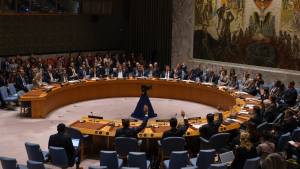
The United Nations Security Council (UNSC) is the UN’s primary body for maintaining international peace and security. Since its creation in 1945, its structure has changed little, even as global power dynamics, regional aspirations and conflict patterns have shifted sharply.
As a result, reform has become a long-running issue in UN diplomacy. The core debate is how to make the Council more representative, effective and legitimate without upsetting the Charter-based balance of power.
Constitutional Framework and Historical Background
- Article 108 of the UN Charter governs amendments to the Charter and requires approval by two-thirds of the 193 General Assembly members.
- Ratification requirement: Any amendment must also be ratified by two-thirds of UN member states, including all five permanent members.
- P5 members: The permanent and veto-wielding members are the United States, the United Kingdom, France, China and Russia.
- Historical precedent: The only structural reform to date came in 1965, when the number of non-permanent members was expanded from 6 to 10.
The Intergovernmental Negotiations (IGN) Framework
The main UN process for Security Council reform is the Intergovernmental Negotiations (IGN), conducted within the General Assembly. It brings member states together to discuss possible reforms, but no binding text has yet emerged from the process.
- Five core issues: The IGN focuses on categories of membership, the veto question, regional representation, Council size and working methods.
- Consensus challenge: States continue to disagree on whether reform should expand permanent membership, create longer-term elected seats or limit changes to working methods.
- Pact for the Future: Actions 39 and 40, adopted by consensus at the Summit of the Future on September 22, 2024, reaffirm member state commitment to reform the Council through the IGN process.
- Consolidated model: Member states have been urged to use the IGN framework to develop a more unified reform approach.
Key Reform Coalitions and Proposals
| Coalition | Key Members | Core Proposal |
| G4 Coalition | India, Japan, Germany, Brazil | Supports expansion of the Council to 26 seats with new permanent and non-permanent categories; backs the African Model. |
| L.69 Group | Developing countries from Asia, Africa and Latin America | Supports the African Model and expansion to 26 seats with new permanent and non-permanent categories. |
| African Union C-10 | Committee of Ten heads of state | Seeks the African Model: two permanent seats with veto power and five non-permanent seats for Africa; rejects intermediate models. |
| Uniting for Consensus (UfC) | Coordinated by Italy | Opposes new permanent, veto-holding seats; prefers more elected/non-permanent seats with longer terms and immediate re-election. |
The wide gap between these proposals has slowed progress. Regional rivalries and the need to reconcile competing models have made it difficult to produce an agreed reform package.
Major Obstacles to Reform
- P5 veto power: Any permanent member can block changes that reduce its exclusive authority, making Charter amendment highly difficult.
- Need for supermajority support: Reform requires not only broad General Assembly backing but also ratification by the permanent members.
- Regional rivalries: Competing claims within regions complicate consensus, including Pakistan’s opposition to India and Italy’s opposition to Germany.
- Divergent models: Some groups want new permanent seats, while others prefer only elected seats with longer terms.
- Negotiating text gap: The lack of a single consolidated reform text within the IGN has slowed negotiations for years.
Why the Debate Matters
The UNSC’s legitimacy is closely tied to whether it reflects today’s geopolitical realities. Supporters of reform argue that broader representation would improve the Council’s credibility and make it more responsive to developing regions.
- Representation: Expanding membership is seen as a way to better reflect Africa, Asia and Latin America.
- Legitimacy: A more balanced Council could strengthen acceptance of its decisions.
- Effectiveness: Reform advocates argue that updated membership could improve responsiveness to modern conflicts.
- Continuity problem: The present structure still reflects the post-1945 balance of power rather than current global influence.
Key Prelims Takeaways
- UNSC: The UN’s primary organ for maintaining international peace and security.
- Article 108: Charter amendments need two-thirds approval in the General Assembly and ratification by two-thirds of members, including all P5 states.
- P5: The permanent members are the United States, the United Kingdom, France, China and Russia.
- Only structural reform: In 1965, non-permanent seats were increased from 6 to 10.
- IGN: The main General Assembly framework for Security Council reform, built around five issues: membership categories, veto, regional representation, size and working methods.
- G4 and L.69: Both support expansion to 26 seats and back the African Model.
- UfC: Opposes new permanent seats and prefers expanded elected membership with longer terms.
| Related | |
|---|---|