Important International Organisations Working on Human Rights
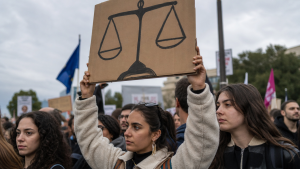
International human rights organisations form the core institutional framework for monitoring, documenting and responding to violations of fundamental freedoms. They include United Nations bodies, treaty-based courts and commissions, humanitarian agencies, and independent advocacy groups.
United Nations Human Rights Bodies
- United Nations Human Rights Council (UNHRC): The UNHRC is a key intergovernmental body within the UN system, headquartered in Geneva, Switzerland. It replaced the former UN Commission on Human Rights in 2006 under General Assembly Resolution 60/251.
- Membership and terms: The Council has 47 Member States serving staggered three-year terms. No member is eligible for immediate re-election after two consecutive terms.
- Universal Periodic Review (UPR): The UNHRC conducts the UPR, a cooperative state-driven process that reviews the human rights record of all 193 UN Member States once every four and a half years.
- Special Procedures: The Council also appoints independent experts and working groups to monitor thematic issues and country-specific situations.
- Office of the United Nations High Commissioner for Human Rights (OHCHR): Established in 1993 following the Vienna Declaration and Programme of Action, the OHCHR is the principal human rights office of the UN and functions as part of the UN Secretariat from Geneva.
- Role of OHCHR: It supports the UN human rights machinery, promotes universal human rights standards, and assists states in implementing their obligations.
International Judicial and Humanitarian Organs
- International Criminal Court (ICC): The ICC is a permanent judicial body established by the Rome Statute in 1998, which entered into force in 2002. It is headquartered in The Hague, Netherlands.
- Jurisdiction of ICC: The Court has jurisdiction over genocide, crimes against humanity, war crimes, and the crime of aggression.
- Assembly of States Parties: This is the management oversight and legislative body of the ICC, consisting of representatives of states that have ratified the Rome Statute.
- European Court of Human Rights (ECHR): Set up in 1959 under the European Convention on Human Rights, the ECHR is based in Strasbourg, France.
- Function of ECHR: It rules on individual or state applications alleging violations of civil and political rights protected by the Convention.
- Difference from ICJ: Unlike the International Court of Justice, which hears disputes between states, the ECHR allows individuals to file applications directly against member states of the Council of Europe.
Specialist Agencies and Humanitarian Movements
- United Nations High Commissioner for Refugees (UNHCR): Established in 1950 by the UN General Assembly, UNHCR is mandated to protect refugees, resolve refugee problems worldwide, and prevent statelessness.
- Headquarters and role: The agency is headquartered in Geneva, Switzerland, and leads international action on refugee protection and durable solutions.
- International Committee of the Red Cross (ICRC): Founded in 1863 in Geneva, the ICRC is an independent and neutral humanitarian organisation.
- Mandate under international law: It has a unique mandate under the Geneva Conventions of 1949 and their Additional Protocols to protect the lives and dignity of victims of international and non-international armed conflicts.
- Importance in armed conflict: The ICRC is explicitly named in international humanitarian law for specific protection and assistance tasks during conflicts.
Prominent Non-Governmental Organisations
- Amnesty International: Founded in London in 1961 by Peter Benenson, Amnesty International is a global movement campaigning for human rights.
- Work and reach: It is one of the largest human rights NGOs, documenting abuses and advocating for prisoners of conscience, fair trials, and broader civil liberties.
- Human Rights Watch (HRW): Founded in 1978 as Helsinki Watch to monitor Soviet compliance with the Helsinki Accords, HRW is an international non-governmental organisation headquartered in New York City.
- Role of HRW: It conducts investigations, publishes reports, and advocates against human rights violations worldwide.
- Independence of NGOs: Both Amnesty International and HRW follow funding and policy safeguards intended to preserve operational independence.
Important Exam Points on Institutions and Jurisdiction
- UNHRC composition: Seats are distributed on the basis of equitable geographical representation.
- Regional allocation: African States 13, Asia-Pacific States 13, Eastern European States 6, Latin American and Caribbean States 8, and Western European and Other States 7.
- Charter-based bodies: These include UN organs such as the UNHRC, which operate under the UN framework.
- Treaty-based bodies: These are created under specific human rights treaties, such as the Human Rights Committee under the International Covenant on Civil and Political Rights.
- ICC membership: Countries such as India, the United States, China, Russia and Israel are not members because they have not ratified the Rome Statute.
- Humanitarian mandate: The ICRC is central to international humanitarian law and operates differently from advocacy-based NGOs.
Key Prelims Takeaways
- UNHRC: The main UN intergovernmental body for human rights, with 47 members and a Universal Periodic Review mechanism.
- OHCHR: The UN’s principal human rights office, established in 1993 and based in Geneva.
- ICC: A permanent court for genocide, crimes against humanity, war crimes and aggression, created under the Rome Statute.
- ECHR: Allows individuals to petition directly against Council of Europe member states for Convention violations.
- UNHCR: The UN refugee agency responsible for refugee protection and prevention of statelessness.
- ICRC: A neutral humanitarian body with a special mandate under the Geneva Conventions.
- NGOs: Amnesty International and Human Rights Watch play a major role through reporting, advocacy and public pressure.
Current General Studies comprises current-affairs-based, General Studies-rich study material on policies, laws, institutions, economy, science, environment, governance, international relations, and other varied but important topics for UPSC and State PSC Prelims examinations.
Fortnightly PDF compilations: Available here
Originally written on
February 1, 2026
and last modified on
September 4, 2026.
| Related | |
|---|---|