Important Wetlands and Ramsar Sites in India
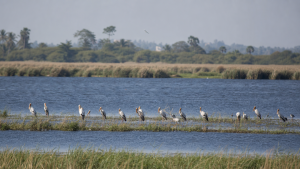
India’s wetland network is an important part of its biodiversity and water-security framework under the Ramsar Convention. These sites include lakes, rivers, mangroves, estuaries, deltas, swamps, peatlands and even man-made reservoirs that meet international criteria for ecological importance.
As of August 2026, India has 101 Ramsar Sites covering more than 1.38 million hectares, with recent additions further expanding the country’s protected wetland map.
India’s Ramsar Network: Basic Facts
- Ramsar Convention: Signed on February 2, 1971, in Ramsar, Iran.
- India became a party: February 1, 1982.
- Wetlands of International Importance: Sites identified on ecological, botanical, zoological, limnological or hydrological criteria.
- Wetland definition: Includes lakes, rivers, aquifers, swamps, wet grasslands, peatlands, oases, estuaries, deltas, tidal flats, mangroves, fish ponds and reservoirs.
- Total Ramsar sites in India: 101 as of August 2026.
- Total area covered: More than 1.38 million hectares.
State-Wise Distribution and Notable Extremes
- Highest number of sites: Tamil Nadu leads with 20 Ramsar Sites.
- Second-highest: Uttar Pradesh has 13 Ramsar Sites.
- Largest wetland area: West Bengal has the largest total Ramsar wetland area in India.
- Largest single Ramsar site: Sundarban Wetland in West Bengal, covering 423,000 hectares.
- Smallest Ramsar sites: Renuka Wetland in Himachal Pradesh and Vembannur Wetland Complex in Tamil Nadu, both 20 hectares.
Recent Additions to the Ramsar List
| Ramsar Site | State | Date of designation | Key feature |
| Glaw Lake | Arunachal Pradesh | August 3, 2026 | Freshwater lake in Kamlang Tiger Reserve |
| Jai Prakash Narayan Bird Sanctuary | Uttar Pradesh | June 5, 2026 | Oxbow lake in Ballia district |
| Shekha Jheel Bird Sanctuary | Uttar Pradesh | April 2026 | Managed wetland in Aligarh district |
| Chhari-Dhand Reserve | Gujarat | January 2026 | Seasonal wetland in Kutch district |
| Patna Bird Sanctuary | Uttar Pradesh | January 2026 | Protected bird sanctuary in Etah district |
- Glaw Lake: Located in Lohit district, it is Arunachal Pradesh’s first Ramsar site and lies inside Kamlang Tiger Reserve.
- Uttar Pradesh additions: Jai Prakash Narayan Bird Sanctuary and Shekha Jheel were among the new designations in 2026.
- 2025 additions: Eleven Ramsar Sites were added, including three in Rajasthan, three in Bihar, two in Tamil Nadu, and one each in Chhattisgarh, Sikkim and Jharkhand.
- Rajasthan sites in 2025: Siliserh Lake, Khichan and Menar.
- Bihar sites in 2025: Gogabeel Lake, Gokul Jalashay and Udaipur Jheel.
- Tamil Nadu sites in 2025: Sakkarakottai and Therthangal Bird Sanctuaries.
- Other 2025 additions: Kopra Jalashay in Chhattisgarh, Khecheopalri Wetland in Sikkim and Udhwa Lake Bird Sanctuary in Jharkhand.
Montreux Record and Wetland City Accreditation
- Montreux Record: A register of Ramsar sites where ecological change has occurred, is occurring or is likely to occur due to human interference.
- Indian sites on the record: Keoladeo National Park in Rajasthan and Loktak Lake in Manipur.
- Keoladeo: Added to the Montreux Record in 1990.
- Loktak: Added in 1993.
- Removed from the record: Chilika Lake in Odisha was removed in 2002.
- Wetland City Accreditation: In January 2025, Indore and Udaipur became the first two Indian cities to receive this accreditation under the Ramsar Convention.
- Indore: Accredited for Sirpur Lake.
- Udaipur: Accredited for Pichola, Fateh Sagar, Rang Sagar, Swaroop Sagar and Doodh Talai lakes.
Policy, Conservation and Regulatory Framework
- Administrative ministry: The Ministry of Environment, Forest and Climate Change oversees wetland policy and conservation.
- Amrit Dharohar Scheme: A three-year capacity-building initiative launched in June 2023.
- Focus of Amrit Dharohar: Promotion of alternative livelihoods, nature tourism and conservation across Indian Ramsar sites.
- MISHTI scheme: The Mangrove Initiative for Shoreline Habitats & Tangible Incomes was launched in 2023.
- MISHTI coverage: Operates across 11 states and 2 Union Territories.
- Andhra Pradesh achievement: In 2025-26, the state developed 2,047.70 hectares of mangrove plantations under MISHTI using the Fish Bone Technique.
- Wetlands Rules: Wetlands in India are governed by the Wetlands (Conservation and Management) Rules, 2017, under the Environment (Protection) Act, 1986.
- Prohibited activities: Reclamation, setting up new industries, dumping solid waste and discharge of untreated waste.
- Wetland authorities: State Wetland Authorities and Union Territory Wetland Authorities are to be constituted for monitoring and management.
- Apex advisory body: The National Wetland Committee replaced the earlier Central Wetlands Regulatory Authority under the 2017 rules.
Key Prelims Takeaways
- Tamil Nadu has the highest number of Ramsar Sites in India.
- Uttar Pradesh ranks second in the number of Ramsar Sites.
- Sundarban Wetland in West Bengal is India’s largest Ramsar site.
- Renuka Wetland and Vembannur Wetland Complex are the smallest Ramsar sites in India, each spread over 20 hectares.
- Glaw Lake is Arunachal Pradesh’s first Ramsar site.
- Keoladeo National Park and Loktak Lake are the only Indian sites on the Montreux Record.
- Indore and Udaipur were the first Indian cities to get Wetland City Accreditation.
Current General Studies comprises current-affairs-based, General Studies-rich study material on policies, laws, institutions, economy, science, environment, governance, international relations, and other varied but important topics for UPSC and State PSC Prelims examinations.
Fortnightly PDF compilations: Available here
Originally written on
March 16, 2026
and last modified on
September 5, 2026.
| Related | |
|---|---|