India’s Contributions to UN Peacekeeping Operations
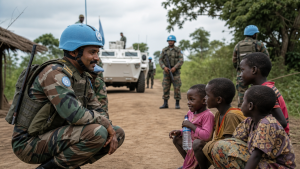
India has been one of the most consistent and trusted contributors to United Nations peacekeeping operations. Since joining UN peacekeeping in 1948, it has provided military, police and specialized personnel to missions across several continents, often in difficult and high-risk environments.
Its contribution is significant not only in numbers but also in leadership, training, gender inclusion and operational professionalism. Indian peacekeepers have served in some of the UN’s most complex theatres, earning a strong reputation for discipline and public engagement.
Historical Scale and Legacy
- Cumulative deployment: Since 1948, India has deployed over 300,000 military and police personnel to more than 50 international missions.
- High sacrifice: Indian peacekeepers have suffered 184 fatalities while serving under the UN flag, the highest among troop-contributing countries.
- Wide operational footprint: Indian contingents have served in the Gaza Strip, Cyprus, Congo, Cambodia, Somalia, Rwanda and Sierra Leone.
- Reputation in the field: Indian troops are known for operational discipline, resilience and community-level engagement in conflict zones.
- Leadership roles: India has also provided Force Commanders, Military Advisors and Police Advisors to UN missions.
- Prominent commander: Lt Gen Satish Nambiar served as Force Commander of the UN Protection Force (UNPROFOR) in the former Yugoslavia.
Current Deployment and Mission Profile
- Large active presence: India remains among the largest contributors of uniformed personnel to UN peacekeeping, with over 4,200 military and police personnel deployed across nine active missions.
- Major theatres: Indian personnel are deployed in the Democratic Republic of Congo (MONUSCO), South Sudan (UNMISS), Lebanon (UNIFIL) and Abyei (UNISFA).
- High-risk assignments: These missions often involve civilian protection, support to humanitarian access and assistance to local authorities in stabilizing volatile regions.
- Specialized capabilities: India contributes Level-II field hospitals, engineering units for infrastructure restoration and aviation assets for logistics and medical evacuation.
- Field impact: In MONUSCO and UNMISS, Indian peacekeepers support protection of civilians and help maintain stability in conflict-affected areas.
Role in Gender Parity and Female Peacekeepers
- First all-female FPU: In 2007, India became the first country to deploy an all-female Formed Police Unit to a UN peacekeeping mission in Liberia (UNMIL).
- Law-and-order role: The deployment helped restore confidence, strengthen policing and improve local outreach in the mission area.
- UN gender targets: The UN Gender Parity Strategy aims for 15% women in troop contingents and 25% in staff officer and military observer posts by 2028.
- India’s progress: India has achieved a 22% deployment rate for women among its staff officers and military observers.
- Female Engagement Team: A new Female Engagement Team was prepared for deployment to UNISFA in Abyei to assist with community outreach and local security.
Training Infrastructure and Capacity Building
- CUNPK: The Centre for United Nations Peacekeeping, established in 2000 in New Delhi, is India’s nodal training agency for peacekeepers.
- Training role: It provides pre-deployment training to Indian and foreign peacekeepers and familiarizes them with UN standards and procedures.
- Training reach: CUNPK has trained around 10,000 Indian peacekeepers and over 2,000 international peacekeepers from 98 countries.
- Women-focused training: In August 2026, CUNPK conducted the ASEAN-UN Women Military Officers Course in New Delhi.
- Global South outreach: In February 2025, it hosted the Conference on Women Peacekeepers from the Global South, with participants from 35 nations.
- Capacity building: These initiatives underline India’s role in promoting standard operating procedures and professional preparedness.
Important UN Peacekeeping Facts
| First UN peacekeeping participation | 1948 |
| Cumulative Indian deployment | Over 300,000 personnel across more than 50 missions |
| Indian fatalities | 184, the highest among troop-contributing countries |
| CUNPK location | New Delhi |
| CUNPK established | 2000 |
| First all-female FPU | Liberia (UNMIL), 2007 |
Key Prelims Takeaways
- India joined UN peacekeeping in 1948.
- India has deployed over 300,000 military and police personnel in UN missions.
- Indian peacekeepers have suffered 184 fatalities, the highest among troop contributors.
- Major Indian deployments are in MONUSCO, UNMISS, UNIFIL and UNISFA.
- India deployed the first all-female FPU to UNMIL in Liberia in 2007.
- CUNPK was established in 2000 in New Delhi.
- India also contributes field hospitals, engineering units and aviation support to UN missions.
Current General Studies comprises current-affairs-based, General Studies-rich study material on policies, laws, institutions, economy, science, environment, governance, international relations, and other varied but important topics for UPSC and State PSC Prelims examinations.
Fortnightly PDF compilations: Available here
Originally written on
March 16, 2026
and last modified on
September 5, 2026.
| Related | |
|---|---|