Constitutional Safeguards for Scheduled Tribes
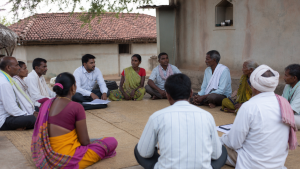
The Constitution of India provides a broad framework of safeguards for Scheduled Tribes (STs) to protect their social, economic, political, and cultural rights. These provisions aim to address historical disadvantage, prevent exploitation, and promote self-governance and development in tribal areas.
Constitutional Definitions and Status
- Article 366(25): Defines Scheduled Tribes as the tribal communities specified under Article 342 by the President of India.
- Article 342: Empowers the President to specify tribes or tribal communities in each State and Union Territory, subject to later modification by Parliament.
- Population share: STs constituted about 8.6% of India’s population as per the 2011 Census.
- National Commission for Scheduled Tribes (NCST): A constitutional body under Article 338A, created by the Constitution (89th Amendment) Act, 2003, which came into force on February 19, 2004.
Key Constitutional Safeguards
- Article 15(4): Allows special provisions for the advancement of socially and educationally backward classes or Scheduled Tribes.
- Article 16(4): Provides for reservation in appointments or posts in favour of any backward class of citizens.
- Article 46: Directs the State to promote the educational and economic interests of STs and protect them from social injustice and exploitation.
- Article 244(1): Applies the Fifth Schedule for the administration and control of Scheduled Areas and Scheduled Tribes.
- Article 244(2): Applies the Sixth Schedule for tribal areas in Assam, Meghalaya, Tripura, and Mizoram.
- Article 330: Reserves seats for Scheduled Tribes in the Lok Sabha.
- Article 332: Reserves seats for Scheduled Tribes in State Legislative Assemblies.
- Article 335: Protects the claims of SCs and STs to services and posts, subject to administrative efficiency.
Institutions and Administrative Framework
- Ministry of Tribal Affairs: The nodal ministry for policy formulation, planning, and coordination of programmes for Scheduled Tribes.
- NCST: Investigates matters relating to constitutional safeguards, inquires into specific complaints, and participates in development planning.
- Powers of NCST: It is vested with powers of a civil court for inquiry and related functions.
- Official leadership: Jual Oram is the Union Minister of Tribal Affairs, Durga Das Uikey is the Minister of State, and Ranjana Chopra is the Secretary.
- NCST Chairperson: Antar Singh Arya serves as the Chairperson of the National Commission for Scheduled Tribes.
Welfare Schemes for Tribal Development
- PM-JANMAN: Pradhan Mantri Janjati Adivasi Nyaya Maha Abhiyan is being implemented from FY 2023-24 to FY 2025-26.
- Objective of PM-JANMAN: It seeks to improve the socio-economic conditions of 75 Particularly Vulnerable Tribal Groups (PVTGs).
- Budget of PM-JANMAN: The scheme has an outlay of ₹24,104 crore, including ₹15,336 crore Central share and ₹8,768 crore State share.
- Housing under PM-JANMAN: As of December 31, 2025, 4,73,939 pucca houses were sanctioned and about 2.5 lakh houses were completed.
- DAJGUA: Dharti Aaba Janjatiya Gram Utkarsh Abhiyan is being implemented from FY 2024-25 to FY 2028-29.
- Objective of DAJGUA: It aims to saturate basic infrastructure gaps across 63,843 tribal-majority villages.
- Budget of DAJGUA: The scheme has an outlay of ₹79,156 crore, including ₹56,333 crore Central share and ₹22,823 crore State share.
Judicial Developments on Reservation
- State of Punjab v. Davinder Singh: On August 1, 2024, a seven-judge Constitution Bench of the Supreme Court ruled 6:1 that sub-classification within Scheduled Castes and Scheduled Tribes is permissible for reservation benefits.
- Overruling of E.V. Chinnaiah: The ruling overruled the 2004 judgment in E.V. Chinnaiah.
- Creamy layer principle: The majority verdict endorsed applying the creamy layer principle to SC and ST categories, allowing exclusion of relatively affluent or socially advanced members.
- Later direction: In February 2026, the Supreme Court directed the Union Government to file an Action Taken Report on implementation of the August 1, 2024 judgment.
- Government stand: In August 2026, the Union of India filed an affidavit opposing income-based sub-classification of SCs, STs, and OBCs, stating that reservations rest on historical and social backwardness, not only economic criteria.
Key Prelims Takeaways
- Definition: Article 366(25) defines Scheduled Tribes; Article 342 provides the presidential notification process.
- NCST: Created under Article 338A by the 89th Amendment Act, 2003, and came into force on February 19, 2004.
- Core safeguards: Articles 15(4), 16(4), 46, 244, 330, 332, and 335 are especially important for ST-related revision.
- Institutions: The Ministry of Tribal Affairs is the nodal ministry, while NCST monitors safeguards and complaints.
- PM-JANMAN: Targets 75 PVTGs with an outlay of ₹24,104 crore during FY 2023-24 to FY 2025-26.
- DAJGUA: A five-year saturation mission for tribal-majority villages with an outlay of ₹79,156 crore.
- Judicial trend: The Supreme Court has permitted sub-classification within SCs and STs for reservation benefits.
Current General Studies comprises current-affairs-based, General Studies-rich study material on policies, laws, institutions, economy, science, environment, governance, international relations, and other varied but important topics for UPSC and State PSC Prelims examinations.
Fortnightly PDF compilations: Available here
Originally written on
January 10, 2026
and last modified on
September 4, 2026.
| Related | |
|---|---|