Textile and Apparel Sector Schemes
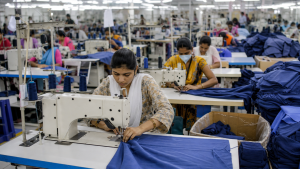
The textile and apparel sector is one of India’s largest employment generators and a major contributor to export earnings. To strengthen the value chain from cotton to garments, the Government of India has launched targeted schemes for infrastructure, productivity, skilling, research, and market-linked manufacturing.
Pradhan Mantri MITRA Parks Scheme
The Pradhan Mantri Mega Integrated Textile Region and Apparel (PM MITRA) Parks Scheme is designed to create world-class, integrated industrial infrastructure for textiles. It aims to improve scale, reduce logistics costs, and attract large investments across the textile value chain.
- Financial outlay: The scheme has a total outlay of ₹4,445 crore for seven years, up to FY 2027–28.
- Seven sites: Parks are being developed at Virudhunagar (Tamil Nadu), Warangal (Telangana), Navsari (Gujarat), Kalaburagi (Karnataka), Dhar (Madhya Pradesh), Lucknow (Uttar Pradesh), and Amravati (Maharashtra).
- Development capital support: The Centre provides 30% of the project cost, capped at ₹500 crore for Greenfield parks and ₹300 crore for Brownfield parks.
- Investment progress: MoUs with expected potential of over ₹27,434 crore have been signed, while state governments have begun infrastructure works worth ₹2,590.99 crore.
Production Linked Incentive (PLI) Scheme for Textiles
The PLI Scheme for Textiles promotes domestic production of high-value man-made fibre (MMF) apparel, MMF fabrics, and technical textiles. The scheme is intended to help Indian manufacturers scale up and become more globally competitive.
- Budget outlay: The scheme has a planned budget outlay of ₹10,683 crore.
- Revised framework: The revised PLI framework expanded the eligible product list by adding 8 new HSN codes for MMF apparel and 9 new HSN codes for MMF fabrics.
- Project flexibility: It also allows project units to be set up within existing companies.
- Application window: The submission deadline was extended to March 31, 2026.
- Participation: By June 10, 2026, 96 companies had been approved under the third round of the scheme.
- Expected impact: The approved companies represented a committed investment of ₹12,822.67 crore and an estimated turnover of ₹58,294.18 crore.
Cotton Productivity Mission (Kapas Kanti)
The Cotton Productivity Mission, also known as Kapas Kanti, seeks to improve cotton productivity, strengthen raw material availability, and support India’s position in global cotton production.
- Outlay: The mission has an approved outlay of ₹5,659.22 crore.
- Period: It will be implemented over five years, from 2026–27 to 2030–31.
- Nodal department: The Department of Agricultural Research and Education (DARE) is the nodal department.
- Role of Ministry of Textiles: The Ministry of Textiles will implement Component II (Production Upscaling) and Component III (Post-Harvest and Textile Linkages/New Age Fibres).
- Coverage: The mission aims to benefit about 32 lakh farmers across 140 districts in 14 cotton-producing states.
- Output target: It aims to raise average productivity and achieve a national lint output of 498 lakh bales by 2031.
Tex-RAMPS and SAMARTH Initiatives
These initiatives focus on research, planning, monitoring, data systems, and skill development across the textile value chain. Together, they address both institutional capacity and workforce quality.
- Tex-RAMPS: The Textiles Focused Research, Assessment, Monitoring, Planning and Start-Up (Tex-RAMPS) Scheme is a 100% centrally funded initiative with an outlay of ₹305 crore.
- Implementation period: It is being implemented from FY 2025–26 to FY 2030–31.
- Decentralised support: The scheme provides grants of ₹12 lakh per year to each State/UT and ₹1 lakh per year per district for district-level action plans.
- SAMARTH: The skilling scheme is valid up to March 31, 2026.
- Training achievement: SAMARTH has trained and certified 6.17 lakh beneficiaries since its launch in 2017.
- Placement record: The scheme has placed 5.17 lakh individuals.
Integrated Programme for Textile Sector
Announced in the Union Budget 2026–27, this programme brings several textile development efforts under a common framework. It is meant to support employment, sustainability, handloom promotion, and advanced skilling.
- Five sub-schemes: National Fibre Scheme, Textile Expansion and Employment Scheme, National Handloom and Handicraft programme, Tex-Eco Initiative, and Samarth 2.0.
- Main focus: The programme addresses eco-friendly manufacturing, handloom preservation, employment generation, and skill upgradation.
Key Prelims Takeaways
- PM MITRA: ₹4,445 crore outlay; seven parks; implementation up to FY 2027–28.
- PM MITRA locations: Virudhunagar, Warangal, Navsari, Kalaburagi, Dhar, Lucknow, and Amravati.
- PM MITRA support: 30% central Development Capital Support, capped at ₹500 crore for Greenfield and ₹300 crore for Brownfield parks.
- PLI Textiles: ₹10,683 crore outlay; focused on MMF apparel, MMF fabrics, and technical textiles.
- PLI expansion: The revised framework added 8 HSN codes for MMF apparel and 9 HSN codes for MMF fabrics.
- Kapas Kanti: ₹5,659.22 crore mission for 2026–27 to 2030–31; nodal department is DARE.
- Tex-RAMPS: ₹305 crore, 100% centrally funded, with grants of ₹12 lakh per State/UT and ₹1 lakh per district.
| Related | |
|---|---|