Regulations on Commercial Communications in India
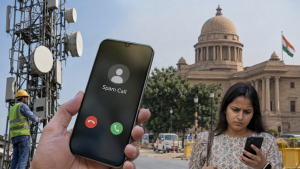
Commercial communication rules balance legitimate business and service-related calls with protection from unsolicited commercial communication (UCC). TRAI’s framework combines customer preferences, registered communication channels and designated number series to improve transparency and limit spam and impersonation.
Regulatory Framework and Institutions
The regulatory roles in telecommunications are divided between the Central Government, TRAI and the Department of Telecommunications (DoT). This distinction is important: TRAI regulates services and commercial communications, while telecom licensing remains a Central Government function.
- TRAI: Established under the Telecom Regulatory Authority of India Act, 1997, it regulates telecommunications, including tariffs, quality of service and commercial communications.
- Telecom licensing: Licensing is a Central Government responsibility and is separate from TRAI’s regulatory role.
- Numbering resources: The National Numbering Plan, 2003, provides the framework for allocating telephone numbers. DoT administers India’s numbering resources.
Customer Preferences and the TCCCPR, 2018
TRAI’s Telecom Commercial Communications Customer Preference Regulations, 2018 (TCCCPR, 2018), provide the main framework for controlling UCC and managing customer consent. The rules place obligations on access providers and create processes for registering commercial communication participants and recording customer preferences.
- Distributed-ledger systems: Access providers use distributed-ledger technology (DLT) platforms to register telemarketers and principal entities involved in commercial communications.
- Consent management: The platforms manage customer consent for receiving commercial communications. Customers can specify the types of communication they wish to receive or block.
- Communication preferences: Customers can also set preferences about the times at which they wish to receive communications.
Consent management links commercial communication to customer choice. In practice, privacy and consent depend on preferences being recorded and applied appropriately. The framework is intended to curb unwanted calls while allowing legitimate transactional and service-related communications; it does not treat every business call as promotional.
2026 Amendment and Regulatory Focus
The Telecom Commercial Communications Customer Preference (Third Amendment) Regulations, 2026, were issued on September 18, 2026. The amendment further strengthened the framework against UCC and addressed Application-to-Person (A2P) calls.
- Regulatory objective: Strengthen controls against unsolicited communications and improve the management of consent.
- Implementation focus: Effective compliance depends on access providers and participating entities applying registration, consent and communication requirements across their operations.
The rules address spam regulation through controls on who may send communications and how customer preferences are managed. Their effectiveness also depends on implementation: registration and preference systems must be used consistently, while customers need meaningful control over the communications they receive.
Special Numbering Series
Designated number series help distinguish regulated commercial and government communications from other calls. The series include 140xx, 1600xx and 1601xx. Calls originating from these series will not be flagged as suspected spam by AI/ML-based detection systems, helping service and transactional calls reach customers.
- Purpose: The numbering arrangements support identification of regulated commercial and government communications.
- 1601-series: This series is being used for service and transactional voice calls and is not permitted for promotional voice calls.
- Consumer protection: Dedicated numbering is intended to help consumers recognise legitimate calls and reduce fraud or impersonation using ordinary 10-digit numbers.
Phased Expansion of the 1601-Series
The 1601-series is being rolled out in phases to cover entities making service and transactional voice calls. Phase I commenced in August 2026 and covered utility providers and logistics-related businesses.
- Phase I sectors: Electricity distribution companies, water utilities, city gas distribution companies, LPG distributors and other utility providers were included. The phase also covered courier, express logistics, parcel delivery, freight and logistics companies.
- Phase II sectors: Announced by TRAI on November 27, 2026, the expansion covers retail chains, e-commerce, hospitals, diagnostic laboratories, telecom and internet service providers, automobile sales and servicing, travel agencies and commercial airlines.
- Other Phase II sectors: Food aggregators, ride-hailing aggregators and lending service providers are also included.
- Eligibility: A company must be registered in India under applicable law and have annual turnover of at least Rs 500 crore in one of the preceding three financial years. Distribution Platform Operators (DPOs)—including DTH, HITS, IPTV and MSOs—qualify with at least one million subscribers in any month of the preceding 12 months.
- Use and deadline: The numbers cannot be used for promotional voice calls. Telecom access providers must complete onboarding and migration of eligible entities within 180 days of the November 27, 2026, directive.
Key Prelims Takeaways
- TRAI was established under the Telecom Regulatory Authority of India Act, 1997.
- The Central Government handles telecom licensing; TRAI regulates telecom services.
- DoT administers numbering resources under the National Numbering Plan, 2003.
- TCCCPR, 2018, provides for DLT-based registration and customer consent management.
- The 2026 Third Amendment addresses UCC and A2P calls.
- The 1601-series is for service and transactional calls, not promotional calls; Phase II eligibility includes turnover and subscriber thresholds.
Recent Context
On November 27, 2026, TRAI extended the 1601-series to additional sectors under Phase II. The directive sets eligibility conditions and gives telecom access providers 180 days to complete onboarding and migration, supporting consumer identification of legitimate service and transactional calls.
| Related | |
|---|---|