Major Emerging Aviation Technologies
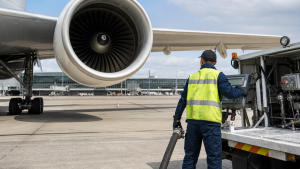
The aviation sector is moving rapidly toward cleaner propulsion, smarter operations, and faster air travel through a mix of sustainable fuels, hydrogen, electric systems, AI, and advanced aerodynamics.
Sustainable Aviation Fuels (SAF)
Sustainable Aviation Fuel is the most immediate way to reduce the carbon footprint of air travel without replacing existing airport infrastructure.
- Origin and Composition: SAF is produced from renewable resources such as municipal solid waste, agricultural residues, used cooking oils, and woody biomass. It is a drop-in fuel and can be blended with conventional Jet A-1 fuel for use in existing aircraft engines.
- Production Pathways: The two main production routes are Hydroprocessed Esters and Fatty Acids (HEFA) and the Fischer-Tropsch (FT) synthetic pathway.
- Synthetic E-Fuels: These are produced by capturing carbon dioxide directly from the atmosphere and combining it with green hydrogen derived from water electrolysis. E-fuels offer a closed-loop carbon cycle.
- Global Targets: Under frameworks like the Carbon Offsetting and Reduction Scheme for International Aviation (CORSIA), international aviation bodies aim to increase SAF usage. Many carriers have committed to a 10% blend by 2030, with a long-term goal of carbon neutrality by 2050.
Hydrogen-Powered Flight
Hydrogen offers high energy density by mass, making it a promising alternative to fossil fuels for medium- and long-haul flights.
Hydrogen Fuel Cells vs. Direct Combustion
- Hydrogen Fuel Cells: These systems combine hydrogen with oxygen to generate electricity, which then powers electric motors. The process produces only water vapor as a byproduct. Companies like ZeroAvia are testing hydrogen-electric powertrains, such as the ZA600, for regional aircraft.
- Direct Hydrogen Combustion: This involves burning liquid hydrogen directly in modified gas turbine engines. Airbus is exploring this technology through its ZEROe concept, aiming to bring a commercial zero-emission passenger aircraft to market by 2035.
Technological Challenges of Hydrogen
- Volumetric Storage: Although hydrogen has high energy density by mass, its volumetric energy density is low. It requires about four times the storage volume of jet fuel.
- Cryogenic Infrastructure: Hydrogen must be stored as a liquid at extremely low temperatures (-253°C). This requires heavy, insulated cryogenic tanks and completely new airport fueling networks.
Electric and Hybrid-Electric Propulsion
Electric propulsion is transforming short-haul flights and urban air transport by lowering operating costs and reducing localized emissions.
- Battery-Electric Aircraft: Fully electric aircraft rely entirely on lithium-ion batteries. Due to battery weight constraints, these designs currently target flight ranges under 200 miles. An example is the Pipistrel Velis Electro, the world’s first certified all-electric aircraft.
- Hybrid-Electric Systems: These systems pair traditional combustion engines with electric motors. The conventional engine handles peak power demands during takeoff, while electric power is used during cruise phases, saving up to 25% on fuel.
- Advanced Air Mobility (AAM): This domain focuses on Electric Vertical Takeoff and Landing (eVTOL) aircraft designed to bypass urban road congestion. Major players like Joby Aviation, Archer Aviation, and Lilium are preparing for commercial passenger operations. Startups in emerging economies, such as India’s BluJ Aerospace with its VANTIS prototype, are also developing regional cargo and passenger eVTOL networks.
Artificial Intelligence and Autonomous Flight
Artificial intelligence is moving from experimental applications into core flight operations, predictive logistics, and air traffic management.
- AI-Powered Predictive Maintenance: Machine learning models analyze real-time data from aircraft sensors measuring engine temperature, vibration, and pressure. These models can flag mechanical anomalies weeks before failure, reducing unscheduled aircraft downtime by over 30%.
- Autonomous Cargo Drones: Unmanned Aerial Vehicles (UAVs) are carrying out point-to-point cargo deliveries. Regulators like the US Federal Aviation Administration (FAA) have introduced rules allowing Beyond Visual Line of Sight (BVLOS) drone flights without individual waivers, speeding up logistics integration.
- Single-Pilot Operations: Aerospace firms are testing automated flight decks where AI acts as a co-pilot, managing routine flight monitoring and allowing a single human pilot to safely fly commercial cargo or regional passenger routes.
Supersonic and Hypersonic Flight
The quest for speed is leading to the redevelopment of supersonic transport and the exploration of hypersonic systems.
- Boom Supersonic Overture: Aiming to fly at Mach 1.7, this commercial airliner project targets sustainable supersonic flight by using 100% SAF and advanced composite materials to reduce weight and fuel consumption.
- NASA X-59 QueSST: The Quiet SuperSonic Technology experimental aircraft is testing aerodynamic designs to reduce the loud sonic boom into a quieter sonic thump. Successful trials could lead to regulators lifting bans on supersonic flight over land.
- Hypersonic Transport: Flying at speeds exceeding Mach 5, hypersonic travel uses scramjet (supersonic combustion ramjet) technology. While currently restricted to military and experimental defense applications, it represents the future of ultra-rapid intercontinental transit.
Digital Twins and Smart Maintenance
A digital twin is a virtual, real-time replica of a physical aircraft or its subcomponents.
- Operational Monitoring: Jet engine manufacturers, including Rolls-Royce and Pratt & Whitney, run digital twins alongside actual flight operations. Operational data from aircraft engines is streamed directly to these virtual models.
- Simulation and Wear Analysis: Engineers use digital twins to simulate complex environmental stressors, predict wear and tear, and plan component replacements with high accuracy. This reduces unnecessary maintenance cycles and prolongs the lifespan of critical parts.
Advanced Materials and Aerodynamics
Innovative materials are reducing structural weight, allowing aircraft to carry more fuel, batteries, or passengers.
- Carbon Fiber Composites: Modern airframes like the Boeing 787 and Airbus A350 use over 50% carbon fiber composites. These materials are lighter and stronger than aluminum, offering superior resistance to corrosion and fatigue.
- Laminar Flow Designs: Aircraft such as the Otto Celera use aerodynamic shapes designed to maximize laminar (smooth) airflow over the fuselage. Minimizing drag can reduce fuel burn by up to 60% compared to traditional aircraft of similar size.
Comparative Summary of Emerging Aviation Technologies
| Technology | Key Propulsion/Mechanism | Current Status | Primary Benefits | Key Challenges |
| Sustainable Aviation Fuel (SAF) | Biofuels (HEFA, FT) and synthetic e-fuels | Active blending (approx. 0.5% globally) | Fits existing engines; cuts emissions up to 80% | High production costs; limited feedstock scalability |
| Hydrogen Propulsion | Fuel cells (electric) and direct combustion | Prototyping and flight testing | Zero carbon emissions; high mass energy density | Volumetric storage; requires cryogenic infrastructure (-253°C) |
| Electric & Hybrid Systems | Lithium-ion batteries and electric motors | Regional flight testing; eVTOL certification | Low fuel costs; zero operational emissions | Low battery energy density; heavy weight |
| Artificial Intelligence (AI) | Machine learning models and sensor networks | Active commercial implementation | Reduces unscheduled downtime; optimizes flight routes | Regulatory certification; cybersecurity vulnerabilities |
| Supersonic Transport | Aerodynamic noise reduction and scramjets | Prototyping (Boom Overture, NASA X-59) | Drastically reduces travel time across oceans | Sonic boom restrictions over land; high fuel consumption |
| Digital Twins | Virtual real-time engine replicas | Mainstream adoption by major OEMs | Pre-empts equipment failure; extends part life | High computational cost; complex data integration |
Rare Facts for Prelims
- SAF Compatibility: Many SAF blends can be used in current aircraft without engine modification because they are designed as drop-in fuels.
- Hydrogen Storage: Liquid hydrogen must be kept at about -253°C, which is only a few degrees above absolute zero.
- eVTOL Design: Most eVTOL aircraft use multiple small rotors or fans to provide redundancy in vertical lift.
- Digital Twin Use: Digital twins are not limited to aircraft; they are also widely used in jet engines, airport systems, and manufacturing lines.
- Laminar Flow Advantage: Even small reductions in drag can significantly improve fuel efficiency over long flight durations.
- Hypersonic Threshold: Hypersonic flight begins at speeds above Mach 5, which is five times the speed of sound.
| Related | |
|---|---|