Important Nuclear Institutions and Regulatory Bodies in India
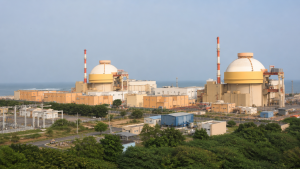
India’s nuclear sector is organized through a clear framework of policy, regulation, research, industry, and public sector execution under the Department of Atomic Energy (DAE).
Administrative and Policy Oversight
Department of Atomic Energy (DAE)
- Establishment: August 3, 1954, through a Presidential Order.
- Headquarters: Mumbai, Maharashtra.
- Administrative Control: Functions directly under the Prime Minister of India.
- Mandate: Responsible for developing nuclear power technology, including uranium exploration, mining, processing, fuel fabrication, heavy water production, and construction of nuclear power reactors.
- Applications: Develops non-power applications of radiation and isotope technologies for agriculture, healthcare, and industry.
Atomic Energy Commission (AEC)
- Establishment: First constituted in August 1948 under the Department of Scientific Research; reconstituted in March 1958 under the DAE.
- Headquarters: Mumbai, Maharashtra.
- Leadership: The Secretary to the Government of India in the Department of Atomic Energy serves as the ex-officio Chairman.
- Mandate: Apex policy-making body for nuclear programmes in India; formulates policy, sanctions budgets, and coordinates implementation.
Regulatory and Safety Oversight
Atomic Energy Regulatory Board (AERB)
- Establishment: Constituted on November 15, 1983, by the President of India.
- Legal Authority: Derives regulatory power from Section 27 of the Atomic Energy Act, 1962, and the Environment (Protection) Act, 1986.
- Headquarters: Mumbai, Maharashtra.
- Mandate: Ensures that the use of ionizing radiation and nuclear energy does not pose undue risk to health and the environment.
- Key Functions:
- Develops safety codes, guides, and standards for siting, design, construction, commissioning, and decommissioning of nuclear facilities.
- Grants licenses and authorizations for nuclear and radiation facilities after multi-tier safety reviews.
- Prescribes radiation exposure limits for occupational workers and the public.
- Monitors compliance and enforces safety regulations across civilian nuclear installations.
Premier Research and Development Centres
Bhabha Atomic Research Centre (BARC)
- Establishment: Founded in January 1954 as the Atomic Energy Establishment, Trombay (AEET); renamed BARC in 1966 in honour of Dr. Homi Jehangir Bhabha.
- Headquarters: Trombay, Mumbai, Maharashtra.
- Mandate: Premier multidisciplinary nuclear research facility in India.
- Key Focus Areas:
- Reactor design, fuel cycle development, risk analysis, and nuclear waste management.
- Production of radioisotopes for agricultural, medical, and industrial use.
- Operation of research reactors and design of advanced reactors such as the Advanced Heavy Water Reactor.
Indira Gandhi Centre for Atomic Research (IGCAR)
- Establishment: Established on April 30, 1971, as the Reactor Research Centre; renamed IGCAR in December 1985.
- Headquarters: Kalpakkam, Tamil Nadu.
- Mandate: Focuses on the second stage of India’s nuclear power programme.
- Key Focus Areas:
- Design and development of sodium-cooled Fast Breeder Reactor technology.
- Operation of the Fast Breeder Test Reactor.
- Support for the Prototype Fast Breeder Reactor.
Raja Ramanna Centre for Advanced Technology (RRCAT)
- Establishment: Foundation stone laid in February 1984; scientific activities began in 1986.
- Headquarters: Indore, Madhya Pradesh.
- Mandate: Concentrates on non-reactor research areas.
- Key Focus Areas:
- Advanced lasers, accelerators, and synchrotron radiation sources.
- Technology for industrial and medical laser applications.
Variable Energy Cyclotron Centre (VECC)
- Headquarters: Kolkata, West Bengal.
- Mandate: Key national laboratory for accelerator-based research.
- Key Focus Areas:
- Basic and applied research in nuclear science.
- Development of cyclotron systems and accelerator technologies.
- Production of medical radioisotopes in collaboration with industrial boards.
Atomic Minerals Directorate for Exploration and Research (AMD)
- Headquarters: Hyderabad, Telangana.
- Mandate: Identifies mineral resources necessary for the nuclear power programme.
- Key Focus Areas:
- Geological surveys and exploration for uranium, thorium, zirconium, niobium, tantalum, and rare earth elements.
- Resource evaluation and mapping of atomic minerals across India.
Global Centre for Nuclear Energy Partnership (GCNEP)
- Establishment: Approved in September 2010.
- Headquarters: Bahadurgarh, Jhajjar district, Haryana.
- Mandate: Facilitates international collaboration in civil nuclear energy.
- Key Focus Areas:
- Five specialized schools on advanced nuclear energy systems, nuclear security, radiological safety, material characterization, and applications of radioisotopes.
- Collaboration with international bodies, including the International Atomic Energy Agency.
Industrial and Mineral Sector Organisations
Nuclear Fuel Complex (NFC)
- Establishment: Founded in 1971.
- Headquarters: Hyderabad, Telangana.
- Mandate: Integrated fuel manufacturing facility.
- Key Functions:
- Processes uranium concentrates and zirconium sand.
- Fabricates fuel assemblies and structural components for Pressurised Heavy Water Reactors and Boiling Water Reactors.
- Operates a secondary manufacturing facility in Kota, Rajasthan.
Heavy Water Board (HWB)
- Headquarters: Mumbai, Maharashtra.
- Mandate: Manages the production of heavy water.
- Key Functions:
- Designs, builds, and operates Heavy Water Plants across the country, including Manuguru, Kota, Thal, and Hazira.
- Heavy water serves as a moderator and coolant in Indian pressurised heavy water reactors.
- Produces stable isotopes such as Oxygen-18 for medical diagnostics.
Board of Radiation and Isotope Technology (BRIT)
- Headquarters: Mumbai, Maharashtra.
- Mandate: Commercializes radiation and radioisotope technologies.
- Key Functions:
- Produces and supplies radiopharmaceuticals, labeled compounds, and gamma radiography equipment.
- Supports healthcare facilities with cancer diagnostic and therapeutic isotopes.
- Offers radiation processing services for food preservation and sterilization of medical products.
Public Sector Undertakings Under DAE
Nuclear Power Corporation of India Limited (NPCIL)
- Establishment: Incorporated in September 1987 under the Companies Act, 1956.
- Headquarters: Mumbai, Maharashtra.
- Mandate: Responsible for the commercial operation and maintenance of nuclear power stations.
- Key Functions:
- Designs, constructs, and commissions commercial nuclear power plants.
- Operates Pressurised Heavy Water Reactors, Boiling Water Reactors, and Light Water Reactors in India.
Bharatiya Nabhikiya Vidyut Nigam Limited (BHAVINI)
- Establishment: Incorporated on October 22, 2003.
- Headquarters: Kalpakkam, Tamil Nadu.
- Mandate: Government-owned enterprise focused on fast breeder reactors.
- Key Functions:
- Handles construction, commissioning, and commercial operation of fast breeder reactors.
- Its initial project is the 500 MWe Prototype Fast Breeder Reactor at Kalpakkam.
Uranium Corporation of India Limited (UCIL)
- Establishment: Incorporated on October 4, 1967.
- Headquarters: Jaduguda, Singhbhum district, Jharkhand.
- Mandate: Manages the mining and milling of uranium ore in India.
- Key Functions:
- Operates underground and open-cast uranium mines in Jharkhand and Andhra Pradesh.
- Processes uranium ore to produce yellowcake, which is sent to the Nuclear Fuel Complex for fuel fabrication.
IREL (India) Limited
- Establishment: Founded in August 1950 as Indian Rare Earths Limited.
- Headquarters: Mumbai, Maharashtra.
- Mandate: Processes beach sand minerals.
- Key Functions:
- Recovers heavy minerals including ilmenite, rutile, zircon, monazite, sillimanite, and garnet.
- Extracts thorium from monazite sand, which is critical for the third stage of India’s nuclear power programme.
Electronics Corporation of India Limited (ECIL)
- Establishment: Incorporated on April 11, 1967.
- Headquarters: Hyderabad, Telangana.
- Mandate: Develops control systems and electronic instruments.
- Key Functions:
- Designs and manufactures control and instrumentation systems for nuclear power plants.
- Supplies security systems, defense electronics, and communication equipment.
Institutional Structures: Quick Reference Table
| Organization | Headquarter Location | Category | Primary Focus |
| Department of Atomic Energy (DAE) | Mumbai | Administrative Department | Executive policy execution and program oversight |
| Atomic Energy Commission (AEC) | Mumbai | Apex Advisory Body | Strategic planning and policy formulation |
| Atomic Energy Regulatory Board (AERB) | Mumbai | Regulatory Authority | Licensing, radiation protection, and safety regulation |
| Bhabha Atomic Research Centre (BARC) | Mumbai | Research & Development | Multidisciplinary nuclear science and reactor design |
| Indira Gandhi Centre for Atomic Research (IGCAR) | Kalpakkam | Research & Development | Fast Breeder Reactor technologies |
| Raja Ramanna Centre for Advanced Technology (RRCAT) | Indore | Research & Development | Laser and particle accelerator technologies |
| Variable Energy Cyclotron Centre (VECC) | Kolkata | Research & Development | Accelerator physics and isotope trials |
| Global Centre for Nuclear Energy Partnership (GCNEP) | Bahadurgarh | Research & Development | International collaborations and capacity building |
| Nuclear Fuel Complex (NFC) | Hyderabad | Industrial Unit | Uranium and zirconium fuel fabrication |
| Nuclear Power Corporation of India Limited (NPCIL) | Mumbai | Public Sector Undertaking | Commercial nuclear power plant operations |
| Bharatiya Nabhikiya Vidyut Nigam Limited (BHAVINI) | Kalpakkam | Public Sector Undertaking | Commercial fast breeder reactor operations |
| Uranium Corporation of India Limited (UCIL) | Jaduguda | Public Sector Undertaking | Domestic uranium mining and processing |
| IREL (India) Limited | Mumbai | Public Sector Undertaking | Beach sand mineral mining and thorium recovery |
Aided Institutions and Funding Boards
Board of Research in Nuclear Sciences (BRNS)
- Mandate: Promotes and funds extramural research projects in universities and academic institutions.
- Key Areas: Provides financial grants for research in nuclear sciences, engineering, and related technologies.
National Board for Higher Mathematics (NBHM)
- Mandate: Established in 1983 to foster the development of higher mathematics in India.
- Key Areas: Manages scholarships, financial grants for mathematical centres, and supports mathematical Olympiad programmes.
Premier Aided Institutes
- Tata Institute of Fundamental Research (TIFR), Mumbai: Conducts basic research in physics, chemistry, biology, mathematics, and computer science.
- Saha Institute of Nuclear Physics (SINP), Kolkata: Specializes in nuclear physics, biophysical sciences, and material physics.
- Tata Memorial Centre (TMC), Mumbai: Premier national cancer treatment, research, and education facility.
- Institute for Plasma Research (IPR), Gandhinagar: Conducts research in plasma physics and fusion technologies.
- Homi Bhabha National Institute (HBNI), Mumbai: A deemed-to-be university that integrates academic programmes across DAE institutions.
Exam Point: The AERB is the main civilian nuclear safety regulator in India, while DAE is the apex administrative body under the Prime Minister.
Exam Point: BHAVINI is the PSU associated with fast breeder reactors, and NPCIL handles commercial nuclear power generation.
Exam Point: India’s three-stage nuclear programme moves from PHWRs to fast breeder reactors and then to thorium-based systems.
Recent Context
India’s nuclear sector is being expanded through a dual strategy of large PHWRs and SMRs. The PFBR at Kalpakkam achieved first criticality in 2026, marking a key step into the second stage of the nuclear programme.
Rare Facts for Prelims
- BARC’s original name: It began as the Atomic Energy Establishment, Trombay (AEET).
- Tarapur legacy: Tarapur hosts India’s earliest nuclear power station, which became operational in 1969.
- Heavy water use: In Indian PHWRs, heavy water acts as both moderator and coolant.
- Thorium link: IREL’s monazite processing is important because monazite is a major thorium-bearing mineral.
- VECC focus: VECC is one of India’s key centres for accelerator-based nuclear science rather than reactor development.
- GCNEP role: GCNEP was created to strengthen international cooperation in nuclear security and advanced nuclear training.
| Related | |
|---|---|