Types of Cross-Border Transport Corridors
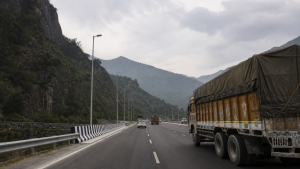
Cross-border transport corridors are integrated networks that connect economic hubs across international boundaries through roads, railways, rail links, waterways, air routes, and sea lanes. They reduce transit time, improve customs coordination, and strengthen trade, logistics, and regional integration.
Developmental Stages of Transport Corridors
International development agencies usually describe four broad stages in the evolution of a corridor, from a simple transport route to a full economic zone.
Transport Corridors
- Physical connectivity: The entry-level stage focuses on building highways, bridges, and rail lines across borders.
- Example: The India-Myanmar-Thailand Trilateral Highway in its construction phase.
Transit Corridors
- Legal facilitation: Countries prioritize agreements that ease the movement of vehicles and goods across borders.
- Measures: Streamlined border checks, simplified customs documents, and unified road tolls.
- Example: The TIR (Transports Internationaux Routiers) system, which allows sealed trucks to cross borders with minimal customs checks.
Trade and Logistics Corridors
- Commercial support: This stage adds logistics facilities and services along the route.
- Infrastructure: Dry ports, warehouses, cold chain facilities, and logistics parks.
- Example: The Northern Corridor in East Africa, linking Mombasa with Uganda and Rwanda.
Economic Corridors
- Broader growth: The corridor attracts industries, processing zones, and urban clusters.
- Outcome: It becomes a zone of investment and economic development, not just a transport route.
- Example: The China-Pakistan Economic Corridor (CPEC), which combines transport routes with power plants, optical fiber networks, and special economic zones.
Types of Corridors by Spatial and Geographic Scale
Cross-border corridors can also be classified by their geographic reach and the number of countries involved.
Bilateral Corridors
- Two-country link: These corridors connect two neighboring countries to promote direct trade.
- Features: Shared border posts and joint customs clearance points.
- Example: India-Nepal trade routes such as Raxaul-Birgunj.
Regional Corridors
- Multi-country network: These connect several countries within a region to support integration.
- Framework: Multilateral treaties and regional cooperation mechanisms.
- Example: The Greater Mekong Subregion (GMS) Southern Economic Corridor connecting Cambodia, Thailand, and Vietnam.
Intercontinental Corridors
- Large-scale link: These mega-networks span multiple continents and connect distant markets.
- Structure: They combine sea routes and transcontinental rail lines.
- Example: The India-Middle East-Europe Economic Corridor (IMEC).
Types of Corridors by Mode of Transport
Corridors are also classified by the transport modes they use.
Unimodal Corridors
- Single mode: These use only one mode of transport, such as rail or road.
- Limitation: They are simpler to manage but vulnerable to disruptions like strikes or landslides.
- Example: Some Pan-European transport corridors historically focused on specific rail and road links.
Multimodal Corridors
- Multiple modes: These combine two or more transport modes under one logistics plan.
- Benefit: They help choose the most cost-effective route using sea, rail, and road transport.
- Example: The International North-South Transport Corridor (INSTC).
Digital and Virtual Corridors
- Digital support: These corridors use digital infrastructure along with physical transport routes.
- Tools: Blockchain, electronic cargo tracking, and electronic data interchange (EDI).
- Example: The India-UAE Virtual Trade Corridor.
Components of Cross-Border Corridors: Hard vs Soft Infrastructure
Successful corridors need both physical infrastructure and policy coordination.
Hard Infrastructure
- Road networks: Highways, expressways, and bridges for commercial trucks.
- Rail systems: Tracks, cargo terminals, and locomotives for container traffic.
- Ports and hubs: Seaports, dry ports, and inland container depots.
- Utility lines: Pipelines, electricity grids, and telecommunication cables.
Soft Infrastructure
- Customs simplification: Integrated border management and joint border posts reduce delays.
- Regulatory alignment: Common rules on axle load limits, insurance, and driving permits.
- Trade agreements: Multilateral arrangements such as the Bangladesh-Bhutan-India-Nepal (BBIN) Motor Vehicles Agreement.
- Corridor management committees: Bodies that bring together public officials and private operators to resolve bottlenecks.
Key Global Cross-Border Corridors Involving India
India is part of several regional and transcontinental corridors that support supply chains and infrastructure diplomacy.
International North-South Transport Corridor (INSTC)
- Route: Connects India (Mumbai) to Russia (St. Petersburg) via Iran and Azerbaijan.
- Modes: Sea, rail, and road.
- Benefit: It can reduce freight transit time from about 40 days to 20-25 days compared to the Suez Canal route.
India-Middle East-Europe Economic Corridor (IMEC)
- Route: Links India to Europe via the United Arab Emirates, Saudi Arabia, Jordan, and Israel.
- Modes: Maritime shipping and rail transport.
- Components: Electricity cables, green hydrogen pipelines, and digital data cables.
Kaladan Multi-Modal Transit Transport Project
- Route: Connects Kolkata port to Sittwe port in Myanmar and then to Mizoram.
- Modes: Sea shipping, inland water transport, and road networks.
- Benefit: It provides an alternative route to India’s Northeast, bypassing the Siliguri Corridor.
Bangladesh-China-India-Myanmar (BCIM) Economic Corridor
- Route: Connects Kolkata to Kunming through Bangladesh and Myanmar.
- Modes: Multimodal transport corridor.
- Status: Progress has slowed due to geopolitical differences among member states.
Global Case Studies of Cross-Border Corridors
The Lobito Corridor
- Route: Extends from the Port of Lobito in Angola to mineral-rich regions of the Democratic Republic of Congo and Zambia.
- Focus: Critical minerals such as copper and cobalt.
- Support: It receives funding from the European Union and the United States.
The Maputo Development Corridor
- Route: Links industrial areas around Johannesburg in South Africa to the Port of Maputo in Mozambique.
- Impact: It is a major example of a transport corridor evolving into a full economic corridor in Africa.
Recent Context
The Secure Green Land Corridor between Oman and Saudi Arabia was launched in August 2026 as a direct overland logistics route across the Rub’ al Khali. It links Sohar Port with a dry-port facility in Saudi Arabia’s Eastern Province and reduces transit time by avoiding UAE borders.
Comparative Summary of Corridor Types
| Corridor Type | Primary Focus | Mode of Transport | Complexity Level | Key Example |
| Transport Corridor | Physical pathways | Typically unimodal or basic rail/road | Low | Physical segments of the India-Myanmar-Thailand Trilateral Highway |
| Transit Corridor | Customs and administrative ease | Multimodal or unimodal | Medium | TIR Convention corridors |
| Trade Corridor | Warehousing and supply chain operations | Highly integrated multimodal | High | Northern Corridor (East Africa) |
| Economic Corridor | Industrial, agricultural, and urban growth | Integrated multimodal and utilities | Very High | China-Pakistan Economic Corridor (CPEC) |
Rare Facts for Prelims
- TIR Convention: It is administered under the UN system and is widely used to speed up cross-border road freight movement.
- Dry ports: These are inland terminals linked to seaports by road or rail and can handle customs clearance away from the coast.
- Rub’ al Khali: Also called the Empty Quarter, it is one of the largest continuous sand deserts in the world.
- INSTC advantage: The corridor is often cited as a shorter alternative to the traditional Europe-Asia sea route via the Suez Canal.
- BBIN significance: The agreement is important because it aims to improve subregional road connectivity in South Asia.
- Infrastructure diplomacy: Modern corridors are increasingly used as tools of foreign policy, not just trade facilitation.
| Related | |
|---|---|