Major Strategic Maritime Passages of the World
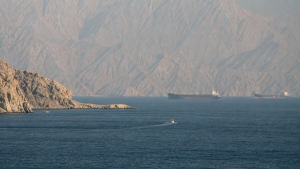
Strategic maritime passages are narrow sea routes that carry a large share of global trade, energy supplies, and naval traffic. Because they are difficult to bypass, any disruption can quickly affect shipping costs, supply chains, and energy security.
Major Maritime Chokepoints of the World
Strait of Hormuz
- Location: Connects the Persian Gulf with the Gulf of Oman and the Arabian Sea.
- Geography: Separates the Arabian Peninsula from Iran.
- Coasts: The northern coast belongs to Iran, while the southern coast is controlled by Oman (Musandam enclave) and the United Arab Emirates.
- Importance: It is the most critical oil transit passage in the world and carries about one-fifth of global petroleum consumption.
- Shipping lanes: The channel has narrow inbound and outbound lanes with a buffer zone.
- LNG route: It is a vital pathway for liquefied natural gas (LNG) from Qatar to global markets.
Strait of Malacca
- Location: Connects the Indian Ocean (Andaman Sea) with the Pacific Ocean (South China Sea).
- Geography: Lies between Sumatra and the Malay Peninsula.
- Bordering countries: Indonesia, Malaysia, and Singapore.
- Importance: It is the primary shipping channel between the Indian Ocean and East Asia.
- Trade route: It is the shortest sea route connecting Middle Eastern energy exporters to major Asian markets such as China, Japan, and South Korea.
- Traffic: Over 100,000 vessels pass through this strait each year.
- Bottleneck: The narrowest part is the Phillips Channel in the Singapore Strait, only 2.7 kilometers wide.
Suez Canal
- Type: An artificial sea-level waterway in Egypt.
- Connects: The Mediterranean Sea to the Red Sea.
- Importance: It offers the shortest maritime route between Europe and the regions surrounding the Indian and western Pacific Oceans.
- Opened: 1869.
- Length: Approximately 193 kilometers.
- Benefit: It avoids the long route around the Cape of Good Hope, saving about 8,900 kilometers.
- Trade share: The canal handles roughly 12 percent of global trade, including crude oil and refined petroleum products.
Bab-el-Mandeb Strait
- Location: Connects the Red Sea to the Gulf of Aden and the Arabian Sea.
- Bordering areas: Yemen on the Arabian Peninsula, and Djibouti and Eritrea in the Horn of Africa.
- Importance: It links the Mediterranean Sea and the Indian Ocean through the Red Sea route.
- Gateway: It lies south of the Suez Canal and serves as a gateway to it.
- Transit role: Most exports from the Persian Gulf that travel through the Suez Canal must first pass through this strait.
- Channels: Perim Island divides it into western and eastern channels.
Panama Canal
- Type: An artificial lock-gated waterway in Central America.
- Connects: The Atlantic Ocean with the Pacific Ocean.
- Length: 82 kilometers.
- Importance: It allows ships to bypass the long and hazardous Cape Horn route at the tip of South America.
- Locks: The canal uses locks to raise ships to the level of Gatun Lake and then lower them.
- Challenge: Freshwater shortages during dry seasons can limit daily transits.
Turkish Straits
- Components: The Bosporus and the Dardanelles.
- Bosporus: Connects the Black Sea to the Sea of Marmara.
- Dardanelles: Connects the Sea of Marmara to the Aegean Sea, which joins the Mediterranean.
- Location: They separate Europe from Asia and lie entirely within Turkey.
- Importance: They are the only sea route out of the Black Sea for countries such as Russia, Ukraine, Romania, Bulgaria, and Georgia.
- Montreux Convention: Under the 1936 convention, commercial vessels enjoy free transit during peacetime, while military warships are regulated.
Strait of Gibraltar
- Connects: The Atlantic Ocean to the Mediterranean Sea.
- Location: Lies between Spain and Gibraltar in the north, and Morocco in the south.
- Width: 14 kilometers at its narrowest point.
- Importance: It is the only natural entrance to the Mediterranean Sea from the Atlantic Ocean.
- Shipping: It is one of the busiest shipping lanes in the world.
Sunda and Lombok Straits
- Nature: Alternative waterways in the Indonesian archipelago.
- Sunda Strait: Runs between Java and Sumatra and connects the Java Sea to the Indian Ocean.
- Lombok Strait: Lies between Bali and Lombok and connects the Java Sea to the Indian Ocean.
- Use: Deep-draft tankers too large for the shallow Strait of Malacca often use the Lombok Strait as an alternative.
Other Notable Straits
- English Channel (Strait of Dover): Connects the North Sea to the Atlantic Ocean and separates Great Britain from continental Europe.
- Bering Strait: Connects the Pacific Ocean (Bering Sea) to the Arctic Ocean (Chukchi Sea) and separates Russia from the United States (Alaska).
- Cook Strait: Connects the Tasman Sea to the South Pacific Ocean, separating New Zealand’s North and South Islands.
- Bass Strait: Separates mainland Australia from Tasmania and connects the Tasman Sea to the Indian Ocean.
- Tsushima Strait: Lies between Korea and Japan, connecting the East China Sea with the Sea of Japan.
- Strait of Magellan: Located at the southern tip of South America, connecting the Atlantic and Pacific Oceans; it lies entirely within Chile.
Quick Reference of Strategic Waterways
| Strait / Canal | Connecting Water Bodies | Bordering Nations / Territories | Primary Cargo / Importance |
| Strait of Hormuz | Persian Gulf & Gulf of Oman | Oman, Iran, UAE | Crude Oil, LNG |
| Strait of Malacca | Indian Ocean & Pacific Ocean | Indonesia, Malaysia, Singapore | Oil, Manufactured Goods |
| Suez Canal | Mediterranean Sea & Red Sea | Egypt | Container Ships, Oil, LNG |
| Bab-el-Mandeb | Red Sea & Gulf of Aden | Djibouti, Yemen, Eritrea | Crude Oil, Commercial Cargo |
| Panama Canal | Atlantic Ocean & Pacific Ocean | Panama | Grains, Containers, Petroleum |
| Bosporus & Dardanelles | Black Sea & Mediterranean Sea | Turkey | Agricultural goods, Russian Oil |
| Strait of Gibraltar | Atlantic Ocean & Mediterranean Sea | Spain, Morocco, UK (Gibraltar) | General Cargo, Tourism, Oil |
| Lombok Strait | Java Sea & Indian Ocean | Indonesia | Mega-tankers, Coal, Iron Ore |
Geopolitical Challenges and Security Concerns
Piracy and Armed Robbery
- Threat: Piracy remains a risk in several maritime corridors.
- High-risk areas: The Strait of Malacca and the waters off the Horn of Africa near Bab-el-Mandeb have historically seen pirate attacks.
- Response: International naval coalitions patrol these areas to protect commercial shipping.
Regional Conflicts and Chokepoint Blockades
- Risk: Geopolitical tensions can threaten passage through strategic straits.
- Hormuz: The strait has seen recurring friction between international forces and Iran.
- Bab-el-Mandeb: Conflict in Yemen can disrupt safe passage into the Red Sea.
- Impact: Closure of such routes can trigger supply chain delays and energy crises.
Infrastructure and Environmental Risks
- Suez Canal: The grounding of the container ship Ever Given in 2021 halted trade for six days and caused major financial losses.
- Panama Canal: Drought and changing weather patterns can reduce water levels, forcing limits on vessel draft and daily transits.
Recent Context
In August 2026, Oman and Saudi Arabia launched the Secure Green Land Corridor, a cross-border logistics route linking Sohar Port with SPARK in Saudi Arabia. The route bypasses the Strait of Hormuz for selected freight movements.
Rare Facts for Prelims
- Strait of Hormuz: It is one of the few chokepoints where a very large share of the world’s oil supply passes through a single narrow corridor.
- Suez Canal: It is a sea-level canal, unlike the Panama Canal, which uses locks.
- Bab-el-Mandeb: The name means “Gate of Tears” in Arabic.
- Panama Canal: Ships cross from one ocean to another without going around South America, saving weeks of travel time.
- Turkish Straits: The Bosporus is one of the few straits in the world that divides a single city, Istanbul, into two continents.
- Strait of Gibraltar: It is the only natural sea gateway between the Atlantic Ocean and the Mediterranean Sea.
Current General Studies comprises current-affairs-based, General Studies-rich study material on policies, laws, institutions, economy, science, environment, governance, international relations, and other varied but important topics for UPSC and State PSC Prelims examinations.
Fortnightly PDF compilations: Available here
Originally written on
August 16, 2026
and last modified on
August 15, 2026.
| Related | |
|---|---|