Strait of Hormuz
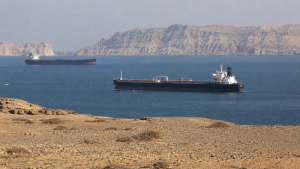
The Strait of Hormuz is one of the world’s most sensitive maritime chokepoints. It links the Persian Gulf with the oman/">Gulf of Oman and carries a large share of global oil and LNG shipments, making it critical for energy security, shipping costs and regional stability.
Geographical Importance
The Strait of Hormuz is only about 33 kilometres wide at its narrowest point. Despite its small width, it is a major sea lane for tankers carrying crude oil and liquefied natural gas (LNG). Its location gives it outsized importance in global trade and strategic affairs.
The strait is bordered by iran/">Iran and Oman, which makes the route especially sensitive during periods of tension. Any disruption here can quickly affect supply chains far beyond the region.
- Major energy corridor: Around 20 million barrels of oil pass through the strait each day.
- Share in global trade: This is more than one-quarter of the world’s seaborne oil trade.
- LNG movement: The route is also vital for LNG exports from the Gulf region.
Why the Strait Matters Economically
A blockade or serious disruption in the strait would have immediate and wide-ranging effects. Because so much oil and gas moves through this route, even a temporary closure could raise uncertainty in energy markets and push up prices.
Shipping companies would face higher insurance and freight costs. Delays or rerouting would also add pressure to supply chains already dependent on steady Gulf exports. For energy-importing countries, the impact would be felt through higher fuel costs and broader inflationary pressure.
- Oil prices: A disruption would likely cause global oil prices to surge.
- Shipping costs: Higher risk would increase freight and insurance expenses.
- Market instability: Energy markets could become volatile if supply is threatened.
- LNG dependence: The United States Energy Information Administration (EIA) says around 83% of LNG trade also transits this route.
Iran’s Strategic Calculations
Iran has often used the Strait of Hormuz as a strategic lever, but it has historically avoided fully closing it. During the Iran-Iraq War, both sides attacked vessels, yet traffic through the strait was not completely halted.
Iran’s restraint is linked to its own economic interests. The country depends on the same route for oil exports, especially for sales to China, which buys Iranian oil at discounted prices. A blockade would hurt Iran’s revenues and could also weaken its regional standing.
- Own export dependence: Iran uses the strait for its own oil shipments.
- Economic cost: Blocking it would damage Iran’s export earnings.
- Diplomatic risk: It could alienate potential allies in the region.
- Historical pattern: Even in war, Iran did not completely shut the waterway.
Military Presence and Global Response
The United States maintains a strong military presence in the region, including the 5th Fleet stationed in Bahrain. This gives Washington the ability to respond quickly to any threat to maritime traffic in and around the strait.
At the same time, any military escalation would be risky. A confrontation could disrupt shipping, raise tensions across the Gulf and create wider instability in global energy markets. Because of this, the strait remains a flashpoint where naval, diplomatic and economic considerations intersect.
- US 5th Fleet: Based in Bahrain to monitor and respond to regional threats.
- Rapid response capability: Helps the US react to disruptions in shipping lanes.
- Escalation risk: Military action could intensify instability in global shipping.
Implications for India and Alternative Routes
India is highly exposed to the Strait of Hormuz because a large share of its crude oil imports pass through this route. In 2024, about 84% of India’s crude oil imports came through the strait. Any disruption would therefore affect India’s energy security and fuel pricing.
Although India sources oil from multiple regions, a chokepoint crisis would still raise import costs and add to domestic price volatility. The effect would likely spread beyond the energy sector to transport, industry and inflation trends.
There are some alternative routes, but they cannot fully replace the Strait of Hormuz. Saudi Arabia operates a pipeline to the Red Sea, and the UAE has a pipeline to the Gulf of Oman. However, these options have limited capacity compared with the volume that normally moves through the strait.
- India’s dependence: A large share of crude imports enters through this route.
- Price impact: A blockade would raise import costs and fuel prices.
- Partial alternatives: Saudi and UAE pipelines provide only limited backup.
- Cannot replace volume: No alternate route matches the full capacity of the strait.
Key Prelims Takeaways
- Location: Connects the Persian Gulf with the Gulf of Oman.
- Narrowest width: About 33 kilometres.
- Oil flow: Around 20 million barrels per day pass through it.
- Global share: More than one-quarter of the world’s seaborne oil trade moves through the strait.
- LNG route: A key passage for LNG; the EIA says about 83% of LNG trade transits it.
- Strategic control: The strait is bordered by Iran and Oman.
- India link: In 2024, about 84% of India’s crude oil imports came through this route.