Important Defence Research Institutions in India
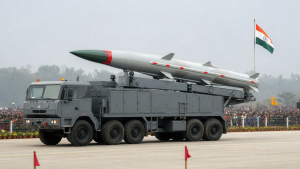
The Defence R&D ecosystem in India is led by DRDO and supported by specialised laboratories, academic institutes, DPSUs, and innovation agencies. Its focus is to build indigenous military technologies and reduce dependence on imports.
Defence Research and Development Organisation (DRDO)
The Defence Research and Development Organisation (DRDO) was formed on 1 January 1958 through the merger of the Technical Development Establishment (TDE) of the Indian Army, the Directorate of Technical Development and Production (DTDP), and the Defence Science Organisation (DSO).
- Headquarters: New Delhi
- Motto: Balasya Mulam Vigyanam (Strength’s Origin is in Science)
- Administrative control: Department of Defence Research and Development, Ministry of Defence
- Infrastructure: Over 50 laboratories
- Functional clusters: Aeronautics, armaments, combat vehicles, electronics, life sciences, materials, missiles, and naval systems
Major DRDO Research Laboratories
DRDO laboratories work across different states and focus on specific areas of defence science.
| Laboratory Name | Location | Primary Research Focus | Developed Systems / Technologies |
| Defence Research and Development Laboratory (DRDL) | Hyderabad | Missile and rocket propulsion systems | Agni and Prithvi missiles, Akash air defence system |
| Research & Development Establishment (Engineers) [R&DE (E)] | Pune | Combat engineering and bridging systems | Sarvatra bridging system, robotic platforms |
| Combat Vehicles Research and Development Establishment (CVRDE) | Chennai | Armored fighting vehicles and tracked platforms | Arjun Main Battle Tank (MBT) |
| Armament Research and Development Establishment (ARDE) | Pune | Small arms, artillery, and ammunition | Pinaka Multi-Barrel Rocket Launcher, INSAS rifle |
| Aeronautical Development Establishment (ADE) | Bengaluru | Unmanned Aerial Vehicles (UAVs) and flight simulators | Lakshya target drone, Nishant UAV, Rustom UAV |
| Electronics and Radar Development Establishment (LRDE) | Bengaluru | Radar systems and electronic warfare | Rajendra radar, Swathi Weapon Locating Radar |
| Naval Physical and Oceanographic Laboratory (NPOL) | Kochi | Underwater acoustics and sonar systems | USHUS sonar for submarines |
| Defence Food Research Laboratory (DFRL) | Mysore | Food preservation and packaging for armed forces | Packaged operational rations, space food for astronauts |
| Defence Institute of High Altitude Research (DIHAR) | Leh-Ladakh | Cold-desert agriculture and high-altitude physiology | Agro-animal technologies for extreme cold conditions |
| Institute of Nuclear Medicine and Allied Sciences (INMAS) | New Delhi | Radiation medicine and CBRN defence | Biodosimetry, chemical-biological antidote kits |
| High Energy Materials Research Laboratory (HEMRL) | Pune | High explosives, propellants, and pyrotechnics | Solid propellants, explosive reactive armor (ERA) |
| Instruments Research and Development Establishment (IRDE) | Dehradun | Optical and electro-optical instruments | Night vision devices, laser range finders, thermal imagers |
Specialised Defence Academic and Training Institutes
- Defence Institute of Advanced Technology (DIAT): Established in 1952 in Pune. Initially named the Institute of Armament Studies, it became a Deemed-to-be University in 2000. It functions under the Department of Defence Research and Development and offers postgraduate and doctoral courses in cybersecurity, quantum technology, guided missiles, and aerospace engineering. It also trains officers from the Indian Armed Forces, defence PSUs, and friendly foreign nations.
- Defence Institute of Psychological Research (DIPR): Located in New Delhi. It conducts research in military psychology, including personnel selection methodologies, pilot selection tests, leadership assessment, and stress management for military personnel.
- Defence Institute of Physiology and Allied Sciences (DIPAS): Located in New Delhi. It conducts physiological and biomedical research to improve soldier performance in extreme environments such as high altitudes, deserts, and underwater conditions.
Other Strategic Space and Cyber Innovation Agencies
- Aeronautical Development Agency (ADA): Established in 1984 with headquarters in Bengaluru. It is an autonomous body under the Department of Defence Research and Development and is the nodal agency for the design and development of light combat aircraft. Its major programmes include the Tejas fighter aircraft and the Advanced Medium Combat Aircraft (AMCA).
- Defence Space Research Agency (DSRA): Approved by the Cabinet Committee on Security in June 2019. It develops space warfare weapon systems and technologies and supports the tri-service Defence Space Agency (DSA) in coordination with the Integrated Defence Staff (IDS).
- Defence Cyber Agency (DCA): A tri-service agency created to handle cyber security threats. It develops technologies for protecting critical military communications and managing cyber warfare operations.
- Innovations for Defence Excellence (iDEX): Launched in April 2018 under the Defence Innovation Organisation (DIO). It engages MSMEs, startups, individual innovators, and academic institutions by providing funding and R&D support for prototype military technologies.
Role of Defence Public Sector Undertakings (DPSUs) in R&D Translation
R&D translation converts laboratory prototypes into operational military hardware. DPSUs collaborate with research agencies to manufacture these systems.
| DPSU Name | Headquarters | Core Area of Operations | Collaboration with R&D Agencies |
| Hindustan Aeronautics Limited (HAL) | Bengaluru | Military aircraft, helicopters, and turbine engines | Manufactures Tejas LCA and Dhruv helicopters developed by ADA and ADE |
| Bharat Electronics Limited (BEL) | Bengaluru | Radar systems, sonars, and strategic communication | Produces military radars and electronic warfare systems designed by LRDE and DLRL |
| Bharat Dynamics Limited (BDL) | Hyderabad | Guided missiles, torpedoes, and countermeasure systems | Acts as the prime production agency for missiles designed by DRDL |
| Mazagon Dock Shipbuilders Limited (MDL) | Mumbai | Warship and submarine construction | Translates naval designs from the Navy’s Warship Design Bureau into active vessels |
| Munitions India Limited (MIL) | Pune | Ammunition, military explosives, and propellants | Produces ammunition in partnership with ARDE and HEMRL |
Key Strategic Projects of Indian Defence R&D
- Integrated Guided Missile Development Programme (IGMDP): Managed by DRDO and led by Dr. A.P.J. Abdul Kalam. It ran from 1983 to 2008 and developed five missile systems: Prithvi, Agni, Trishul, Akash, and Nag.
- Pinaka Multi-Barrel Rocket System (MBRL): Developed by ARDE and HEMRL in Pune. It is a free-flight artillery rocket system that can fire a salvo of 12 rockets in 44 seconds, neutralising a target area of 350,000 square metres.
- Light Combat Aircraft (LCA) Tejas: Designed by ADA in collaboration with aircraft research groups of HAL. It is a delta-wing, multi-role light fighter with a fly-by-wire flight control system and composite material structures.
- Arjun Main Battle Tank: Designed by CVRDE in Chennai. It features a 120 mm rifled gun, indigenous Kanchan composite armour, and a computerised fire control system.
- Mission Shakti: A joint demonstration by DRDO and ISRO in March 2019. It successfully tested an anti-satellite (ASAT) missile by intercepting a live satellite in low Earth orbit.
Recent Context
In August 2026, Reliance Industries and Rolls-Royce announced a private partnership to explore indigenous combat aircraft engine development for the AMCA programme. Separately, DRDO’s GTRE and Safran have submitted a competing proposal for a high-thrust engine.
Key Defence Research Trivia and Facts
- BrahMos Aerospace: A joint venture between DRDO and NPO Mashinostroyeniya of Russia. It produces the BrahMos supersonic cruise missile, which can be launched from land, sea, sub-sea, and air platforms.
- Astra Missile: India’s first indigenous Beyond Visual Range Air-to-Air Missile (BVRAAM), developed by DRDL and other DRDO partners for fighter aircraft such as the Su-30MKI.
- Dr. A.P.J. Abdul Kalam: He served as Director of DRDL in the 1980s and led the IGMDP before becoming Scientific Adviser to the Defence Minister and later President of India.
- K-Missile Family: A series of submarine-launched ballistic missiles (SLBM) developed by DRDO in honour of Dr. A.P.J. Abdul Kalam. It includes the K-15 (Sagarika) and K-4.
Rare Facts for Prelims
- GTRE: The Gas Turbine Research Establishment is DRDO’s key laboratory for indigenous aero-engine and gas turbine development.
- Swathi Weapon Locating Radar: It is one of India’s notable indigenous radar systems and is associated with LRDE.
- Rustom UAV: The Rustom series is among India’s important indigenous unmanned aerial vehicle programmes developed under ADE.
- USHUS sonar: This indigenous sonar system is fitted on Indian submarines and is linked to NPOL’s underwater acoustics work.
- DIHAR: The institute is especially important for developing technologies suited to extreme cold-desert conditions in Ladakh.
- iDEX: It is a major innovation platform for defence startups and MSMEs, making it important for India’s defence innovation ecosystem.
| Related | |
|---|---|