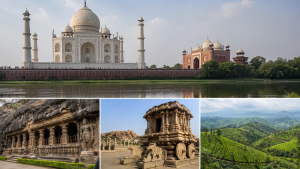
Unesco World Heritage Sites in India

India possesses a diverse cultural and natural heritage, recognized globally through the UNESCO World Heritage Site designation. The United Nations Educational, Scientific and Cultural Organization (UNESCO) designates these places based on their outstanding universal value under the 1972 World Heritage Convention. India ratified the convention in 1977 and stands as one of the leading nations globally in terms of total inscribed properties. As of recent updates, India has 43 World Heritage Sites, categorized into cultural, natural, and mixed properties. The Archaeological Survey of India (ASI) acts as the nodal agency for cultural properties, while the Ministry of Environment, Forest and Climate Change (MoEFCC) oversees natural properties.

Legal and Institutional Framework

UNESCO classifies sites into three broad types: Cultural, Natural, and Mixed. Cultural properties represent architectural, historical, or artistic works, while natural properties preserve ecological processes, geological formations, or biodiversity. Mixed sites fulfill criteria from both categories.

Criteria for Inscription

A property must satisfy at least one of ten selection criteria established in the UNESCO Operational Guidelines. Criteria (i) through (vi) apply to cultural properties, while criteria (vii) through (x) apply to natural sites.

Nodal Agencies and Legislation
  • Cultural Sites: Administered by the Archaeological Survey of India (ASI) under the Ancient Monuments and Archaeological Sites and Remains (AMASR) Act, 1958.
  • Natural Sites: Governed by the Ministry of Environment, Forest and Climate Change (MoEFCC) under the Wildlife Protection Act, 1972 and Forest Conservation Act, 1980.
  • Tentative List: A mandatory inventory of properties a state party intends to nominate over the next five to ten years. India maintains dozens of sites on its Tentative List.

Category-Wise Distribution of World Heritage Sites in India

India’s World Heritage Sites showcase human history, architectural styles, and ecological biomes. The country has 35 Cultural sites, 7 Natural sites, and 1 Mixed site.

Natural World Heritage Sites
Site Name Location Inscription Year Key Features / Significance
Kaziranga National Park Assam 1985 Hosts the world’s largest population of Great One-horned Rhinoceros; primary habitat on the Brahmaputra floodplain.
Manas Wildlife Sanctuary Assam 1985 Biosphere reserve and Project Tiger reserve located along the Manas River; home to Golden Langur and Pygmy Hog.
Keoladeo National Park Rajasthan 1985 Man-made wetland reserve, formerly known as Bharatpur Bird Sanctuary; key wintering ground for migratory waterfowl.
Sundarbans National Park West Bengal 1987 World’s largest mangrove forest delta formed by Ganges, Brahmaputra, and Meghna rivers; primary habitat of Bengal Tiger.
Nanda Devi and Valley of Flowers National Parks Uttarakhand 1988, 2005 High-altitude West Himalayan ecosystem; holds endemic alpine flowers and endangered Asiatic Black Bear.
Western Ghats Maharashtra, Goa, Karnataka, Tamil Nadu, Kerala 2012 A global biodiversity hotspot featuring 39 individual sub-clusters; key catchment area for major South Indian rivers.
Great Himalayan National Park Conservation Area Himachal Pradesh 2014 Located in the high peaks of the Western Himalayas; protects alpine meadows and glacial water sources.
Mixed World Heritage Site
Site Name Location Inscription Year Key Features / Significance
Khangchendzonga National Park Sikkim 2016 India’s sole mixed site; features Mount Khangchendzonga (third highest peak globally) alongside sacred Buddhist ritual sites.

Major Cultural World Heritage Sites

Cultural sites represent distinct architectural phases, including ancient rock shelters, classical temple architecture, medieval Islamic monuments, colonial structures, and modern urban design.

Ancient and Rock-Cut Architecture
  • Ajanta Caves (Maharashtra): Inscribed in 1983. Group of 30 rock-cut Buddhist cave monuments featuring famous Jataka tale murals and frescoes.
  • Ellora Caves (Maharashtra): Inscribed in 1983. Features 34 rock-cut caves representing Hindu, Buddhist, and Jain traditions. Contains the monolithic Kailash Temple (Cave 16).
  • Elephanta Caves (Maharashtra): Inscribed in 1987. Rock-cut cave complex on Gharapuri Island dedicated mainly to Shiva, known for the Maheshmurti sculpture.
  • Rock Shelters of Bhimbetka (Madhya Pradesh): Inscribed in 2003. Contains over 750 rock shelters displaying prehistoric cave paintings from the Mesolithic to Historic periods.
Classical and Medieval Temple Complexes
  • Sun Temple, Konark (Odisha): Inscribed in 1984. Represents 13th-century Kalinga architecture, structured as a colossal stone chariot of Sun God Surya with 24 carved wheels.
  • Group of Monuments at Mahabalipuram (Tamil Nadu): Inscribed in 1984. Built by the Pallava dynasty; includes Pancha Rathas, Shore Temple, and the open-air relief Arjuna’s Penance.
  • Great Living Chola Temples (Tamil Nadu): Inscribed in 1987 (expanded in 2004). Includes Brihadisvara Temple at Thanjavur, Gangaikonda Cholapuram, and Airavatesvara Temple at Darasuram.
  • Group of Monuments at Hampi (Karnataka): Inscribed in 1986. Capital of the Vijayanagara Empire located on the banks of the Tungabhadra River; features the Virupaksha and Vittala temples.
  • Group of Monuments at Pattadakal (Karnataka): Inscribed in 1987. Features a mix of Nagara and Dravidian temple architectural styles built by the Chalukya dynasty.
  • Khajuraho Group of Monuments (Madhya Pradesh): Inscribed in 1986. Built by the Chandela dynasty; showcases Nagara-style architecture with intricate sculptural work.
  • Kakatiya Rudreshwara (Ramappa) Temple (Telangana): Inscribed in 2021. Constructed during the Kakatiya period using floating bricks and sandbox foundation technology.
Islamic, Sultanate, and Mughal Architecture
  • Agra Fort (Uttar Pradesh): Inscribed in 1983. Red sandstone fortress serving as the principal seat of the Mughal dynasty until 1638.
  • Taj Mahal (Uttar Pradesh): Inscribed in 1983. White marble mausoleum built by Mughal Emperor Shah Jahan along the Yamuna River.
  • Fatehpur Sikri (Uttar Pradesh): Inscribed in 1986. Short-lived Mughal capital built by Akbar, featuring Buland Darwaza and Panch Mahal.
  • Humayun’s Tomb (Delhi): Inscribed in 1993. First garden-tomb on the Indian subcontinent, establishing the precedent for Mughal monumental architecture.
  • Qutb Minar and its Monuments (Delhi): Inscribed in 1993. Includes the 73-meter tall red sandstone minaret built by Qutb-ud-din Aibak, alongside the Iron Pillar of Delhi.
  • Red Fort Complex (Delhi): Inscribed in 2007. Palace fort constructed by Shah Jahan, representing the pinnacle of Mughal architectural planning.
Historic Urban Ensembles and Forts
  • Hill Forts of Rajasthan: Inscribed in 2013. Consists of six Rajput forts across Rajasthan: Chittorgarh, Kumbhalgarh, Ranthambore, Amber, Jaisalmer, and Gagron.
  • Champaner-Pavagadh Archaeological Park (Gujarat): Inscribed in 2004. Pre-Mughal Islamic city containing Hindu and Jain temples alongside Sultanate-era structures.
  • Historic City of Ahmadabad (Gujarat): Inscribed in 2017. First Indian city recognized by UNESCO; features traditional residential clusters known as Pols and the famous Sidi Saiyyed Mosque.
  • Jaipur City (Rajasthan): Inscribed in 2019. Walled city founded by Sawai Jai Singh II in 1727, built on a grid-based plan derived from Vedic architecture.
  • Sacred Ensembles of the Hoysalas (Karnataka): Inscribed in 2023. Includes the 12th-century Hoysala temple complexes at Belur, Halebidu, and Somanathapura.
  • Moidams – the Mound-Burial System of the Ahom Dynasty (Assam): Inscribed in 2024. Represents the unique royal mound-burial tradition of the Ahom Kingdom in Charaideo, Assam.
Stepwells, Rail, and Modern Architectural Heritage
  • Rani-ki-Vav (The Queen’s Stepwell) at Patan (Gujarat): Inscribed in 2014. 11th-century stepwell built by Queen Udayamati of the Chaulukya dynasty, designed as an inverted temple on the banks of the Saraswati River.
  • Mountain Railways of India: Inscribed in 1999 (expanded in 2005, 2008). Covers three narrow-gauge rail lines: Darjeeling Himalayan Railway, Nilgiri Mountain Railway, and Kalka-Shimla Railway.
  • Chhatrapati Shivaji Maharaj Terminus (formerly Victoria Terminus) (Maharashtra): Inscribed in 2004. Designed by Frederick William Stevens, showcasing Victorian Gothic Revival architecture combined with traditional Indian elements.
  • The Architectural Work of Le Corbusier (Chandigarh): Inscribed in 2016. Part of a trans-national entry covering the Capitol Complex in Chandigarh, representing modern architectural urban design.
  • Victorian Gothic and Art Deco Ensembles of Mumbai (Maharashtra): Inscribed in 2018. Collection of 19th-century Victorian public buildings and 20th-century Art Deco structures around Oval Maidan.

Key Facts for Quick Revision

  • First Indian Sites Inscribed: Ajanta Caves, Ellora Caves, Agra Fort, and Taj Mahal were the first sites added in 1983.
  • State with Most Sites: Maharashtra holds the highest number of UNESCO World Heritage Sites in India.
  • Sole Mixed Site: Khangchendzonga National Park in Sikkim remains India’s only mixed-category property.
  • Nodal Cultural Agency: Archaeological Survey of India (ASI) acts as the primary agency for cultural site nominations and management.
  • First Recognized Indian City: Historic City of Ahmadabad became the first Indian city inscribed on the list in 2017.
  • Unique Burial Site: Moidams of the Ahom Dynasty in Charaideo, Assam, is the first cultural heritage site from North-East India in the mound-burial category.
  • Dholavira Distinction: Dholavira in Gujarat (inscribed 2021) is the first Harappan/Indus Valley Civilization site in India to gain World Heritage status.
  • Unique Structural Feature: Ramappa Temple in Telangana utilizes floating light-weight bricks and a sandbox technique to resist earthquakes.
Originally written on November 8, 2015 and last modified on August 11, 2026.

Leave a Reply

Your email address will not be published. Required fields are marked *