Major Rajput Kingdoms and Dynasties
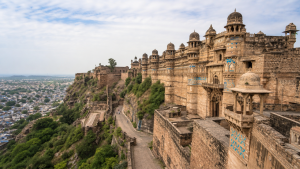
The Rajput kingdoms and dynasties shaped much of northern and western India in the early medieval period. Their rise was tied to clan-based rule, martial traditions, and regional power struggles that influenced politics, temple building, and cultural life for centuries.
Origin and Agnikula Legend
The origins of the Rajputs are explained through both historical theories and traditional accounts. Modern scholarship generally treats Rajputs as a broad socio-political class that emerged through the rise of ruling groups and their assimilation into wider Hindu society.
- Foreign origin theory: Historians such as James Tod linked Rajputs to Saka, Kushan, Huna, and Gurjara groups that entered India after the Gupta period.
- Kshatriya origin theory: Traditional scholars trace Rajputs to ancient Solar and Lunar Kshatriya lineages.
- Mixed origin theory: Many modern scholars see Rajputs as formed from indigenous ruling families and assimilated foreign tribes.
- Agnikula legend: The Prithviraj Raso attributes the origin of some major Rajput clans to a fire ritual performed by sage Vashistha at Mount Abu.
- Four Agnikula clans: Paramaras of Malwa, Chauhans of Shakambhari and Ajmer, Chaulukyas of Gujarat, and Pratiharas of Mandore and Kannauj.
Gurjara-Pratiharas
The Gurjara-Pratiharas formed an important barrier against Arab expansion from Sindh into northern India in the 8th century and later emerged as a major power in north India.
- Nagabhata I (c. 730–760 CE): Consolidated the dynasty by repelling Arab invasions in western India.
- Vatsaraja and Nagabhata II: Expanded Pratihara influence into Central India and captured Kannauj.
- Tripartite struggle: The control of Kannauj brought the Pratiharas into conflict with the Palas of Bengal and the Rashtrakutas of the Deccan.
- Mihira Bhoja (c. 836–885 CE): Took the dynasty to its territorial peak; he was a devotee of Vishnu and used the title Adivaraha.
- Coinage: Silver coins of Mihira Bhoja carried the Varaha avatar.
- Mahendrapala I: Patronised Rajasekhara, who wrote Kavyamimamsa, Karpuramanjari, and Balabharata.
Chauhans, Chandelas and Tomaras
Several Rajput dynasties rose to prominence in north and central India as Pratihara power declined. Among them, the Chauhans, Chandelas, and Tomaras became especially significant in the pre-Turkish period.
- Chahamanas (Chauhans) of Shakambhari: Initially feudatories of the Gurjara-Pratiharas, they became independent in the 10th century.
- Ajayaraja II: Founded Ajayameru, or modern Ajmer, in the early 12th century and built Taragarh Fort.
- Vigraharaja IV (Bisaldeo): Captured Delhi from the Tomaras, wrote the Sanskrit drama Harakeli Nataka, and built a Sanskrit pathshala at Ajmer, later converted into the Adhai Din Ka Jhonpra.
- Prithviraj Chauhan III (1177–1192 CE): Defeated Chandela ruler Paramardi Deva and won the First Battle of Tarain in 1191.
- Second Battle of Tarain (1192): Prithviraj was defeated and captured by Muhammad Ghori, marking a major political turning point in north India.
- Chandelas of Jejakabhukti: Ruled the region between the Yamuna and Narmada rivers, with centres at Khajuraho and Mahoba and strongholds at Kalinjar and Ajaygarh.
- Nannuka: Founded the Chandela dynasty in the early 9th century.
- Yashovarman: Built the Lakshmana Temple at Khajuraho after asserting independence from the Pratiharas.
- Dhanga (c. 950–1002 CE): Built the Vishvanatha Temple at Khajuraho and joined the regional coalition led by Jayapala against Subuktigin.
- Vidyadhara (c. 1003–1035 CE): Resisted Mahmud of Ghazni and built the Kandariya Mahadeva Temple.
- Tomaras of Delhi: Anangpal Tomar I established the dynasty in the 8th century, while Anangpal II refortified Delhi in the 11th century.
- Delhi structures: The Tomaras are associated with Lal Kot and the Anang Tal stepwell.
Paramaras and Chaulukyas
In western and central India, the Paramaras of Malwa and the Chaulukyas of Gujarat became major Rajput powers known for political consolidation, temple patronage, and literary activity.
- Paramaras of Malwa: Ruled from Ujjain and Dhar.
- Upendra (Krishnaraja): Founded the dynasty in the early 9th century as a vassal of the Rashtrakutas.
- Siyaka II: Declared independence after defeating Rashtrakuta king Khottiga at Manyakheta in 972 CE.
- Raja Bhoja (c. 1010–1055 CE): A polymath ruler associated with works on architecture, grammar, and astronomy.
- Important works: Samarangana Sutradhara, Sarasvatikanthabharana, and Rajamartanda.
- Bhojpur and Dhar: He built the Bhojeshwar Temple at Bhojpur and established the Bhoj Shala learning centre at Dhar.
- Chaulukyas (Solankis) of Gujarat: Ruled Gujarat and Kathiawar from Anahilapataka, modern Patan.
- Mularaja I: Founded the dynasty in 941 CE and patronised Shaivism.
- Bhima I (1022–1064 CE): Ruled during Mahmud of Ghazni’s raid on Somnath in 1026 CE.
- Rani ki Vav: Constructed by queen Udayamati at Patan.
- Vimala Vasahi: Built by minister Vimala Shah at Mount Abu.
- Siddharaja Jayasimha: Expanded the kingdom to include Malwa and patronised the Jain scholar Hemachandra.
- Kumarapala: Converted to Jainism under Hemachandra’s influence and banned animal slaughter in his kingdom.
Gahadavalas and Major Rajput Kingdoms of Rajasthan
Late early-medieval Rajput history saw the rise of the Gahadavalas in the Gangetic region and continued resistance from the ruling houses of Mewar in Rajasthan.
- Gahadavalas of Kannauj: Rose after the decline of the Pratiharas and became important in Varanasi and Kannauj.
- Chandradeva: Founded the dynasty around 1090 CE.
- Govindachandra: Protected the kingdom from Ghurid raids.
- Kritya Kalpataru: An administrative and legal digest compiled by his minister Lakshmidhara.
- Jayachandra (Jaichand): The last major ruler, whose rivalry with Prithviraj III weakened regional unity.
- Battle of Chandawar (1194 CE): Jayachandra was defeated and killed by Muhammad Ghori.
- Guhilas and Sisodias of Mewar: Mewar became known for continuous resistance against the Delhi Sultanate and later the Mughals.
- Bappa Rawal: Associated with the capture of Chittorgarh.
Key Prelims Takeaways
- Rajputs: Emerged as a major ruling class between the 7th and 12th centuries in Rajasthan, Malwa, Bundelkhand, Gujarat, and the Gangetic plains.
- Agnikula clans: Paramaras, Chauhans, Chaulukyas, and Pratiharas are the four main clans linked to the fire-pit legend.
- Gurjara-Pratiharas: Played a key role in resisting Arab expansion and in the Tripartite Struggle for Kannauj.
- Prithviraj Chauhan III: Important for the First and Second Battles of Tarain in 1191 and 1192.
- Chandelas: Remembered for Khajuraho temples such as Lakshmana, Vishvanatha, and Kandariya Mahadeva.
- Paramara ruler Raja Bhoja: Noted for learning, literature, architecture, and temple patronage.
- Chaulukyas of Gujarat: Associated with Patan, Rani ki Vav, Somnath’s historical context, and Jain patronage.
| Related | |
|---|---|