Key State Police Organisations and Specialised Wings
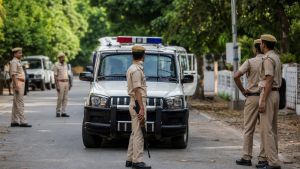
State police organisations are the backbone of internal security and day-to-day law enforcement in India. Under the federal system, they handle public order, crime control, intelligence gathering and specialised tactical operations, often through dedicated wings and units.
Constitutional and Statutory Foundations
- State subject: “Police” and “Public Order” fall in List II of the Seventh Schedule, giving States primary control over law and order.
- Police Act, 1861: Most state police structures trace their framework to this colonial-era law, though several States now function under their own police Acts.
- State-specific laws: States such as Maharashtra, Kerala and Gujarat have enacted separate laws to regulate police organisation and administration.
- BNSS, 2023: The Bharatiya Nagarik Suraksha Sanhita replaced the CrPC, 1973, with effect from 1 July 2024 and governs criminal procedure for state police work.
- Superior officers’ powers: Section 30 of the BNSS empowers senior police officers, such as DGPs, IGPs and DIGs, to exercise station-level operational and supervisory powers within their jurisdiction.
- Administrative control: Since police is a State subject, state governments retain legislative, administrative and financial control over local policing.
Specialised Wings of State Police
- Criminal Investigation Department (CID): The main state-level investigation wing for serious, multi-district and interstate crimes, including economic offences.
- State Intelligence Bureau (SIB): Also called the Special Branch in some States, it collects intelligence and tracks internal security threats.
- State Crime Records Bureau (SCRB): It acts as the state-level repository for crime statistics and criminal records in coordination with the NCRB.
- Greyhounds: A specialised counter-insurgency force operating in Andhra Pradesh and Telangana, trained for jungle warfare and anti-left-wing extremism operations.
- Force One: Maharashtra’s specialised counter-terrorism unit for urban terror incidents and high-risk tactical response.
- Operational role: These wings supplement district police by handling cases and threats that require specialised training, intelligence or equipment.
DGP Selection and Police Reforms
- Prakash Singh case: In Prakash Singh vs. Union of India (2006), the Supreme Court issued key directions to reduce political interference in police functioning.
- UPS C panel: The Court required State DGPs to be selected from a panel empanelled by the Union Public Service Commission.
- Residual service: Empanelled officers must have at least six months of residual service at the time of empanelment.
- Two-year tenure: The Supreme Court also directed that State DGPs should get a minimum tenure of two years.
- Objective: These safeguards are intended to improve stability, professionalism and continuity in police leadership.
Central Modernisation and Related Frameworks
- Police Modernisation Mission: The Union Government’s ₹24,000-crore, five-year umbrella scheme aims to strengthen internal security, technology and forensic capability in state police forces and CAPFs.
- Technology upgrade: The mission is relevant for exam purposes because it links police reform with better surveillance, investigation and forensic infrastructure.
- CAPF service rules: The Central Armed Police Forces (General Administration) Bill, 2026 was introduced to regulate service rules and deputation-related appointments in CAPFs.
- IPS deputation: The Bill provides for IPS officers on deputation in specified top posts, including IG, ADG and DG/SDG levels.
- Deputation quotas: The stated quotas are 50% for IG posts, 67% for ADG posts and 100% for DG/SDG posts.
- BNSS and immunity: Section 218(3) of the BNSS allows States to extend prosecution-related protection to police personnel for actions taken while maintaining public order, subject to state sanction.
Organisational Importance in Internal Security
- Local law enforcement: District and state police remain the first responders for crime prevention, public order management and routine investigation.
- Specialised response: CID, intelligence and tactical units ensure that complex threats are handled by officers with appropriate training and mandate.
- Coordination role: State agencies coordinate with central institutions such as the NCRB and the Ministry of Home Affairs on security and records.
- Federal balance: The structure reflects India’s federal scheme, where States control policing but broader internal security reforms can involve the Union.
Key Prelims Takeaways
- State List: Police and Public Order are in List II of the Seventh Schedule.
- All India Service: The IPS is an All India Service under Article 312.
- Procedural law: The BNSS, 2023 replaced the CrPC, 1973 from 1 July 2024.
- Senior officers’ powers: Section 30 of the BNSS gives higher police officers station-level operational powers within their jurisdiction.
- DGP norms: The Prakash Singh ruling requires UPSC empanelment, six months’ residual service and a two-year tenure.
- Specialised units: Greyhounds operates in Andhra Pradesh and Telangana; Force One belongs to Maharashtra.
- Modernisation: The ₹24,000-crore Police Modernisation Mission is a major current reform framework for police capability building.
Current General Studies comprises current-affairs-based, General Studies-rich study material on policies, laws, institutions, economy, science, environment, governance, international relations, and other varied but important topics for UPSC and State PSC Prelims examinations.
Fortnightly PDF compilations: Available here
Originally written on
April 10, 2026
and last modified on
September 5, 2026.
| Related | |
|---|---|