Major Inland Water Transport Policies and Schemes
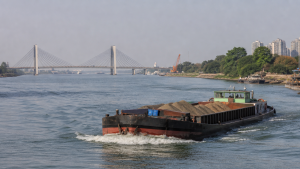
Inland Water Transport (IWT) is an important part of India’s logistics system because it is fuel-efficient, cost-effective, and environmentally friendlier than road transport. Its growth depends on national waterways, enabling laws, digital portals, and incentive schemes that encourage cargo and passenger movement through rivers and canals.
Institutional and Statutory Framework
- IWAI: The Inland Waterways Authority of India was constituted on October 27, 1986, under the Inland Waterways Authority of India Act, 1985. It works under the Ministry of Ports, Shipping and Waterways and is the nodal agency for developing, regulating, and maintaining national waterways.
- Core functions: IWAI conducts hydrographic surveys, maintains navigation aids, and supports fairway development to improve navigability.
- National Waterways Act, 2016: This Act declared 111 National Waterways across the country and brought earlier separate declarations into one consolidated schedule.
- Operational waterways: 32 National Waterways are operational as of March 2026.
- Inland Vessels Act, 2021: It replaced the Inland Vessels Act, 1917 and created a unified legal framework for inland vessel navigation across states.
- Regulatory coverage: The new Act provides common provisions for safety, registration, and security standards.
- Digital database: Under the Inland Vessels Act, 2021, the government launched the Jalyan and Navic central database portal for vessel registration, certification, and crew training records.
Constitutional and Administrative Basis
- Union List: Shipping and navigation on inland waterways declared by Parliament by law to be national waterways fall under Entry 24 of the Union List (List I).
- State List: Other inland waterways fall under Entry 32 of the State List (List II).
- Head office: IWAI is headquartered in Noida, Uttar Pradesh.
- Regional offices: Major regional offices are located in Patna, Kolkata, Guwahati, and Kochi.
Infrastructure Projects and Digital Portals
- Jal Marg Vikas Project (JMVP): Implemented by IWAI with technical and financial assistance from the World Bank, this project focuses on the 1,390 km stretch of NW-1 between Varanasi and Haldia.
- Navigation support: The project aims to improve navigability and infrastructure so that vessels of 1,500 to 2,000 tonnes can move commercially.
- Least Available Depth (LAD): The project seeks to maintain a LAD of 3 metres on this stretch.
- Jetties and terminals: The National Waterways (Construction of Jetties/Terminals) Regulations, 2025 encourage both private and public participation in terminal development.
- Regulatory clarity: These regulations set standard guidelines for setting up, operating, and maintaining jetties, reducing administrative delays for developers.
- Jal Samriddhi portal: It streamlines online applications for No Objection Certificates for jetty and terminal construction across about 14,500 km of navigable waterways.
- Process reform: The portal replaces manual clearances with a time-bound and transparent approval mechanism.
Targeted Promotional Schemes
- Jalvahak Cargo Promotion Scheme: Launched on December 15, 2024, with an allocation of ₹95.42 crore, it provides direct financial incentives to cargo owners.
- Reimbursement support: The scheme offers up to 35% reimbursement of operating expenses for shifting cargo by inland waterways.
- Covered routes: It applies to NW-1, NW-2, and NW-16 via the Indo-Bangladesh Protocol (IBP) route.
- Logistics shift: The scheme is designed to reduce the initial cost of shifting freight from road and rail to waterways.
- Coastal Cargo Promotion Scheme: Introduced in the Union Budget 2026–27, it seeks to strengthen the link between inland waterways and coastal shipping.
- Long-term aim: The scheme targets an increase in the combined logistics share of inland waterways and coastal shipping from 6% to 12% by 2047.
- Maritime Amrit Kaal Vision 2047: It aims to raise the modal share of inland water transport in cargo movement from 2% to 5% by 2047.
- Traffic target: The Vision also aims to expand total cargo volumes to 500 million metric tonnes (MMT) by 2047.
Green Transition Initiatives
- Harit Nauka Guidelines: Launched on January 8, 2024, these guidelines provide a roadmap for reducing carbon intensity in inland passenger transport.
- Alternative fuels: The guidelines encourage the use of electricity, hydrogen, and methanol.
- Carbon reduction target: The sector aims for a 30% reduction in carbon intensity by 2030, using FY 2022-23 as the base year.
- Long-term reduction: A 70% reduction is targeted by 2047.
- Retrofitting: The framework supports retrofitting existing vessels with eco-friendly propulsion systems.
- Final goal: The guidelines target a transition to 100% green vessels in the inland water transport sector by 2047.
Key Prelims Takeaways
- IWAI: Constituted on October 27, 1986, under the Inland Waterways Authority of India Act, 1985.
- National Waterways Act, 2016: Declared 111 National Waterways; 32 are operational as of March 2026.
- Inland Vessels Act, 2021: Replaced the Inland Vessels Act, 1917 and unified vessel regulation across states.
- Major portal: Jalyan and Navic is used for vessel registration, certification, and crew database management.
- Jetty NOCs: Jal Samriddhi is the portal for online NOC applications for jetty and terminal construction.
- Jalvahak Scheme: Covers NW-1, NW-2, and NW-16 via the IBP route and offers up to 35% reimbursement.
- Green target: Harit Nauka Guidelines aim for 100% green vessels by 2047.
Current General Studies comprises current-affairs-based, General Studies-rich study material on policies, laws, institutions, economy, science, environment, governance, international relations, and other varied but important topics for UPSC and State PSC Prelims examinations.
Fortnightly PDF compilations: Available here
Originally written on
February 16, 2026
and last modified on
September 4, 2026.
| Related | |
|---|---|