Key Government Housing and Urban Development Schemes
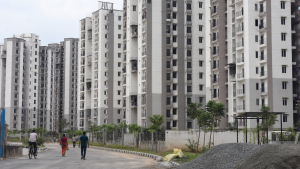
India’s major housing and urban development schemes are designed to support affordable housing, urban livelihoods, water supply, sanitation and basic civic infrastructure. Most of these programmes are implemented by the Ministry of Housing and Urban Affairs and are important for Prelims because of their timelines, coverage and financial outlays.
Pradhan Mantri Awas Yojana – Urban (PMAY-U)
- Original mission timeline: Launched in June 2015, the original PMAY-U mission now concludes on September 30, 2026, to allow completion of houses under construction and release of pending central funds.
- PMAY-U 2.0: Launched on September 1, 2024, it provides financial assistance to 1 crore urban poor and middle-class families over five years, up to 2029.
- Central assistance: The initiative has a total central assistance of up to ₹2.50 lakh crore.
- Verticals: PMAY-U 2.0 is implemented through four verticals—Beneficiary Led Construction (BLC), Affordable Housing in Partnership (AHP), Affordable Rental Housing (ARH), and the Interest Subsidy Scheme (ISS).
- Purpose: The scheme addresses housing shortages in urban areas and supports ownership, rental housing and interest subsidy-based assistance.
Restructured PM SVANidhi Scheme
- Scheme extension: The PM Street Vendor’s AtmaNirbhar Nidhi (PM SVANidhi) scheme was restructured and extended by the Union Cabinet on August 27, 2025.
- Revised deadline: The loan disbursement deadline has been extended from December 31, 2024, to March 31, 2030.
- Outlay and coverage: The updated outlay is ₹7,332 crore and the scheme targets 1.15 crore street vendors, including 50 lakh new beneficiaries.
- Expanded coverage: Geographic coverage now extends beyond statutory towns to census towns and peri-urban locations in a graded manner.
- Digital incentive: Beneficiaries who repay the second loan can access a UPI-linked RuPay Credit Card with a limit of up to ₹30,000 and digital transaction cashbacks of up to ₹1,600.
- Liability support: The government will service liabilities for interest subsidies and credit guarantees until March 31, 2033, while credit card guarantee claims remain active until March 31, 2035.
| Loan Tranche | Restructured Limit | Previous Limit |
| First Tranche | ₹15,000 | ₹10,000 |
| Second Tranche | ₹25,000 | ₹20,000 |
| Third Tranche | ₹50,000 | ₹50,000 |
AMRUT 2.0 and Urban Water Infrastructure
- Mission period: The Atal Mission for Rejuvenation and Urban Transformation (AMRUT) 2.0 runs from FY 2021-22 to FY 2025-26.
- Financial size: It has an indicative total outlay of ₹2,77,000 crore, including a central share of ₹76,760 crore.
- Tap connections: The mission targets universal water supply through 2.68 crore tap connections across all 4,378 statutory towns.
- Sewerage goal: It aims for 100% sewerage and septage management through 2.64 crore sewer connections across 500 designated AMRUT cities.
- Urban reform measures: The Ministry launched Jal Hi AMRIT to incentivize efficient sewage treatment plant management.
- Institutional support: Water Resource Recovery Cells have been established in 25 States and Union Territories.
Status of Smart Cities Mission and DAY-NULM
- Smart Cities Mission: Launched in June 2015 to develop 100 sustainable cities, it officially closed on March 31, 2025, after receiving its final timeline extension.
- Funds disbursed: By closure, around 99.44% of the ₹47,652 crore Union Budget allocation had been disbursed to the 100 cities.
- DAY-NULM closure: The Deendayal Antyodaya Yojana-National Urban Livelihoods Mission concluded on September 30, 2024.
- Effect of closure: Its self-employment and skill training initiatives ended with the formal closure of the mission.
- RBI action: The Reserve Bank of India withdrew all related master circulars with effect from October 1, 2024.
Key Prelims Takeaways
- PMAY-U timeline: The original PMAY-U mission ends on September 30, 2026.
- PMAY-U 2.0: Launched on September 1, 2024, it supports 1 crore urban families up to 2029 with central assistance of up to ₹2.50 lakh crore.
- PMAY-U verticals: The four verticals are BLC, AHP, ARH and ISS.
- PM SVANidhi revision: The scheme has been extended to March 31, 2030, with an outlay of ₹7,332 crore.
- PM SVANidhi loans: The first loan is ₹15,000, the second ₹25,000 and the third ₹50,000.
- AMRUT 2.0 targets: It covers 4,378 statutory towns for tap water connections and 500 cities for sewerage management.
- Mission closures: Smart Cities Mission closed on March 31, 2025, and DAY-NULM closed on September 30, 2024.
Current General Studies comprises current-affairs-based, General Studies-rich study material on policies, laws, institutions, economy, science, environment, governance, international relations, and other varied but important topics for UPSC and State PSC Prelims examinations.
Fortnightly PDF compilations: Available here
Originally written on
February 10, 2026
and last modified on
September 4, 2026.
| Related | |
|---|---|