Sports Injuries and Athlete Retirement in India and the World
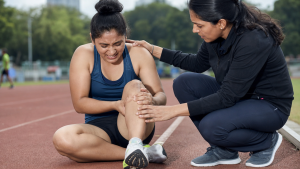
Sports injuries are a major concern in competitive sport because they can disrupt training, reduce performance and, in many cases, end careers early. The impact is not limited to physical pain; it also affects mental health, income, rehabilitation pathways and post-retirement transition. For athletes, injury management has become as important as performance itself.
Types of Sports Injuries
- Acute injuries: These occur suddenly from a specific event such as a fall, collision or awkward twist. Common examples include sprains, strains, fractures, dislocations and contusions.
- Chronic injuries or overuse injuries: These develop gradually because of repeated stress on muscles, tendons, ligaments or bones. Typical examples are tendinitis, stress fractures, shin splints and runner’s knee.
- Common affected areas: Knees, ankles, shoulders, lower back, hamstrings and groin are frequently injured. Knee injuries such as ACL tears and meniscus damage are especially common, while shoulder injuries often affect throwing sports.
- Nature of injury: Acute injuries are usually linked to sudden impact, while chronic injuries are often related to repetitive motion, poor recovery or rapid increase in training intensity.
Causes and Risk Factors
- Training errors: Overtraining, inadequate warm-up or cool-down, sudden workload spikes and insufficient rest are major causes of overuse injuries.
- Poor technique and biomechanics: Incorrect running, lifting or throwing form can place excessive stress on joints and muscles, increasing the chance of injury.
- Inadequate equipment: Poorly fitted shoes, faulty gear or unsuitable protective equipment can contribute to both acute and repetitive injuries.
- Environmental factors: Hard, slippery or uneven surfaces; extreme heat or cold; and altitude can influence injury rates and recovery.
- Age and gender: Young athletes may suffer growth-plate injuries, while older athletes are more prone to degenerative conditions. In some sports, females may have a higher incidence of ACL tears.
- Previous injury: A prior injury increases the risk of re-injury in the same area or nearby structures.
- Nutritional deficiencies: Poor diet can weaken bones and muscles, slow recovery and make injuries more likely.
Impact on Athletes and Retirement
- Physical burden: Injuries can lead to chronic pain, reduced mobility, repeated surgeries, long rehabilitation and long-term disability.
- Psychological stress: Athletes may face depression, anxiety, frustration, loss of identity and reduced confidence during recovery.
- Financial pressure: Medical costs, loss of prize money and sponsorships, and lower post-career earning potential can create serious hardship.
- Forced retirement: Severe or recurring injuries can end careers earlier than planned, even during peak competitive years.
- Voluntary retirement: Even when retirement is planned, the cumulative physical toll of years of training and competition often shapes the decision.
- Career transition: Athletes often need rehabilitation support, counselling, skill-building and alternative employment pathways to move beyond sport.
Athlete Welfare and Support in India
- Sports Authority of India (SAI): The apex national sports body supports athlete training, sports medicine and rehabilitation facilities.
- National Centres of Excellence (NCOE): These centres provide high-performance training along with physiotherapy, injury management and scientific support for elite athletes.
- Target Olympic Podium Scheme (TOPS): Launched in 2014, TOPS supports potential Olympic and Paralympic medallists with funding for training, equipment, international exposure and medical care.
- National Sports Development Fund (NSDF): The fund supports sports development and athlete welfare through resources from government and other contributions.
- Athlete insurance: Health and accident insurance coverage is being expanded, though injury-specific retirement protection is still evolving.
- Government employment: Quotas in some departments and public sector undertakings provide post-retirement livelihood opportunities for meritorious sportspersons.
- Rehabilitation focus: Athlete welfare increasingly includes medical support systems, structured rehabilitation and return-to-play monitoring.
International Approaches to Athlete Care
- Advanced sports medicine: Many countries have specialised centres for diagnosis, surgery, physiotherapy and performance recovery.
- Prevention and recovery: The emphasis is on preventing injuries, shortening recovery time and protecting long-term athlete health.
- Athlete unions and associations: Bodies such as FIFPRO and player associations in cricket or basketball often push for insurance, pensions and better medical care.
- Transition programmes: Educational support, vocational training and psychological counselling help athletes adjust to post-sport life.
- Long-term athlete development (LTAD): LTAD models promote age-appropriate training, injury reduction and lifelong participation instead of only early elite success.
- Research and innovation: Sports science, biomechanics and rehabilitation research continue to improve prevention and recovery methods.
Key Prelims Takeaways
- Acute injury: Sudden onset injury such as sprain, fracture or dislocation.
- Chronic injury: Gradual overuse injury such as tendinitis or stress fracture.
- Common injury sites: Knee, ankle, shoulder, hamstring and groin.
- Major risk factors: Training errors, poor technique, inadequate equipment and previous injury.
- SAI: Apex body for sports promotion and athlete support in India.
- TOPS: Provides financial and medical support to elite athletes.
- NSDF: Supports sports development and athlete welfare.
- Retirement: Can be voluntary or involuntary; injuries are a major cause of forced retirement.
- Athlete care: Includes medical support, rehabilitation, mental health care and post-career transition.
Recent Context
England fast bowler Mark Wood announced his retirement from international cricket on September 22, 2026, at the age of 36 after recurring knee problems. He finished with 38 Tests, 70 ODIs and 38 T20Is, and was part of England’s 2019 ODI World Cup and 2022 T20 World Cup-winning squads. He will continue with Durham and franchise leagues.
Current General Studies comprises current-affairs-based, General Studies-rich study material on policies, laws, institutions, economy, science, environment, governance, international relations, and other varied but important topics for UPSC and State PSC Prelims examinations.
Fortnightly PDF compilations: Available here
Originally written on
September 23, 2026
and last modified on
September 23, 2026.
| Related | |
|---|---|