Major Indian Civilian and National Honours
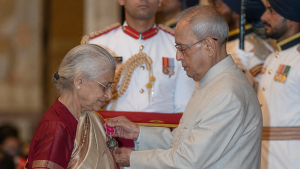
Major civilian honours in India are awarded for exceptional service and achievements of the highest order in diverse fields of human endeavour. The system is centred on the Bharat Ratna and the Padma Awards, which together form the country’s most important civilian recognition framework.
Classification and Evolution of Civilian Awards
- Institution of awards: The Government of India instituted the Bharat Ratna and the three-tier Padma Vibhushan on 2 January 1954 through presidential notifications.
- Reclassification in 1955: In January 1955, the three-tier Padma Vibhushan was split into three separate awards: Padma Vibhushan, Padma Bhushan and Padma Shri.
- Award criteria: These honours recognize exceptional and distinguished service in varied fields of public life and national contribution.
- Suspensions: The civilian awards were suspended twice—first from July 1977 to January 1980, and again from August 1992 to December 1995.
Bharat Ratna: Structure and Key Provisions
- Highest civilian honour: The Bharat Ratna is India’s highest civilian award.
- Scope: It is conferred for exceptional service or performance of the highest order in any field of human endeavour.
- Recommendation process: Recommendations are made directly by the Prime Minister to the President of India.
- Annual limit: Normally, not more than three awards may be given in a single year, though exceptions have been made.
- No cash grant: The award carries no monetary grant.
- Insignia: Recipients receive a Sanad signed by the President and a medallion shaped like a pipal leaf, made of toned bronze.
- Order of precedence: Bharat Ratna holders are placed at 7A in the Indian Order of Precedence, below Cabinet Ministers and above Chief Ministers of States.
Padma Awards: Hierarchy and Eligibility
- Three levels: The Padma Awards are, in descending order, Padma Vibhushan, Padma Bhushan and Padma Shri.
- Fields covered: They are awarded in art, social work, public affairs, science and engineering, trade and industry, medicine, literature and education, civil service, and sports.
- Active government servants: Public sector employees and government servants, except doctors and scientists, are not eligible during active service.
- Posthumous awards: These awards are generally not given posthumously, except in highly deserving cases.
- Foreign recipients: They may also be conferred on foreigners, NRIs, PIOs and OCIs.
- Recognition, not entitlement: The Padma Awards are meant for distinguished service and wide public impact, not for office or rank.
Constitutional Position and Legal Validity
- Article 18: Civilian awards such as the Bharat Ratna and Padma Awards cannot be used as prefixes or suffixes to a recipient’s name.
- No title status: These awards are not “titles” under the Constitution.
- Supreme Court ruling: In the Balaji Raghavan case (1995), the Supreme Court upheld the validity of these honours.
- Reasoning: The Court held that the awards represent national recognition of merit and do not violate Article 18.
- Committee system: Every year, the Prime Minister constitutes a Padma Awards Committee chaired by the Cabinet Secretary.
- Committee composition: The committee includes the Home Secretary, the Secretary to the President, and four to six eminent persons to scrutinize nominations.
Recent Award Statistics and Important Facts
- Bharat Ratna total: As of September 2026, the Bharat Ratna had been conferred on 53 individuals.
- Record year: The year 2024 saw the highest number of Bharat Ratna recipients in a single year, with five awardees.
- 2024 recipients: The five Bharat Ratna awardees in 2024 were Karpoori Thakur, Lal Krishna Advani, Chaudhary Charan Singh, P. V. Narasimha Rao and M. S. Swaminathan.
- Posthumous awards: Four of the 2024 Bharat Ratna awardees were posthumous.
- 2026 Padma Awards: The President approved 131 Padma Awards for 2026, comprising 5 Padma Vibhushan, 13 Padma Bhushan and 113 Padma Shri awards.
- 2026 distribution: The 2026 list included 19 women, 16 posthumous awardees and 6 persons from the categories of foreigners, NRIs, PIOs or OCIs.
- Two duo cases: The 2026 Padma Awards list included two duo cases.
Key Prelims Takeaways
- 1954 origin: The Bharat Ratna and Padma Vibhushan were instituted on 2 January 1954.
- 1955 change: The single Padma Vibhushan category was later divided into Padma Vibhushan, Padma Bhushan and Padma Shri.
- Highest civilian award: Bharat Ratna remains India’s top civilian honour.
- No title usage: Article 18 prevents award names from being used as prefixes or suffixes.
- Padma hierarchy: Padma Vibhushan is higher than Padma Bhushan, which is higher than Padma Shri.
- Eligible categories: Padma Awards cover major fields such as arts, science, public affairs, medicine, literature and sports.
- Legal validity: The Supreme Court upheld the civilian awards in Balaji Raghavan (1995).
Current General Studies comprises current-affairs-based, General Studies-rich study material on policies, laws, institutions, economy, science, environment, governance, international relations, and other varied but important topics for UPSC and State PSC Prelims examinations.
Fortnightly PDF compilations: Available here
Originally written on
March 31, 2026
and last modified on
September 5, 2026.
| Related | |
|---|---|