Major Space Telescopes and Missions for Exoplanet Research
Exoplanet research has moved from simply detecting distant worlds to studying their atmospheres, temperatures and possible habitability. Space telescopes now use transit photometry, microlensing, spectroscopy and direct imaging to build a clearer picture of planets beyond the solar system.
Active Space Observatories for Exoplanet Studies
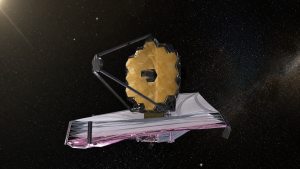
- James Webb Space Telescope (JWST): Operating at the Sun-Earth L2 point, JWST is carrying out deep atmospheric spectroscopy of exoplanets, including rocky super-Earths such as 55 Cancri e.
- JWST instrumentation: Its Mid-Infrared Instrument (MIRI) has been used for extended spectroscopic observations of the extreme hot Jupiter HD 80606 b during its closest stellar pass.
- Transiting Exoplanet Survey Satellite (TESS): Operating in an elliptical geocentric orbit, NASA’s TESS has catalogued over 7,900 candidate exoplanets and confirmed nearly 700 planets by mid-2026.
- TESS recovery and microlensing: After a January 2026 safe-mode event caused by a solar array tracking malfunction, TESS recovered and later identified a distant super-Jupiter in July 2026 using gravitational microlensing.
- CHEOPS: The CHaracterising ExOPlanet Satellite operates in a 700 km Sun-synchronous geocentric orbit. The ESA mission was extended in June 2026 to run through December 31, 2029.
The Nancy Grace Roman Space Telescope
- Purpose: The Nancy Grace Roman Space Telescope is designed for wide-field infrared surveys and high-contrast direct imaging of exoplanets.
- Primary mirror: It carries a 2.4-metre primary mirror donated by the National Reconnaissance Office in 2012.
- Wide-Field Instrument: Its 300.8-megapixel Wide-Field Instrument has an observation field about 100 times larger than the Hubble Space Telescope.
- Coronagraph Instrument (CGI): The CGI is meant for high-contrast direct imaging and spectroscopy by blocking the host star’s light.
- Operations: The telescope is en route to Sun-Earth L2, with a 90-day commissioning phase before core science operations begin in January 2027.
Upcoming ESA Missions: PLATO and Ariel
- PLATO: Scheduled for launch in March 2027 aboard an Ariane 62 rocket, PLATO will operate from a Sun-Earth L2 halo orbit to study planetary transits.
- PLATO instruments: The mission uses a 26-camera array, and its PLATO Input Catalog (PIC), released in February 2026, maps about 290,000 target stars.
- Ariel: The Atmospheric Remote-sensing Infrared Exoplanet Large-survey mission, delayed from 2029, is scheduled for launch in 2031 aboard an Ariane 62 rocket alongside the Comet Interceptor.
- Ariel focus: Ariel is designed to study molecular atmospheric compositions in exoplanets.
- Ariel development: Its payload structural model completed mechanical validation tests at the STFC RAL Space laboratory in May 2026.
Next-Generation Concepts: Habitable Worlds Observatory
- Mission goal: The Habitable Worlds Observatory (HWO) is a conceptual NASA flagship mission planned for the 2040s to search for biosignatures by directly imaging 25 habitable worlds.
- Funding landscape: The US executive budget proposal for FY2027 requested USD 5 million for HWO, down from USD 150 million in FY2026.
- International support: In July 2026, the UK Space Agency awarded £3 million to domestic researchers to develop a core instrument concept for HWO.
Key Prelims Takeaways
- Transit photometry: Detects the dimming of a star when a planet crosses in front of it.
- Gravitational microlensing: Uses the bending of light by gravity to detect distant planets.
- Spectroscopy: Helps identify chemical composition, temperature and atmospheric features from light wavelengths.
- Coronagraphs: Block starlight so nearby exoplanets can be imaged more clearly.
- L2 point: Located about 1.5 million kilometres from Earth opposite the Sun; preferred for JWST, Roman, PLATO and Ariel because of thermal stability.
- Super-Earths: Rocky planets larger than Earth but smaller than Neptune.
- Hot Jupiters: Gas giants orbiting very close to their stars.
Current General Studies comprises current-affairs-based, General Studies-rich study material on policies, laws, institutions, economy, science, environment, governance, international relations, and other varied but important topics for UPSC and State PSC Prelims examinations.
Fortnightly PDF compilations: Available here
Originally written on
March 24, 2026
and last modified on
September 5, 2026.
| Related | |
|---|---|