Major Intelligence Agencies of India
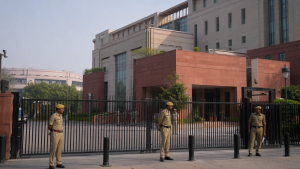
India’s intelligence and security architecture is built around a mix of external intelligence, internal security, technical surveillance, investigation, and financial enforcement agencies. These bodies work under different Union ministries and the PMO, but together they support national security and counter cross-border threats.
For Prelims revision, the key is to remember each agency’s mandate, parent ministry, legal basis, and headquarters-level leadership structure.
Primary Civilian Agencies: R&AW and IB
- Research and Analysis Wing (R&AW): Formed on September 21, 1968, R&AW is India’s external intelligence agency. It functions under the Cabinet Secretariat and reports directly to the Prime Minister.
- R&AW leadership: Parag Jain, a 1989-batch Punjab cadre IPS officer, serves as the Chief (Secretary) of R&AW, having assumed office on July 1, 2025, for a fixed two-year term.
- Intelligence Bureau (IB): The IB is India’s internal security and domestic intelligence agency. Its lineage goes back to the Central Special Branch, established in 1887.
- IB leadership: Mahesh Dixit, a 1993-batch Andhra Pradesh cadre IPS officer, became the Director of the Intelligence Bureau (DIB) on July 1, 2026, succeeding Tapan Kumar Deka. Senior IPS officer Jag Mohan was appointed Special Director of the IB in September 2026.
Specialized Security and Technical Agencies: NIA and NTRO
- National Investigation Agency (NIA): Established under the National Investigation Agency Act, 2008, the NIA was created after the 2008 Mumbai attacks to investigate and prosecute offences affecting the sovereignty, security, and integrity of India.
- NIA control: It functions under the Ministry of Home Affairs.
- NIA leadership: Rakesh Aggarwal, a 1994-batch Himachal Pradesh cadre IPS officer, serves as the Director General of the NIA. He was appointed in January 2026 for a tenure extending to August 31, 2028.
- National Technical Research Organisation (NTRO): Established in 2004, the NTRO is the country’s technical intelligence agency. It reports to the National Security Advisor in the Prime Minister’s Office.
- NTRO leadership: Rajesh Arya, a 1994-batch Rajasthan cadre IPS officer, serves as the Chairman of the NTRO, appointed in January 2025.
- NTRO sub-entities: The NTRO comprises the National Critical Information Infrastructure Protection Centre (NCIIPC) and the National Institute of Cryptology Research and Development (NICRD).
Financial and Investigative Agencies: CBI, NCB, and DRI
- Central Bureau of Investigation (CBI): The CBI operates under the Ministry of Personnel, Public Grievances and Pensions. Its legal basis is the Delhi Special Police Establishment Act, 1946.
- CBI leadership: Praveen Sood, a 1986-batch Karnataka cadre IPS officer, serves as the Director of the CBI and received a one-year extension in May 2026.
- Narcotics Control Bureau (NCB): Established in 1986 under the Ministry of Home Affairs, the NCB is the apex national agency for combating drug trafficking and abuse under the Narcotic Drugs and Psychotropic Substances (NDPS) Act.
- NCB leadership: Anurag Garg, a 1993-batch Himachal Pradesh cadre IPS officer, serves as the Director General of the NCB. His deputation was extended in May 2026 until July 31, 2027.
- Directorate of Revenue Intelligence (DRI): Established on December 4, 1957, the DRI is the apex anti-smuggling, investigation, and enforcement agency under the Central Board of Indirect Taxes and Customs (CBIC), Ministry of Finance.
- DRI leadership: Ganesh Dutt Lohani (G.D. Lohani), a 1993-batch IRS officer, serves as the Principal Director General of the DRI since April 2026.
Defense Intelligence Agency (DIA)
- Establishment and role: The DIA was established in 2002 under the Integrated Defence Staff, Ministry of Defence.
- Mandate: It is a tri-service military intelligence organisation that coordinates defence intelligence across the Army, Navy, and Air Force.
- Leadership transition: In September 2026, the then Director General of the DIA, Lieutenant General Shrinjay Pratap Singh, was appointed to take over as the General Officer Commanding-in-Chief of the Army Training Command (ARTRAC).
Institutional Structure of Indian Intelligence
| Agency | Parent Ministry / Office | Primary Legal Basis / Status | Present Chief |
| R&AW | Cabinet Secretariat (PMO) | Executive body | Parag Jain, IPS |
| IB | Ministry of Home Affairs | Executive body | Mahesh Dixit, IPS |
| NIA | Ministry of Home Affairs | NIA Act, 2008 | Rakesh Aggarwal, IPS |
| NTRO | Prime Minister’s Office (NSA) | Executive body | Rajesh Arya, IPS |
| NCB | Ministry of Home Affairs | NDPS Act, 1985 | Anurag Garg, IPS |
| DRI | Ministry of Finance | CBIC executive body | G.D. Lohani, IRS |
| CBI | Ministry of Personnel | DSPE Act, 1946 | Praveen Sood, IPS |
| DIA | Ministry of Defence | Executive body | Lt. Gen. Shrinjay Pratap Singh |
Key Prelims Takeaways
- External intelligence: R&AW handles foreign intelligence and reports through the Cabinet Secretariat to the Prime Minister.
- Internal security: The IB is India’s main domestic intelligence agency and has the oldest lineage among the agencies listed here.
- Statutory agencies: The NIA functions under the NIA Act, 2008, while the NCB works under the NDPS Act, 1985.
- Technical intelligence: The NTRO is the key technical intelligence body and works under the NSA in the PMO.
- Financial enforcement: The DRI is the apex anti-smuggling agency under CBIC and the Ministry of Finance.
- Investigation authority: The CBI draws its powers from the Delhi Special Police Establishment Act, 1946.
- Defence intelligence: The DIA coordinates intelligence across all three services under the Integrated Defence Staff.
Current General Studies comprises current-affairs-based, General Studies-rich study material on policies, laws, institutions, economy, science, environment, governance, international relations, and other varied but important topics for UPSC and State PSC Prelims examinations.
Fortnightly PDF compilations: Available here
Originally written on
March 24, 2026
and last modified on
September 5, 2026.
| Related | |
|---|---|