International Organisations: Structure, Functions and Membership
International organisations are central to global governance, trade, finance, security, health and development. For Prelims revision, the most useful facts are their legal bases, member strength, headquarters and top office-bearers.
This note compiles the core static facts on major organisations that frequently appear in competitive examinations. It focuses on structure, membership and official functions in a concise revision format.
Global Financial Governance: IMF and World Bank Group
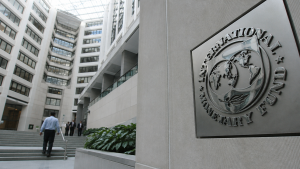
- International Monetary Fund (IMF): A Bretton Woods institution established in 1944 to promote monetary cooperation, exchange rate stability and balance of payments support.
- Membership: The IMF has 191 member countries.
- Head: Kristalina Georgieva is the Managing Director of the IMF.
- Special Drawing Rights (SDR): Created by the IMF in 1969, SDR is an international reserve asset based on a basket of five currencies: US Dollar, Euro, Chinese Renminbi, Japanese Yen and British Pound Sterling.
- World Bank Group: It consists of five institutions — IBRD, IDA, IFC, MIGA and ICSID.
- India and World Bank Group: India is a member of all constituent bodies except ICSID.
- Head: Ajay Banga serves as the 14th President of the World Bank Group.
Security, Defence and Justice Alliances: NATO and Interpol
- NATO: The North Atlantic Treaty Organization is a collective defence alliance formed under the North Atlantic Treaty of 1949, also called the Washington Treaty.
- Membership: NATO has 32 member states.
- Collective defence: Article 5 of the NATO Treaty states that an attack on one ally is considered an attack on all.
- Head: Mark Rutte serves as NATO Secretary General.
- Interpol: The International Criminal Police Organization coordinates international police cooperation.
- Membership: Interpol has 196 member countries.
- National Central Bureaus (NCBs): Interpol works through NCBs in member countries; in India, the Central Bureau of Investigation (CBI) is the official NCB.
- Head: Lucas Philippe is the President of Interpol.
Regional and Trans-Regional Frameworks: AU, SCO and Commonwealth
- African Union (AU): The AU has 55 member states and is based on the Constitutive Act of 2000.
- AU Chairperson: Évariste Ndayishimiye is the Chairperson of the African Union for 2026.
- AU Commission: Mahamoud Ali Youssouf serves as Chairperson of the AU Commission, and Selma Malika Haddadi is the Deputy Chairperson.
- Shanghai Cooperation Organisation (SCO): The SCO is a regional security and economic grouping with 10 members: Belarus, China, India, Iran, Kazakhstan, Kyrgyzstan, Pakistan, Russia, Tajikistan and Uzbekistan.
- SCO Secretary-General: Nurlan Yermekbayev serves as the Secretary-General.
- Commonwealth of Nations: The Commonwealth has 56 member states and is guided by the London Declaration of 1949.
- Secretary-General: Shirley Ayorkor Botchwey is the 7th Commonwealth Secretary-General.
Trade, Economic Forums and Health: WTO, OECD and WHO
- WTO: The World Trade Organization was established by the Marrakesh Agreement in 1994 to replace GATT.
- Membership: The WTO has 166 member countries.
- Head: Ngozi Okonjo-Iweala is the Director-General of the WTO.
- Decision-making: The Ministerial Conference is the WTO’s highest decision-making body and functions primarily by consensus.
- OECD: The Organisation for Economic Co-operation and Development has 38 member states.
- Head: Mathias Cormann is the Secretary-General of the OECD.
- WHO: The World Health Organization was established on 7 April 1948.
- Head: Dr. Tedros Adhanom Ghebreyesus is the Director-General of the WHO.
Other Key Global Groupings: UN and G20
- United Nations (UN): The UN was established in 1945 under the UN Charter.
- Membership: The UN has 193 member states.
- Headquarters: The UN is headquartered in New York, US.
- UN Secretary-General: António Guterres is serving his second term.
- G20: The Group of Twenty comprises 21 members — 19 countries, the European Union and the African Union.
- Rotating presidency: G20 presidency rotates annually among members.
- Importance: The G20 is a major forum for international economic cooperation.
Organisation Snapshot
| Organisation | Headquarters | Member Count | Key Treaty or Founding Year |
| United Nations (UN) | New York, US | 193 | UN Charter (1945) |
| IMF | Washington, D.C., US | 191 | Articles of Agreement (1944) |
| WTO | Geneva, Switzerland | 166 | Marrakesh Agreement (1994) |
| NATO | Brussels, Belgium | 32 | North Atlantic Treaty (1949) |
| Interpol | Lyon, France | 196 | Vienna Charter (1923) |
| African Union (AU) | Addis Ababa, Ethiopia | 55 | Constitutive Act (2000) |
| SCO | Beijing, China | 10 | SCO Charter (2001) |
| OECD | Paris, France | 38 | OECD Convention (1961) |
Key Prelims Takeaways
- Bretton Woods institutions: IMF and the World Bank Group were established in 1944.
- World Bank Group composition: IBRD, IDA, IFC, MIGA and ICSID are its five constituent bodies.
- Article 5 of NATO: It embodies the principle of collective defence.
- IMF reserve asset: SDR is a basket-based international reserve asset created in 1969.
- WTO decision-making: The Ministerial Conference is the top body and works mainly by consensus.
- Interpol structure: It operates through National Central Bureaus in member countries.
- UN and G20: The UN has 193 members, while the G20 has 21 members including the European Union and the African Union.
Current General Studies comprises current-affairs-based, General Studies-rich study material on policies, laws, institutions, economy, science, environment, governance, international relations, and other varied but important topics for UPSC and State PSC Prelims examinations.
Fortnightly PDF compilations: Available here
Originally written on
March 24, 2026
and last modified on
September 5, 2026.
| Related | |
|---|---|