Constitutional Provisions for India’s Unity and Security
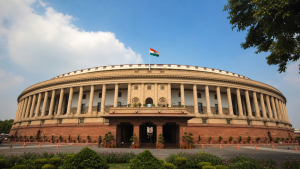
The Constitution balances India’s federal structure with a strong Union to protect territorial integrity, public order, and national security. It gives Parliament, the executive, and constitutional courts specific powers to preserve the unity of the Republic while allowing state autonomy within constitutional limits.
Territorial Integrity and the Indian Union
- Article 1 describes India as a “Union of States”, reflecting that the federation is indissoluble and that no state has the right to secede.
- Article 3 gives Parliament the exclusive power to form new states, alter state boundaries, or change state names by a simple majority.
- For changes under Article 3, the views of the concerned state legislature must be sought, but its consent is not mandatory.
- Article 370 was held by a five-judge Constitution Bench of the Supreme Court in December 2023 to be a temporary and transitional provision.
- The Court also ruled that Jammu and Kashmir did not retain elements of sovereignty after its reorganisation.
Security Exceptions to Fundamental Rights
- Article 19(2) permits reasonable restrictions on freedom of speech and expression in the interests of the sovereignty and integrity of India and the security of the State.
- The phrase “sovereignty and integrity of India” was added to Article 19(2) by the 16th Constitutional Amendment Act, 1963.
- This amendment was intended to curb speech and activities that could encourage secessionism or undermine national unity.
- Articles 22(3) to 22(7) provide the constitutional basis for preventive detention laws.
- The National Security Act, 1980 operates within this framework and allows detention without the normal criminal trial process.
- In July 2025, the Bombay High Court upheld the constitutional validity of the Unlawful Activities (Prevention) Act, 1967 (UAPA).
- In August 2026, the Supreme Court held that stringent bail restrictions under Section 43D(5) of the UAPA do not bar constitutional courts from granting bail where prolonged detention would violate Article 21.
Emergency Provisions and State Safeguards
- Article 355 casts a constitutional duty on the Union to protect every state against external aggression and internal disturbance.
- It also requires the Union to ensure that the government of every state is carried on in accordance with the Constitution.
- In April 2025, the Supreme Court held that High Courts under Article 226 cannot direct the Centre to invoke Article 355.
- This clarified that the decision to use such emergency-related powers remains with the executive.
- Article 356 allows the Union to impose President’s Rule when the constitutional machinery in a state fails.
- President’s Rule was imposed in Manipur on February 13, 2025, after the resignation of Chief Minister N. Biren Singh.
National Security Policies and Fiscal Measures
- On February 23, 2026, the Ministry of Home Affairs launched PRAHAAR, described as India’s first comprehensive National Counter Terrorism Policy & Strategy.
- The policy uses a seven-pillar framework focused on terror activities and terror financing.
- The Health Security se National Security Cess Act, 2025 was enacted on December 15, 2025, and implemented on February 1, 2026.
- The Act levies a cess on manufactured goods to fund public health and national security.
- In July 2026, the Karnataka High Court struck down the Act and its Rules.
- The Court held that a cess based on assumed machine capacity, rather than actual output, violates Article 14.
Key Constitutional Provisions for Prelims
| Article 1 | Defines India as a Union of States and rejects the idea of unilateral secession by states. |
| Article 3 | Empowers Parliament to alter state boundaries, form new states, or change state names by simple majority. |
| Article 19(2) | Allows reasonable restrictions on speech for sovereignty, integrity, and security of the State. |
| Articles 22(3)-(7) | Provide the constitutional foundation for preventive detention laws. |
| Article 355 | Places a duty on the Union to protect states from external aggression and internal disturbance. |
| Article 356 | Permits President’s Rule when state constitutional machinery fails. |
Key Prelims Takeaways
- Union Indissolubility: Article 1 makes India a permanent Union of States, not a voluntary federation with a right to secede.
- Parliamentary Control over Reorganisation: Under Article 3, Parliament can redraw state boundaries or names without needing state consent.
- Security-Based Restrictions: Article 19(2) allows the State to restrict speech for sovereignty, integrity, and security concerns.
- Preventive Detention Framework: Articles 22(3)-(7) constitutionally permit preventive detention laws such as the NSA.
- Union’s Protective Duty: Article 355 obliges the Centre to protect states and maintain constitutional governance in them.
- President’s Rule: Article 356 is the constitutional mechanism for Union intervention when a state’s constitutional machinery breaks down.
- Judicial Oversight: Constitutional courts can still protect fundamental rights, including Article 21, even when special security laws impose strict limitations.
Current General Studies comprises current-affairs-based, General Studies-rich study material on policies, laws, institutions, economy, science, environment, governance, international relations, and other varied but important topics for UPSC and State PSC Prelims examinations.
Fortnightly PDF compilations: Available here
Originally written on
February 11, 2026
and last modified on
September 4, 2026.
| Related | |
|---|---|