Indian Diaspora: Distribution, Demographics and Influence
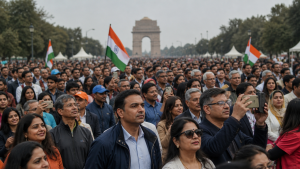
The Indian diaspora is one of the world’s largest transnational communities, linking India with major economic, social and political systems across continents. It includes Non-Resident Indians (NRIs) and Persons of Indian Origin (PIOs), and remains important for remittances, skilled migration, investment and India’s global outreach.
Demographic Profile and Geographical Distribution
MEA estimates place the overseas Indian population at about 35.4 million in 2025–2026. This includes 15.85 million NRIs and 19.57 million PIOs. NRIs are Indian citizens holding Indian passports, while PIOs are foreign citizens with ancestral links to India.
The diaspora is concentrated in a few major host countries. The United States has the largest Indian-origin population, followed by the United Arab Emirates, Malaysia, Canada and Saudi Arabia. These communities are especially significant in North America, Southeast Asia and the Gulf region.
- United States: About 5.4 million people of Indian origin
- United Arab Emirates: About 3.6 million
- Malaysia: About 2.9 million
- Canada: About 2.8 million
- Saudi Arabia: About 2.4 million
Economic Contribution and Remittance Flows
India remains the world’s largest recipient of remittances. These inflows support foreign exchange earnings, strengthen the balance of payments and contribute to household spending on education, health and small businesses.
In 2025–2026, workers’ remittances reached a record USD 110.47 billion. SBI Research has projected total inward remittances in the range of USD 137 billion to USD 140 billion, driven by both high-skilled professionals abroad and migrant workers in Gulf countries.
- Foreign exchange support: Remittances are a stable source of external financing
- Household use: Funds are often used for consumption, education and healthcare
- Entrepreneurship: Transfers help micro-enterprises and small investments
- Macroeconomic role: They help cushion the balance of payments
OCI Framework and Digital Upgrades
The Ministry of Home Affairs has moved OCI services to a more digital format under the Citizenship (Amendment) Rules, 2026. The new electronic OCI or e-OCI system, launched on June 30, 2026, ends the printing of fresh physical OCI booklets for new registrants.
Existing physical OCI booklets remain valid for immigration clearance. Another major change is that cardholders above the age of 20 no longer need to reissue a physical OCI booklet each time they get a new passport. Instead, renewed passport details must be uploaded on the OCI Miscellaneous Services portal within three months of passport issuance. A late fee of USD 25 applies if the update is done after 90 days.
- e-OCI launch: Introduced on June 30, 2026
- Physical booklets: No longer printed for fresh OCI registrations
- Existing cards: Still valid for immigration clearance
- Passport update rule: Details to be uploaded within three months
- Late fee: USD 25 after the 90-day window
- Post-20 age rule: No mandatory reissue of OCI booklet after each new passport
Travel Entry Regulations and Pravasi Bharatiya Divas
Entry rules for overseas Indians have also been tightened and digitized. Physical PIO cards are no longer accepted for entry into or exit from India after the final deadline of December 31, 2025. Foreign passport holders and OCI cardholders must now submit a digital e-Arrival Card within 72 hours before arrival in India. This requirement, effective from April 1, 2026, replaces the older paper disembarkation form.
OCI applicants must also sign a consent form to opt into the Fast Track Immigration Programme, which enables biometric data collection during registration. These changes are meant to streamline immigration processing while tightening documentation norms.
Important exam fact: Physical PIO cards are no longer valid for travel to India after December 31, 2025, and the e-Arrival Card is mandatory within 72 hours before arrival.
The 18th Pravasi Bharatiya Divas Convention was held in Bhubaneswar, Odisha, from January 8 to 10, 2025. The theme was “Diaspora’s Contribution to a Viksit Bharat”, reflecting the continuing effort to connect diaspora resources with national development.
- Fast Track Immigration: OCI applicants must consent to biometric data collection
- PIO card deadline: Physical PIO cards are invalid after December 31, 2025
- e-Arrival Card: Mandatory online submission within 72 hours before travel
- Paper form replacement: Paper disembarkation forms have been discontinued
- PBD 2025 venue: Bhubaneswar, Odisha
- PBD 2025 dates: January 8–10, 2025
Key Prelims Takeaways
- Total overseas Indians: About 35.4 million in MEA estimates for 2025–2026
- Composition: 15.85 million NRIs and 19.57 million PIOs
- Largest host country: United States with about 5.4 million people of Indian origin
- Other major host countries: UAE, Malaysia, Canada and Saudi Arabia
- Workers’ remittances: Reached USD 110.47 billion in 2025–2026
- OCI digitization: e-OCI launched on June 30, 2026 under the Citizenship (Amendment) Rules, 2026
- Travel rules: e-Arrival Card mandatory within 72 hours before arrival in India
| Related | |
|---|---|