Constitutional Provisions Governing Indian State Governments
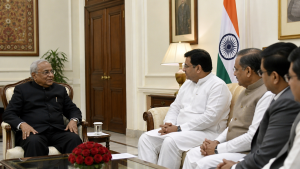
The executive and legislative framework of Indian states is laid down in Part VI of the Constitution. It establishes a parliamentary system at the state level, with the Governor as the constitutional head and the Council of Ministers, led by the Chief Minister, as the real executive.
State Executive: Governor and Council of Ministers
- Article 153 and Article 154: There shall be a Governor for each state, and the executive power of the state is vested in the Governor, exercised directly or through subordinate officers.
- Article 163: A Council of Ministers, with the Chief Minister at its head, shall aid and advise the Governor, except in matters where the Governor is required to act in discretion.
- Article 164: Ministers are appointed by the Governor on the advice of the Chief Minister and hold office during the pleasure of the Governor.
- Article 165: The Governor appoints the Advocate-General for the state, who holds office during the pleasure of the Governor.
Governor’s Role in the Legislative Process
- Article 200: When a bill passed by the state legislature is presented, the Governor may assent to it, return it with a message for reconsideration, or reserve it for the President.
- Withholding of assent: The Governor cannot keep a bill pending indefinitely by simply withholding assent. Constitutionally, refusal to assent is linked with the obligation to return the bill for reconsideration.
- Discretion under Article 200: In dealing with state bills, the Governor exercises an independent constitutional function and is not bound by the aid and advice of the Council of Ministers.
- Article 201: Bills reserved by the Governor for the President’s consideration may receive assent, be withheld, or be returned for reconsideration as provided by the Constitution.
Important Constitutional Provisions for State Governance
| Article | Provision |
| Article 163 | Council of Ministers to aid and advise the Governor |
| Article 164 | Appointment and tenure of Chief Minister and Ministers |
| Article 200 | Governor’s assent to bills, including reservation for the President |
| Article 201 | Presidential consideration of bills reserved by the Governor |
| Article 356 | Provisions in case of failure of constitutional machinery in a state |
Judicial Clarifications on Executive and Emergency Powers
- Article 356 and judicial review: A December 2023 Supreme Court ruling held that a declaration of President’s Rule and subsequent presidential actions must have a reasonable nexus with the intended objective and remain subject to judicial review.
- Limits on judicial timelines: Courts cannot prescribe fixed timelines for the Governor or the President to decide on state bills under Articles 200 and 201.
- No deemed assent: The idea that a bill becomes approved merely because a court-fixed deadline expires is alien to the Constitution and offends the separation of powers.
- Procedural scrutiny: Limited judicial review is possible if there is prolonged, unexplained, or evasive inaction by the Governor, but such review is confined to procedural delay and not the merits of the decision.
- Territorial waters: In a September 2026 ruling on purse seine fishing, the Supreme Court held that states may regulate marine fisheries within territorial waters up to 12 nautical miles, while the Union regulates the Exclusive Economic Zone beyond that limit.
Proposed Legislative Changes in State Governance
- Constitution (130th Amendment) Bill, 2025: Introduced in Parliament in August 2025, it proposes a mandatory resignation mechanism for state ministers under detention.
- Detention criterion: A Chief Minister or Minister must resign if arrested and detained for 30 consecutive days on charges carrying a punishment of five or more years of imprisonment.
- Automatic cessation: If the minister does not resign, the person automatically ceases to hold office on the 31st day of continuous detention.
- Extension to Union Territories: The Government of Union Territories (Amendment) Bill, 2025, and the Jammu and Kashmir Reorganisation (Amendment) Bill, 2025, were introduced to extend similar rules to Union Territories.
- Parliamentary scrutiny: The Constitution (130th Amendment) Bill, 2025, is under examination by a Joint Parliamentary Committee chaired by MP Aparajita Sarangi.
Key Prelims Takeaways
- Part VI: Governs the constitutional machinery of state governments in India.
- Governor: The constitutional head of the state; executive power is formally vested in the Governor.
- Chief Minister and Council of Ministers: The real political executive at the state level.
- Article 200: Gives the Governor three options on a state bill—assent, return, or reserve for the President.
- Article 201: Applies to bills reserved by the Governor for presidential consideration.
- Article 356: Deals with failure of constitutional machinery in a state and is subject to judicial review.
- 12 nautical miles: The limit within which states may regulate marine fisheries, as clarified by the Supreme Court.
Current General Studies comprises current-affairs-based, General Studies-rich study material on policies, laws, institutions, economy, science, environment, governance, international relations, and other varied but important topics for UPSC and State PSC Prelims examinations.
Fortnightly PDF compilations: Available here
Originally written on
March 25, 2026
and last modified on
September 5, 2026.
| Related | |
|---|---|