International Monetary Fund: Structure, Roles and Functions
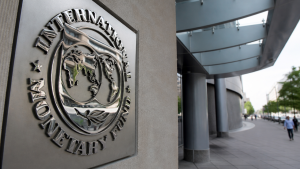
The International Monetary Fund (IMF) is a global financial organization that promotes international monetary cooperation, financial stability, and balanced growth of world trade. It also helps member countries facing balance of payments problems through surveillance, technical assistance, and lending.
Origin and Mandate of the IMF
- Origin: The IMF was conceived in July 1944 at the Bretton Woods Conference, alongside the International Bank for Reconstruction and Development (IBRD).
- Start of operations: It began official operations in March 1947 with 29 founding members.
- Membership: The IMF now has 191 member countries. Liechtenstein became the newest member after joining on October 21, 2024.
- Core mandate: The IMF is responsible for ensuring the stability of the international monetary system.
- Role in global finance: It oversees the system of exchange rates and international payments that allows countries to trade with one another.
- Headquarters: The IMF is headquartered in Washington, D.C.
Governance Structure and Key Leadership
- Board of Governors: This is the highest decision-making body of the IMF. Each member country appoints one governor and one alternate governor.
- IMFC: The International Monetary and Financial Committee (IMFC), with 24 members, advises the Board of Governors on policy matters.
- Executive Board: The Executive Board has 25 Directors who handle the day-to-day business of the IMF at its Washington headquarters.
- Representation: Directors represent individual countries or groups of countries.
- Chair: The Executive Board is chaired by the Managing Director.
- Managing Director: Kristalina Georgieva serves as Managing Director; her second term began on October 1, 2024.
- Senior leadership: Dan Katz is the First Deputy Managing Director, while Bo Li, Kenji Okamura, and Nigel Clarke serve as Deputy Managing Directors.
- Chief Economist: Silvana Tenreyro serves as Chief Economist.
IMF Funding and the Quota System
- Primary funding source: Quotas are the IMF’s main permanent funding source.
- Quota formula: Quotas are based on a formula that combines a country’s GDP, economic openness, economic variability, and international reserves.
- Why quotas matter: They determine a member country’s financial contribution, voting power, and borrowing limits.
- Voting power: Larger economies generally have larger quotas and greater voting power.
- 16th General Review of Quotas: Approved in December 2023, it authorizes a 50 percent equiproportional increase in quotas.
- Quota size: The increase raises total quotas to SDR 715.7 billion, about USD 960 billion.
- Effect of equiproportional increase: Member voting shares remain unchanged, while the IMF becomes less reliant on temporary Bilateral Borrowing Agreements and the New Arrangements to Borrow (NAB).
- Approval requirement: The changes require consent from members holding at least 85 percent of total voting power.
- Deadline: The deadline for consent has been extended to November 15, 2026.
Key Functions and Instruments
- Surveillance: The IMF monitors member economies through annual Article IV Consultations.
- Policy advice: During these consultations, IMF staff analyse domestic policies and issue policy recommendations.
- Lending: The IMF provides financial assistance to countries facing balance of payments difficulties.
- Conditionality: Loans are often linked to fiscal and structural reforms to support recovery and repayment capacity.
- Stand-By Arrangements (SBA): Used mainly for short-term crises.
- Extended Fund Facility (EFF): Used for medium-term structural problems.
- Poverty Reduction and Growth Trust (PRGT): A targeted facility for low-income countries.
- Capacity development: The IMF provides technical assistance and training to strengthen central banks, taxation systems, and statistical institutions.
- Publications: Major IMF publications include the World Economic Outlook (WEO), the Global Financial Stability Report (GFSR), and the Fiscal Monitor.
The Special Drawing Right
- Introduction: The Special Drawing Right (SDR) was created in 1969.
- Purpose: It is an international reserve asset designed to supplement the official foreign exchange reserves of member countries.
- Nature: The SDR is not a physical currency and not a direct claim on the IMF.
- Use in crises: It represents a potential claim on the freely usable currencies of member states and can be exchanged during crises.
- Valuation: Its value is calculated daily using a basket of five major currencies.
- Currency basket: The basket consists of the US Dollar, Euro, Chinese Renminbi, Japanese Yen, and British Pound Sterling.
- Review cycle: The basket weights are reviewed every five years.
Key Prelims Takeaways
- IMF origin: Conceived at the 1944 Bretton Woods Conference and began operations in March 1947.
- Membership: The IMF has 191 members; Liechtenstein joined on October 21, 2024.
- Highest body: The Board of Governors is the IMF’s top decision-making authority.
- IMFC role: The 24-member IMFC advises the Board of Governors.
- Quota importance: Quotas decide funding, voting power, and borrowing limits.
- 16th quota review: Approved a 50 percent equiproportional increase to SDR 715.7 billion, or about USD 960 billion.
- SDR: The SDR is an international reserve asset, not a currency, and is valued using five currencies.
Current General Studies comprises current-affairs-based, General Studies-rich study material on policies, laws, institutions, economy, science, environment, governance, international relations, and other varied but important topics for UPSC and State PSC Prelims examinations.
Fortnightly PDF compilations: Available here
Originally written on
March 5, 2026
and last modified on
September 5, 2026.
| Related | |
|---|---|