Refugee Law and Migrant Rights Compared
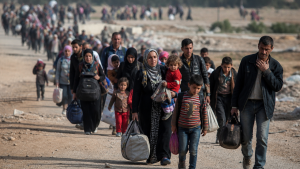
International law treats refugees and migrants as distinct categories. Refugees are people forced to flee persecution, war, or violence, while migrants may move for work, family, education, or other socioeconomic reasons.
The difference matters because refugee protection is tied to a specific treaty regime, especially the 1951 Refugee Convention, while migrant rights are largely covered by general human rights law applicable to all persons.
Core Conceptual and Legal Differences
- Refugee status: A refugee is a person who cannot return safely to the home country because of a well-founded fear of persecution, war, or serious violence.
- Migrant status: A migrant moves for multiple reasons, often voluntary or mixed, and does not automatically qualify for refugee protection.
- Legal foundation: Refugee law is built on the 1951 Refugee Convention and its 1967 Protocol, while migrant rights flow from broader international human rights instruments.
- Scope of protection: Refugee law grants special protection to those fleeing danger, whereas human rights law protects all non-nationals regardless of why they moved.
- Key distinction: Asylum claims require an assessment of persecution and protection needs; ordinary migration cases are generally handled under immigration law.
Non-Refoulement: The Central Protection
- Meaning: Non-refoulement bars states from sending a person to a country where there is a real risk of persecution, torture, or other serious harm.
- Legal status: It is a cornerstone of refugee protection and is widely recognised as a binding rule of customary international law.
- Practical effect: A state must first examine the person’s protection claim before removal, even where entry was irregular.
- Broader relevance: The principle is central not only to refugee law but also to the protection against torture and other grave human rights violations.
Developments in European Union Asylum Governance
- EU Pact on Migration and Asylum: The pact entered into application on June 12, 2026, and shifted many asylum and migration rules from national directives to directly binding EU regulations.
- Unified border screening: It introduced common procedures for identity, health, and security checks at external borders.
- Fast-track assessments: The pact allows quicker asylum processing at the border, reducing the gap between asylum seekers and irregular migrants in initial screening.
- Work rights: Adult asylum seekers may work within a maximum of six months of applying.
- Education for children: Child asylum seekers are to be given access to formal education within two months.
Judicial Interventions in United States Asylum Policy
- RAICES v. Mullin: The D.C. Circuit Court of Appeals held on April 24, 2026, that the executive branch’s January 2025 border proclamation suspending asylum and using summary deportations was unlawful.
- Supreme Court review sought: The administration petitioned the Supreme Court on August 25, 2026, to review that ruling.
- USCIS asylum freeze: USCIS partially lifted a late-2025 blanket freeze on asylum adjudications on March 30, 2026, allowing processing for “non-high-risk” applicants.
- Global Asylum Hold: Cases involving nationals of 39 designated “high-risk” travel-ban countries remained frozen until a federal court struck down the policy on June 5, 2026, in Dorcas International Institute of Rhode Island v. USCIS.
- APA challenge: That court invalidated four agency policies under the Administrative Procedure Act, including the Global Asylum Hold.
- Annual Asylum Fee: In Venezuelan Association of Massachusetts v. USCIS, a federal court issued an administrative stay on July 21, 2026, blocking rules that sought to terminate work authorization and start removals for applicants who did not pay the fee.
- Evidentiary rule: From August 21, 2026, USCIS required affirmative asylum applicants to submit all supporting evidence at least 14 days before interview and imposed strict criteria for rescheduling.
Global Judicial Precedents: South Africa and India
- South African Constitutional Court: On July 7, 2026, the court in Scalabrini Centre of Cape Town v. Minister of Home Affairs held that parts of the Refugees Act 130 of 1998 were unconstitutional.
- Procedural exclusion struck down: The invalid provisions excluded asylum seekers from the system because of procedural immigration violations.
- Non-refoulement affirmed: The court said the protection against refoulement cannot be withdrawn merely because a person entered through an unofficial port or failed to report within five days.
- Merits must be examined: Procedural non-compliance cannot replace a proper assessment of the asylum claim.
- India’s position: In October 2025, the Supreme Court dismissed a petition by a Sudanese national and reiterated that India is not a signatory to the 1951 Refugee Convention or its 1967 Protocol.
- UNHCR cards: The court held that UNHCR refugee cards do not by themselves create a municipal legal right to stay in India.
- Foreigners Act: In May 2025, the Supreme Court said Rohingya refugees found to be foreigners are liable to deportation under domestic law, and UNHCR identity cards do not override the Foreigners Act.
Key Prelims Takeaways
- 1951 Refugee Convention: The main international treaty defining refugee status and protection standards.
- Migrants vs refugees: Refugees flee persecution or violence; migrants move for broader socioeconomic or personal reasons.
- Non-refoulement: A customary international law principle that bars return to danger and applies even beyond treaty signatories.
- EU Pact on Migration and Asylum: Applied from June 12, 2026; it created common border screening and faster asylum procedures.
- India and refugees: India is not a party to the 1951 Refugee Convention, and UNHCR cards do not override domestic immigration law.
- Foreigners Act: The key Indian statute governing entry, stay, and deportation of foreigners.
- South Africa ruling: Procedural lapses alone cannot justify denial of asylum without considering the claim on merits.
Current General Studies comprises current-affairs-based, General Studies-rich study material on policies, laws, institutions, economy, science, environment, governance, international relations, and other varied but important topics for UPSC and State PSC Prelims examinations.
Fortnightly PDF compilations: Available here
Originally written on
March 5, 2026
and last modified on
September 5, 2026.
| Related | |
|---|---|