Role of Voluntary Organisations in Elderly Care in India
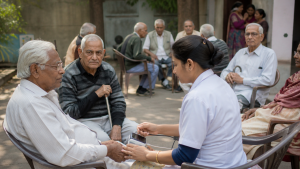
India’s elderly-care system combines public programmes with the local reach of voluntary organisations. These organisations support health, shelter and social participation, while helping connect senior citizens with government services and community-based care.
Demographic Need and Policy Framework
India’s growing elderly population requires support that extends beyond medical treatment to include shelter, dignity, social connection and opportunities for participation. Voluntary organisations can help address these varied needs, particularly through services organised around local communities. The Ministry of Social Justice and Empowerment (MoSJE) is the nodal ministry for senior citizens’ welfare. Its welfare remit includes elderly people among the disadvantaged and marginalised groups it serves. The Ministry has five bureaus, including the Social Defense Bureau, which is headed by a Joint Secretary and oversees policies and programmes relating to older persons. This institutional framework places voluntary organisations within a wider system of public responsibility. Government schemes set objectives and provide support, while eligible organisations can deliver services closer to beneficiaries. Their role is complementary: they help implement welfare measures, but do not replace the government’s responsibility for elderly welfare.
Atal Vayo Abhyuday Yojana
The Atal Vayo Abhyuday Yojana (AVYAY) is an umbrella scheme of MoSJE for the empowerment and welfare of senior citizens. It brings together initiatives intended to improve quality of life through basic amenities, healthcare and opportunities for productive ageing. Key components include:
- Integrated Programme for Senior Citizens (IPSrC): Provides central assistance to eligible voluntary organisations for projects and services for senior citizens.
- Rashtriya Vayoshri Yojana (RVY): Provides physical aids and assisted-living devices to indigent senior citizens with age-related disabilities.
- SAGE initiative: The Seniorcare Ageing Growth Engine promotes and supports start-ups offering products and services for the elderly.
These components address different needs: service delivery through eligible organisations, access to assistive devices, and the development of innovative elderly-care products and services.
Voluntary Organisations under IPSrC
Under IPSrC, eligible voluntary organisations are implementing partners. Central assistance supports projects for older people, subject to scheme guidelines and eligibility criteria. Services can include:
- Residential care homes: Shelter, food, medical care and recreational facilities for indigent older people who are destitute or abandoned.
- Day-care centres: Health check-ups, recreation and opportunities for engagement during the day, enabling senior citizens to remain with their families.
- Mobile Medicare Units: Doorstep consultations and basic medical services, including in remote or underserved areas.
- Physiotherapy clinics: Services to support mobility and help reduce pain.
- Counselling: Psychological support and guidance for concerns such as loneliness and mental well-being.
- Helplines: Information and assistance for senior citizens in distress.
- Awareness and advocacy: Activities on elder abuse, senior citizens’ rights and government schemes.
The range of services shows how voluntary organisations can contribute to both care and social inclusion. Residential facilities may serve people without adequate support, while day-care services allow older people to participate in activities without leaving their families. Mobile units can extend access beyond fixed facilities, and counselling, helplines and awareness activities can address needs that are less visible than physical illness.
Community Role and Implementation Issues
Voluntary organisations often bring knowledge of local needs and established community links. They can help identify eligible beneficiaries, communicate information about schemes and connect older people with services. This ground-level role can make public programmes more accessible, while community-based care can support continued family and social participation. IPSrC assistance covers a percentage of recurring and non-recurring project expenses, subject to scheme rules. Such support can help eligible organisations run services and maintain facilities. Effective implementation also depends on clear responsibilities, appropriate use of funds and attention to the dignity and needs of beneficiaries. For policy and administration, the partnership raises issues of coordination and accountability. Public agencies need to ensure that assistance reaches eligible organisations and that supported services respond to older people’s needs. Organisations, in turn, need to provide reliable services and communicate beneficiaries’ concerns. These considerations are important when expanding civil-society participation and public-private partnerships in elderly care. Voluntary action is most effective when linked to public provision rather than treated as a substitute for it.
Key Prelims Takeaways
- MoSJE is the nodal ministry for senior citizens’ welfare; its Social Defense Bureau is headed by a Joint Secretary.
- AVYAY is an umbrella scheme that includes IPSrC, RVY and the SAGE initiative.
- IPSrC provides central assistance to eligible voluntary organisations for senior-citizen services.
- RVY provides physical aids and assisted-living devices to indigent senior citizens with age-related disabilities.
- SAGE supports start-ups offering products and services for the elderly.
- IPSrC-supported services include residential care, day-care, mobile medical care, physiotherapy, counselling and helplines.
Recent Context
MoSJE launched the Vayo Samman Rashtriya Abhiyan, a National Intergenerational Bonding Campaign, on November 4, 2026, under AVYAY. Its 5C framework—Connect, Converse, Co-create, Contribute and Continue—guides interaction between senior citizens and young people.
| Related | |
|---|---|