RBI Urges Digital Public Infrastructure for MSME Loans
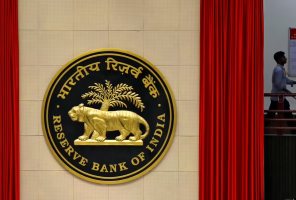
The Reserve Bank of India (RBI) has urged banks and non-banking financial companies to use India’s digital public infrastructure for expanding credit access to Micro, Small, and Medium Enterprises (MSMEs). RBI Governor Sanjay Malhotra made the remarks in Kochi ahead of International MSME Day 2026 on 22 June 2026.
Digital Public Infrastructure for Credit Delivery
Digital public infrastructure, or DPI, refers to shared digital systems that support identity, payments, data exchange, and service delivery at scale. In the MSME credit context, the RBI has referred to the Account Aggregator framework, Unified Lending Interface, Trade Receivables Discounting System, GST data trails, and Aadhaar-enabled authentication.
Account Aggregator and Lending Platforms
The Account Aggregator framework is a consent-based data-sharing system under India’s financial data architecture. It facilitated lending of ₹3.5 trillion during FY26, and the RBI has identified it as a platform with scope for further expansion in digital lending. The Unified Lending Interface is a digital platform for standardised credit access, while the Trade Receivables Discounting System is an electronic platform for invoice discounting. GST data trails and Aadhaar-enabled authentication are also used in digital credit assessment and verification.
MSME Credit and Government Schemes
As of 31 December 2025, credit outstanding by scheduled commercial banks to the MSME sector stood at ₹36.79 trillion. The RBI has also urged lenders to accelerate implementation of Priority Sector Lending, MUDRA, PM-SWANIDHI, PM Vishwakarma, and Credit Guarantee Schemes for MSEs. MSME stands for Micro, Small, and Medium Enterprises, a category used in India for enterprise classification and policy support. Udyam registration is the official registration system for MSMEs to access government benefits and scheme-linked support.
Important Facts for Exams
- The Account Aggregator framework is a consent-based system for financial data sharing in India.
- The Trade Receivables Discounting System is used for invoice discounting and receivables financing.
- Priority Sector Lending is a banking norm linked to sectors such as agriculture, MSMEs, and weaker sections.
- MUDRA stands for Micro Units Development and Refinance Agency.
MSME Classification and Policy Context
MSMEs are classified in India under the Micro, Small, and Medium Enterprises Development Act, 2006. The sector is covered by dedicated credit, guarantee, and registration frameworks in India’s financial and industrial policy structure.
| Related | |
|---|---|